





A New Era in Low-Earth Orbit
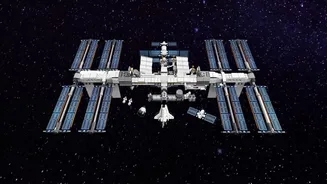
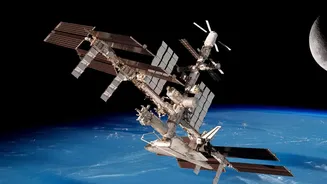
For over two decades, the ISS has been humanity's lone outpost in orbit, a government-run laboratory that has produced countless discoveries. But with its operational life ending, NASA is shifting its strategy. Instead of owning and operating the next
generation of space stations, the agency will be a customer. This pivot, part of the Commercial Low-Earth Orbit Destinations (CLD) program, has ignited a race among private companies to build new orbital platforms. The goal is not just to prevent a gap in U.S. orbital presence but to foster a robust commercial economy in space, where NASA is one of many clients leasing labs and facilities.
More Than Just a Bigger Room
Companies like Axiom Space, Sierra Space, and Vast are at the forefront of this transformation. Axiom Space is taking a modular approach, initially attaching its first habitat module to the ISS before detaching to form a free-flying station. Sierra Space, in partnership with Blue Origin for the Orbital Reef station, is developing the Large Integrated Flexible Environment (LIFE) habitat. These are massive inflatable modules that launch in a compact state and expand in orbit to the size of a multi-story building, offering unprecedented volume for living and working. This leap in design philosophy means more space, more power, and more flexibility than ever before.
Laboratories Designed for Discovery
These next-generation modules are being purpose-built for commercial research. Where the ISS had to accommodate the needs of five different space agencies, new stations can offer customizable, state-of-the-art laboratory facilities. Axiom Station, for example, plans a dedicated Research and Manufacturing module. Companies will be able to rent dedicated payload slots and lab space to conduct proprietary research in areas like pharmaceuticals, materials science, and biotechnology. The unique microgravity environment allows for breakthroughs not possible on Earth, such as growing purer protein crystals for drug development or creating flawless semiconductor crystals. Enhanced features like high-speed data links and robotic assistance will further accelerate the pace of discovery.
The Quest for Artificial Gravity
Perhaps the most revolutionary transformation on the horizon is the introduction of artificial gravity. The long-term effects of microgravity on the human body, such as bone density loss and muscle atrophy, are a major hurdle for extended space missions. Startup Vast, founded by tech entrepreneur Jed McCaleb, is tackling this head-on by developing spinning space stations designed to create artificial gravity through centrifugal force. While its initial Haven-1 station will be a microgravity lab, the company's long-term vision is to build large, rotating structures. This would be a game-changer not only for astronaut health but also for science, allowing researchers to conduct experiments with gravity as a variable for the first time in a long-duration orbital environment.
An Open Market for Science in the Sky
The shift from a single, government-owned station to multiple commercial platforms creates a new marketplace for orbital research. It's no longer just for national space agencies and their chosen partners. Universities, private companies, and international organizations will be able to purchase research time and space on these stations directly. This turnkey service, offered by companies like Axiom, handles everything from hardware development to mission execution, lowering the barrier to entry for in-space research. This competitive environment is expected to drive down costs and increase accessibility, potentially unleashing a wave of innovation as more minds and businesses gain access to the unique conditions of low-Earth orbit.