





A Historic Shift in Space Strategy
For decades, the Indian Space Research Organisation (ISRO) has been the sole custodian of India's space ambitions. From launching satellites that power communication and weather forecasting to its celebrated missions to the Moon and Mars, ISRO built a world-class
program with a focus on national needs and self-reliance. However, with the global space economy expanding rapidly, a strategic evolution became necessary. The government initiated historic reforms in 2020, culminating in the Indian Space Policy 2023. This policy officially opened the doors for Non-Government Entities (NGEs) to participate in end-to-end space activities, transforming them from simple component suppliers to independent innovators and operators.
ISRO’s New Chapter: Mentor and Explorer
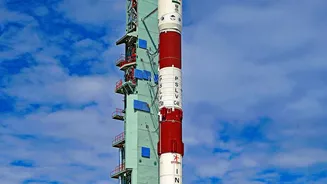
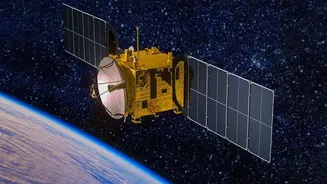
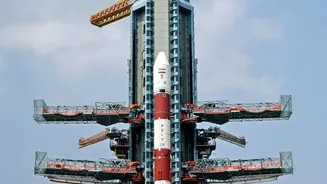
The entry of private players does not mean ISRO is stepping aside; rather, its role is becoming more focused and strategic. The agency is now transitioning away from the routine manufacturing of operational launch vehicles and satellites. This allows ISRO to dedicate its formidable expertise and resources to frontier science, research and development, deep-space exploration like planetary missions, human spaceflight (Gaganyaan), and developing next-generation technologies. In this new paradigm, ISRO acts as a mentor, sharing its decades of knowledge and opening its world-class infrastructure to private companies. This shift was recently reiterated by ISRO Chairman V Narayanan, who clarified that the goal is not privatisation but the expansion of India's overall space ecosystem.
The Rise of Private Ambition
Indian space startups are rising to the occasion with remarkable speed and innovation. The number of registered space startups has surged from just a handful in 2020 to over 400 by 2026. Companies like Hyderabad-based Skyroot Aerospace have already made history by launching India's first privately developed rocket. Chennai-based Agnikul Cosmos is pioneering 3D-printed rocket engines, drastically cutting manufacturing time and costs. Other players like Pixxel are building constellations of hyperspectral imaging satellites, while Dhruva Space focuses on satellite platforms and ground station services. These firms are not just building hardware; they are creating new business models for launch services, satellite data analytics, and in-space applications that serve sectors from agriculture to disaster management.
IN-SPACe: The New Rulebook
To manage this new collaborative environment, the government established the Indian National Space Promotion and Authorisation Centre (IN-SPACe). Functioning as a single-window agency, IN-SPACe is responsible for promoting, authorizing, and supervising all space activities of private entities. It acts as the crucial interface between ISRO and the private sector, ensuring that NGEs can access ISRO's facilities in a regulated manner. This provides regulatory clarity and a level playing field, which are essential for building investor confidence and ensuring the safe and sustainable growth of the industry.
Fueling the Economic Engine
This evolving partnership is set to be a significant economic driver. India's space economy, valued at around $8.4 billion, is projected to surge to $44 billion by 2033. The government aims to increase India's share of the global space market from its current 2-3% to 10% in the coming decade. This growth will be fueled by increased private investment, job creation in high-skilled fields, and the development of new space-based services. Amendments to the Foreign Direct Investment (FDI) policy, allowing up to 100% investment in certain sub-sectors, are also designed to attract global capital. While challenges like access to funding and infrastructure constraints remain, the foundation for a vibrant, multi-billion dollar space economy has been firmly laid.