


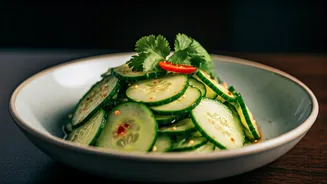
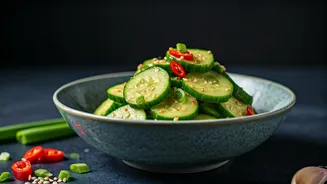


The Classic: Spicy Cucumber Salad (Oi Muchim)
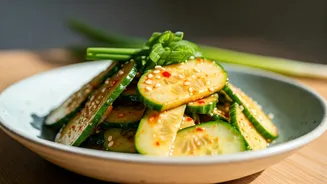
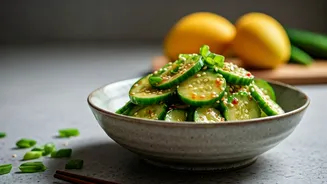
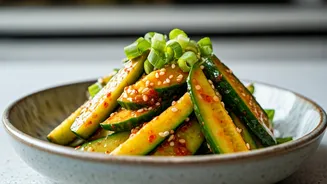
If you’ve ever enjoyed the small side dishes, or banchan, at a Korean barbecue restaurant, you’ve likely had Oi Muchim. This spicy cucumber salad is a staple for a reason: it’s incredibly quick to make and addictively delicious. The key to a great Oi Muchim is the balance
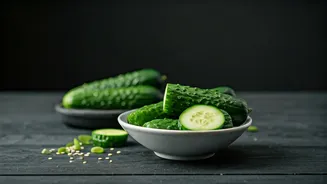
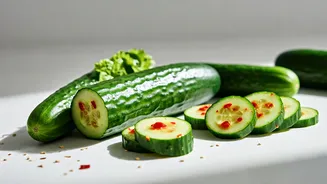
of spicy, sweet, and tangy flavors. You’ll want to use thin-skinned cucumbers like Persian, English, or specific Korean varieties for the best crunch. Simply slice the cucumbers thinly, about 1/8 to 1/4 inch thick. Some recipes recommend salting the cucumbers for 15-20 minutes to draw out excess water, which helps them stay crisp. After salting, give them a quick rinse and pat them dry. In a bowl, mix together gochugaru (Korean chili flakes), rice vinegar, a little sugar, minced garlic, and toasted sesame oil. Toss the cucumbers in this vibrant red dressing until every piece is coated. Garnish with toasted sesame seeds and sliced green onions for a fresh finish. Serve it immediately for maximum crunch or let it sit for about 15 minutes to let the flavors meld.
The Showstopper: Stuffed Cucumber Kimchi (Oi Sobagi)
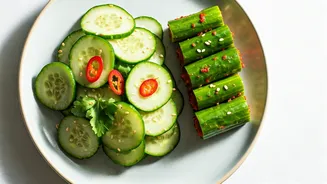
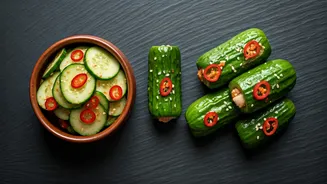
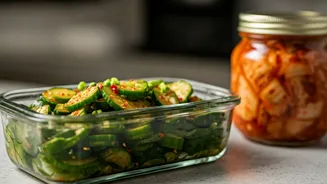
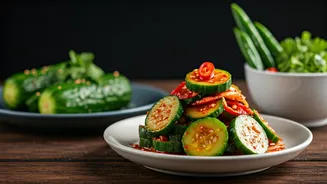
For a dish that’s as visually impressive as it is delicious, try Oi Sobagi. This summer favorite involves stuffing cucumbers with a flavorful kimchi filling. It’s a bit more involved than a simple salad, but the result is a crunchy, fermented side dish that’s bursting with complex flavors. You'll typically use pickling cucumbers like Kirby or Korean cucumbers for this. The process starts by preparing the cucumbers. Cut them into 2-3 inch segments, then make crosswise slits down the length of each piece, leaving one end intact to create a pocket for the stuffing. The cucumbers are then brined in hot, salty water for about an hour to soften them and make them pliable. While they brine, you prepare the filling. This is a zesty mixture of Korean garlic chives (buchu), grated carrot, minced garlic, ginger, and sometimes Korean radish. The seasoning comes from gochugaru, fish sauce or salted shrimp (saeujeot), and a pinch of sugar. Once the cucumbers are brined and rinsed, you gently stuff the spicy vegetable mixture into the slits. The stuffed cucumbers are packed into an airtight container and can be eaten fresh or left to ferment at room temperature for a day or two before refrigerating.
The Crowd-Pleaser: Non-Spicy Cucumber Salad
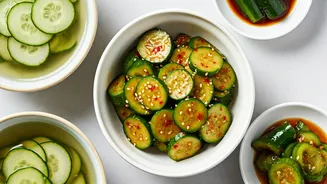
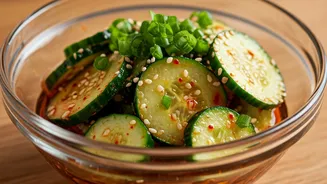
Not everyone is a fan of heat, and that’s where a non-spicy Korean cucumber salad shines. This version skips the gochugaru and gochujang, focusing instead on a savory, sweet, and nutty flavor profile. It’s a perfect entry point for those new to Korean flavors or for serving a crowd with diverse palates. The preparation is similar to the spicy version. Start by slicing your cucumbers and salting them for about 20 minutes to draw out moisture, then drain the excess water. For the dressing, you'll create a simple but flavorful mixture. Whisk together rice vinegar, a sweetener like sugar or maple syrup, minced garlic, and toasted sesame oil. Toss the drained cucumber slices in the dressing until they are well-coated. A generous sprinkle of toasted sesame seeds adds a wonderful texture and nutty aroma. This version is exceptionally refreshing and highlights the clean, crisp taste of the cucumber.
The Make-Ahead Marvel: Korean Soy Sauce Pickles (Oi Jangajji)
Jangajji refers to vegetables pickled in a soy-sauce-based brine, and they are a fantastic way to preserve the summer harvest. These pickles are salty, sweet, and tangy, and they get better the longer they sit in the fridge. Unlike kimchi, these pickles are not fermented. To make Oi Jangajji, you’ll need cucumbers, onion, and some green chili peppers for a mild kick. Cut the vegetables into bite-sized pieces and pack them into a sterilized glass jar. The magic is in the brine, which is typically a simple mixture of soy sauce, vinegar, and sugar, sometimes diluted with a bit of water. This mixture is brought to a boil and then poured hot over the vegetables in the jar. The heat of the brine helps to keep the vegetables crunchy. Let the jar cool, seal it, and leave it at room temperature for a day before transferring it to the refrigerator. They're ready to eat the next day but reach their peak flavor after a few days.