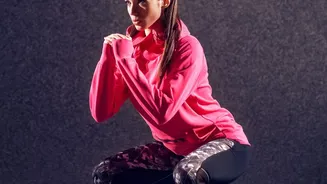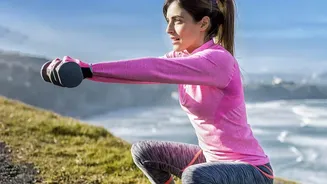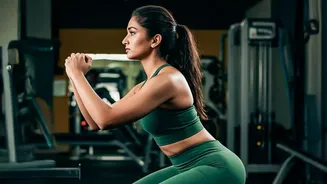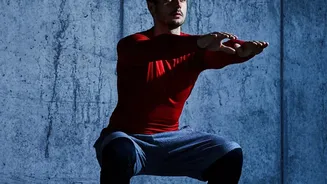




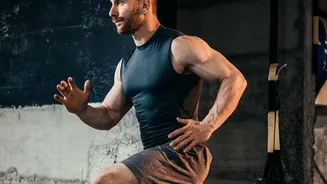
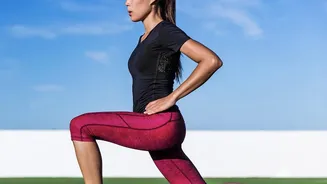
Squats and lunges are kings of leg day, but they are not interchangeable. Understanding how they target different muscles is key to building a strong, balanced lower body, and actor Sonam Bajwa's fitness is a testament to that balanced approach.
The Squat: A Foundation of Power
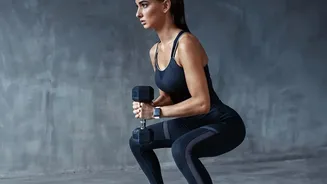
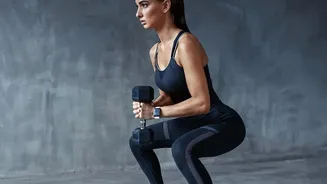
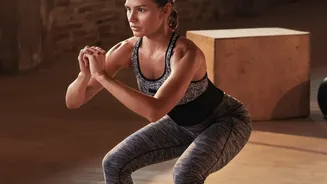
The squat
is a foundational compound exercise, meaning it works multiple major muscle groups simultaneously. When you perform a squat, you're primarily engaging your quadriceps (the front of your thighs) and your gluteus maximus (the largest muscle in your buttocks). As you lower your hips, your quads control the descent, and as you drive back up, your glutes and hamstrings fire up to extend your hips. Because both legs work together in this bilateral movement, squats are unparalleled for building overall lower-body strength and can be loaded with significant weight to drive muscle growth and power. They also heavily recruit your core and lower back muscles to maintain stability and an upright posture throughout the lift.
The Lunge: A Master of Balance and Precision
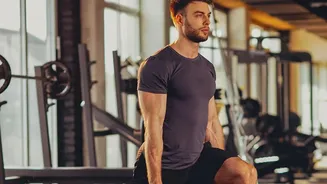
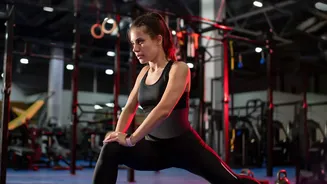
Unlike the squat, the lunge is a unilateral exercise, focusing on one leg at a time. This single-leg focus is its greatest strength. While lunges also work the quads and glutes, their staggered stance introduces a significant balance challenge. To keep from tipping over, your body must recruit smaller, stabilizing muscles, particularly the gluteus medius (on the side of your hip) and the adductors and abductors (your inner and outer thigh muscles). This makes lunges exceptional for improving stability, coordination, and correcting muscle imbalances between your left and right legs—an issue that bilateral exercises like squats can sometimes mask. Variations like walking or reverse lunges also stretch the hip flexors and require greater core engagement to control the movement.
The Key Differences at a Glance
So, what's the verdict in the squats vs. lunges debate? Neither is definitively 'better'; they serve different but complementary purposes. Squats are superior for building maximal strength and power due to their bilateral nature, which allows for heavier loads. Think of them as the tool for building your foundation. Lunges, on the other hand, are specialists in balance, stability, and unilateral strength. They are often considered more effective for honing in on the glutes—especially the stabilising gluteus medius—and for ironing out strength discrepancies between your legs. While squats primarily move you up and down, lunges can be performed in multiple directions (forward, reverse, and sideways), making them highly functional for movements in daily life.
Inspired by Sonam: The Power of a Balanced Routine
Actor Sonam Bajwa’s famously fit physique isn't built on a single exercise. Her workout philosophy, as seen in her social media and interviews, revolves around consistency and a mix of strength training and functional movements. Recently, she shared glimpses of a 'humbling' leg day that included both squats and lunges, showcasing how these two movements are pillars of a well-rounded routine. Achieving a strong, functional, and aesthetically balanced lower body like Sonam's isn't about choosing squats or lunges—it's about programming them both intelligently. Her dedication to a mix of heavy lifting and mobility work shows that strength is about more than just lifting heavy; it's about control, balance, and endurance. By incorporating both bilateral and unilateral exercises, you ensure that you're building overall power while also refining stability and symmetry.
How to Structure Your Leg Day
To get the best of both worlds, structure your workouts to include both movements. A common and effective approach is to start with your heavy compound lift and then move to accessory or unilateral work. Begin your leg day with squats, when your muscles are fresh and you can safely lift heavier weights to build that foundational strength. After completing your squat sets, transition to lunges. Since they require more balance and target stabilizing muscles, performing them later in the workout is ideal. You can use lighter weights or just your bodyweight. Consider different lunge variations to hit different muscles. Reverse lunges are often easier on the knees, while walking lunges add a cardio component and enhance coordination. Lateral (side) lunges are excellent for targeting the inner and outer thighs. By pairing a heavy squat with various lunge styles, you create a comprehensive workout that builds power, corrects imbalances, and enhances functional fitness.