




What is the Ganges Water Treaty?
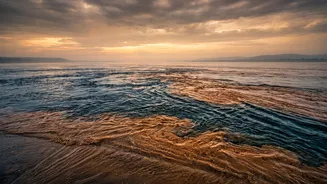
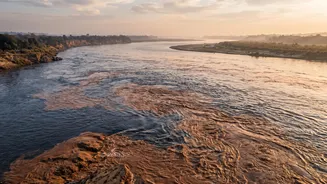
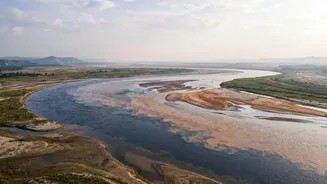
Signed on December 12, 1996, the Ganges Water Sharing Treaty is a 30-year agreement between India and Bangladesh designed to manage the sharing of water from the Ganga river during the critical dry season, which runs from January to May. Its primary mechanism
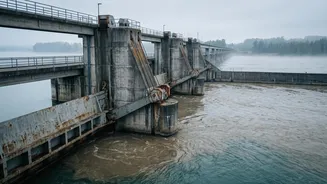
governs water flows at the Farakka Barrage in West Bengal, located about 18 kilometres upstream from the Bangladeshi border. The treaty establishes a formula for sharing water, particularly when the flow diminishes, aiming to balance India's need to divert water to the Hooghly river to keep Kolkata Port navigable with Bangladesh's requirements for agriculture, fisheries, and environmental stability. At the time of its signing, it was hailed as a landmark achievement in regional diplomacy.
Why 2026 is a Critical Year
The treaty was designed with a 30-year lifespan and does not include a clause for automatic renewal. This means that the agreement is set to expire in December 2026, placing an urgent deadline on both nations to negotiate its future. Failure to renew or replace the treaty could create a vacuum, leading to uncertainty and potential disputes over one of the region's most vital resources. Recognizing the impending deadline, Bangladesh has formed a high-level committee to lead negotiations and has been formally pressing India to begin talks. Recent statements from both sides confirm that preliminary discussions at technical levels are underway, though formal high-level negotiations are yet to be finalized.
The Core Issues on the Table
Bangladesh is seeking a new or revised treaty rather than a simple renewal. A key demand from Dhaka is the inclusion of a 'guarantee clause' to ensure it receives a minimum quantity of water, a provision that was part of a previous 1977 agreement but absent in the 1996 treaty. Bangladeshi officials argue this is essential to combat increased soil salinity, protect agriculture, and sustain livelihoods for millions in its northern and southwestern regions, who have been severely impacted by reduced river flows. For India, considerations include its own increasing domestic water needs, particularly for West Bengal, and the operational requirements of the Farakka Barrage. Experts also suggest any new agreement must account for modern challenges like climate change and the overall health of the entire river basin, factors not central to the 1996 framework.
Beyond the Ganges: The Teesta Factor
The Ganges negotiations do not exist in a vacuum. They are intrinsically linked to the broader context of water sharing between the two countries, which share 54 transboundary rivers. The most prominent of these is the Teesta River, for which a proposed water-sharing deal has been stalled since 2011, largely due to internal political opposition within India. This long-pending issue often complicates the overall water dialogue and is a persistent point of friction. Furthermore, the regional dynamic has been altered by China's proposal to assist Bangladesh with a major Teesta river management project, adding another layer of geopolitical complexity to the negotiations between New Delhi and Dhaka.
What Happens Next?
Both nations have designated the Joint Rivers Commission (JRC) as the formal mechanism to handle the discussions. While technical_level meetings have been occurring, a ministerial_level meeting and ultimately a summit between the prime ministers of both countries would likely be needed to finalize a new agreement. India's Ministry of External Affairs has maintained that a 'structured mechanism' is in place for these talks. Bangladesh's State Minister for Foreign Affairs, Shama Obaed Islam, has expressed hope that the treaty will be renewed and that India will 'make the right decision'. However, some reports indicate that an automatic renewal is unlikely and that progress may be tied to a high_level visit from Bangladesh's Prime Minister Tarique Rahman to New Delhi.