



A New Space Race: The Private Sector Lifts Off
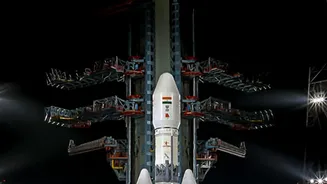
The single biggest driver behind this transformation is policy. The Indian government's decision in 2020 to open the space sector to private participation has unleashed a wave of entrepreneurial energy. The establishment of the Indian National Space Promotion
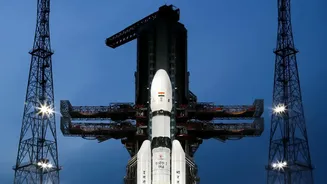
and Authorisation Centre (IN-SPACe) created a single-window agency to guide and authorise private projects, effectively rolling out the welcome mat for startups. This shift is fundamental. For years, private firms were limited to being suppliers for the Indian Space Research Organisation (ISRO). Now, companies can undertake end-to-end space activities, from building satellites and rockets to launching them and managing ground stations. This has allowed ISRO to focus more on advanced research and deep-space exploration, while private players drive commercial applications. The goal is ambitious: to grow India's share of the global space economy from around 2% to over 8% by 2033, expanding the domestic industry from about $9 billion to a projected $44 billion.
The Rise of the Space-Tech Startup
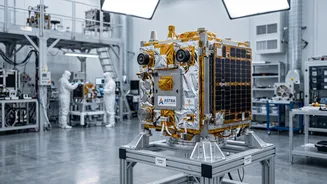
The policy changes have fuelled a startup boom. India is now home to over 400 space-tech startups, a dramatic increase from just a handful a decade ago. Companies like Skyroot Aerospace, Agnikul Cosmos, and Pixxel are becoming prominent names, attracting significant investment and talent. Private investment has surged, climbing from about $100 million in 2021-22 to over $600 million by March 2026. These startups aren't just smaller versions of ISRO. They are agile, commercially focused, and building everything from 3D-printed rocket engines to constellations of small satellites for Earth observation. This activity is creating a vibrant new ecosystem, which in turn is generating demand for a wide array of skilled professionals. The growth has even led to a 'brain gain' dynamic, with some scientists leaving ISRO for the competitive pay and creative opportunities in the private sector.
More Than Just Rocket Science
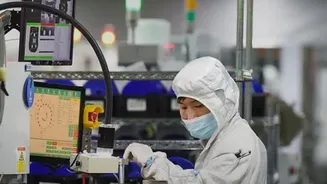
The modern space economy is about far more than launching rockets. The most significant area of growth is in downstream applications—the services built on top of space technology. Think of satellite communications, Earth observation data, and navigation services. These applications are creating a surge in demand for jobs that didn't traditionally exist in the space sector. Companies are hiring data scientists and AI specialists to analyse petabytes of satellite imagery for use in agriculture, climate monitoring, and urban planning. Software developers are needed to build the complex code that runs every satellite and ground station, while cybersecurity experts are required to protect these valuable assets. The expansion also creates roles in manufacturing, robotics for automated assembly, and even non-technical fields like business development, marketing, and space law.
The Skills for a Stellar Future
While traditional aerospace and mechanical engineering degrees remain a core pathway, the skill set required is broadening. Today’s engineers need proficiency in modern software for design and simulation. Critically, there is a growing demand for specialists in data science, artificial intelligence, machine learning, and robotics. Expertise in embedded systems, RF (Radio Frequency) systems, and cybersecurity is also highly valued. This convergence of skills means the space sector is now drawing talent from the automotive, electronics, and IT industries. However, this rapid growth has also created a talent crunch. While thousands of engineers graduate each year, there is a shortage of professionals with niche skills in areas like propulsion and sensor technology, highlighting a need for more specialised university courses and training programs.