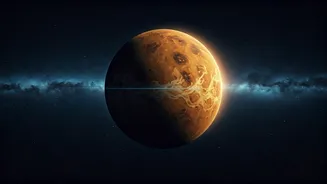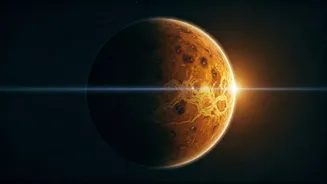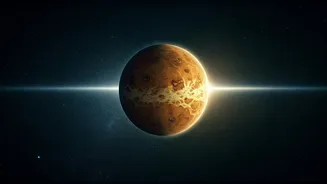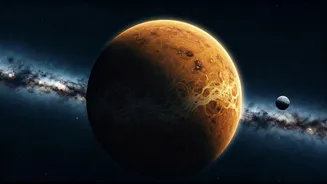



A Day Longer Than a Year
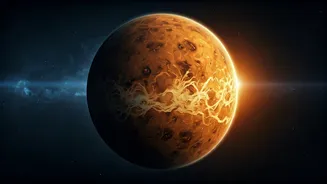
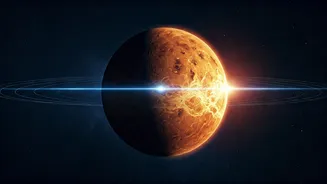
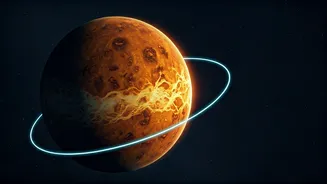
Let’s get the mind-bending numbers out of the way first. A 'year' is the time it takes for a planet to complete one full orbit around the Sun. For Venus, this journey takes about 225 Earth days. A 'day' is the time it takes for a planet to complete one full rotation
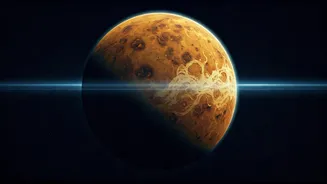
on its own axis. On Earth, that’s 24 hours. On Venus, it’s a staggering 243 Earth days. So yes, you read that right: Venus completes an entire trip around the Sun in less time than it takes for it to spin around just once. If you could stand on its surface, you would celebrate your New Year's Day before the first day was even over. This makes Venus the only planet in our solar system with a day longer than its year.
The Slow, Backward Spin
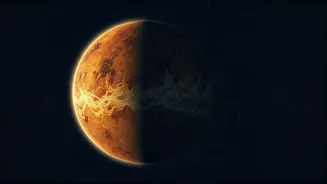
The strangeness doesn’t stop there. Almost every planet in our solar system, including Earth, spins on its axis in a counter-clockwise direction. If you look down from above the North Pole, you’d see the planet turning left. This is called prograde rotation. Venus, however, does the opposite. It spins clockwise, a motion known as retrograde rotation. This means that on Venus, the Sun would appear to rise in the west and set in the east. The combination of this incredibly slow rotation and its backward direction creates a truly alien sense of time. While its rotational period (a sidereal day) is 243 Earth days, the time from one sunrise to the next (a solar day) is about 117 Earth days. So you’d experience roughly two sunrises for every full year on the planet.
Why Is Venus So Weird?
Scientists don't have a single, definitive answer for Venus’s peculiar rotation, but there are two leading theories. The first involves a colossal impact. Early in the solar system's chaotic history, a massive asteroid or protoplanet could have slammed into Venus, either drastically slowing its original spin or even flipping it upside down. If it was flipped, its spin would appear retrograde from our perspective. The second theory points to Venus’s incredibly thick and heavy atmosphere. This dense blanket of carbon dioxide, 90 times thicker than Earth’s, might have created powerful atmospheric tides. Over billions of years, the gravitational pull of the Sun on this bulky atmosphere could have generated enough friction to slow the planet's rotation to its current crawl and eventually reverse it.
Earth’s Twisted Sister Planet
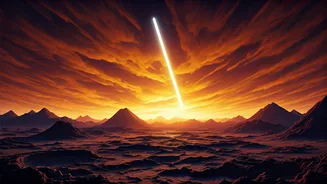
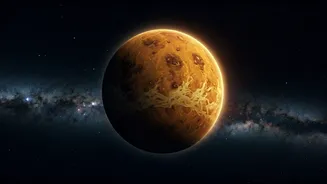
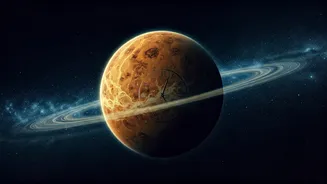
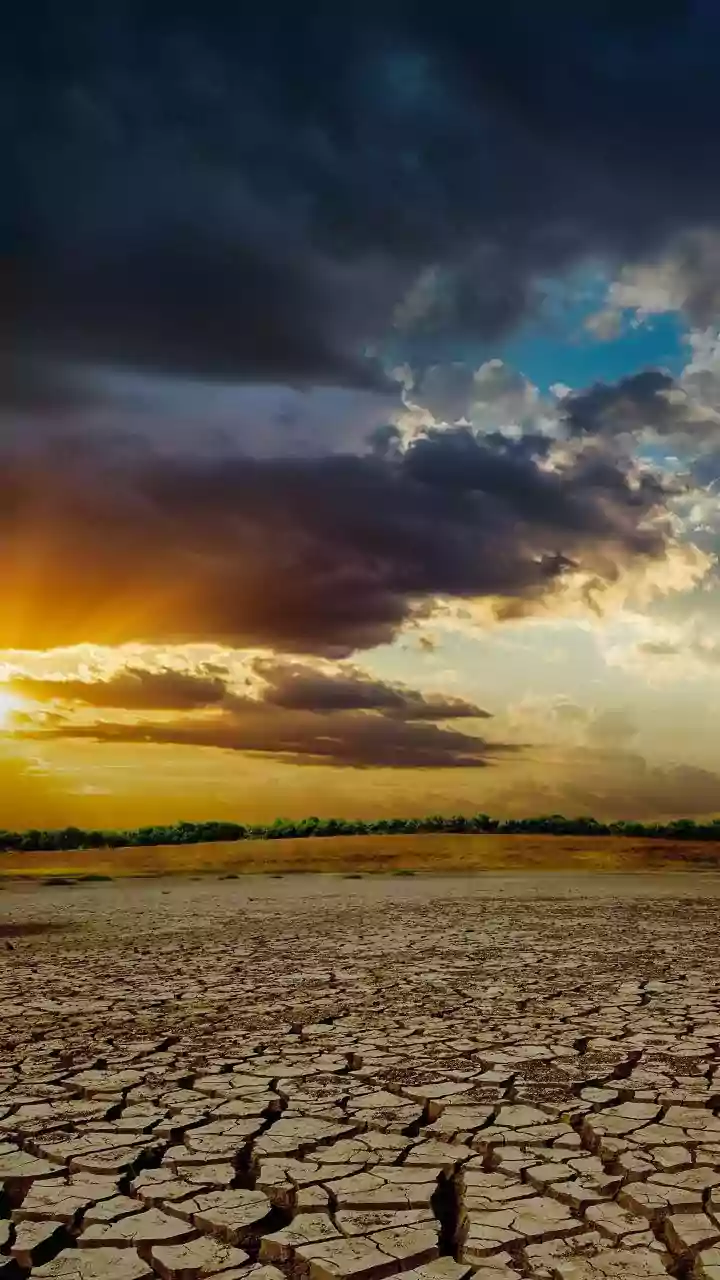
Venus is often called Earth’s 'sister planet' because of its similar size and mass. But that's where the family resemblance ends. The slow day is just one feature of its hellish landscape. This sluggish rotation might have contributed to the planet’s runaway greenhouse effect. Without a faster spin, Venus couldn't generate a protective magnetic field like Earth's. This left its atmosphere vulnerable to the solar wind, which stripped away its water over billions of years. Today, the surface temperature on Venus is a scorching 465°C—hot enough to melt lead. The atmospheric pressure is over 90 times that of Earth at sea level, equivalent to being a kilometre deep in our ocean. Add clouds of sulfuric acid, and you have a world that is anything but hospitable.