








The Power of a Caretaker Prime Minister
In the Israeli system, when a government falls or an election fails to produce a new coalition, the outgoing administration doesn't simply disappear. It becomes a 'caretaker government', continuing to run the country until a new one is sworn in. Legally,
this government retains all the powers of a permanent one. It can manage state affairs, conduct foreign relations, and even make critical security decisions. However, there's a significant catch. Supreme Court rulings have established that a caretaker government must act with 'restraint' because it lacks a fresh democratic mandate from the Knesset, Israel's parliament. This means it should avoid making major, long-term policy decisions unless there is a pressing, unavoidable need. Despite this, the exception is often made for urgent security matters, giving a caretaker prime minister considerable leeway to act in a crisis.
A Fractured Political Landscape
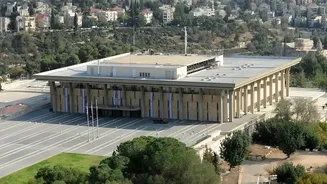
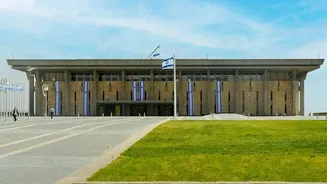
The recent election on October 27, 2026, left the Knesset deeply divided, continuing a cycle of political instability that has plagued the country for years. Neither of the main political blocs secured the 61 seats needed for a majority in the 120-seat parliament. The bloc of parties supporting Netanyahu won around 53 seats, while a rival bloc of opposition parties, led by former military chief Gadi Eisenkot, secured about 48 seats. The remaining 19 seats went to Arab-led parties, who have become potential kingmakers but face opposition from factions in both blocs. This deadlock is a reflection of a society split between those who want Netanyahu to remain in power—often called the 'only Bibi' camp—and those determined to see him replaced, the 'anyone but Bibi' camp.
The High-Stakes Negotiation Process
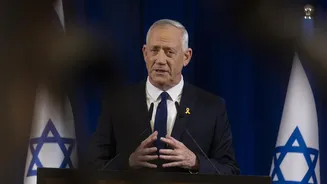
Following the election, President Isaac Herzog tasked Gadi Eisenkot, not Netanyahu, with the challenge of forming a government, as he was deemed to have a viable path to a coalition. Eisenkot was given 28 days, with a possible 14-day extension, to build a majority. This has kicked off a frantic period of horse-trading. Eisenkot's path is complicated. One option is a 'national unity' government with Netanyahu's Likud party, but this has stalled over the crucial question of who would be prime minister. Another path is forming a minority government with other opposition parties, relying on outside support from Arab-led parties to survive key votes. This is a controversial option for some of Eisenkot's potential right-wing partners. Meanwhile, Eisenkot is also negotiating with ultra-Orthodox parties, who have their own specific demands regarding military service exemptions and funding for religious institutions.
Three Possible Scenarios for Israel
As the clock ticks on Eisenkot's mandate, three primary outcomes are possible. The first is that he succeeds in cobbling together a coalition—either a broad unity government with Likud or a narrow minority government—and replaces Netanyahu. The second is that he fails. If that happens, the president could then give Netanyahu a chance to form a government, or a majority of 61 Knesset members could recommend another candidate. The third, and increasingly likely, scenario is that no one can form a government. In that case, the Knesset would dissolve, and Israel would head to yet another election, likely in early 2027, with Netanyahu remaining as caretaker Prime Minister in the interim. This would prolong the political instability at a time when Israel faces significant domestic and international challenges.