

A Tradition of Colour
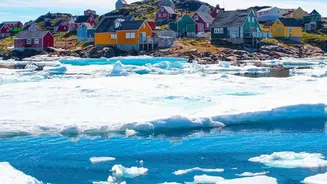
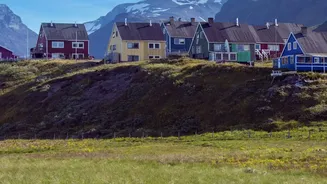
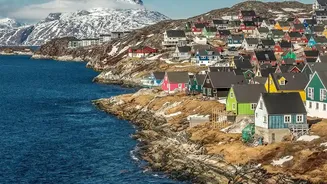
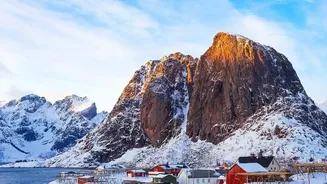
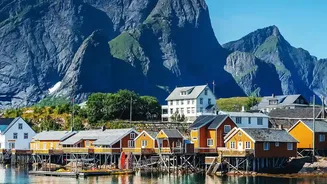
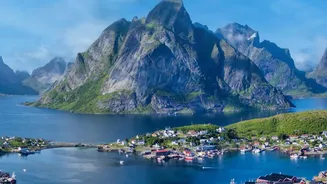
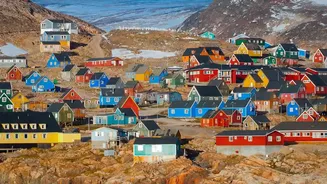
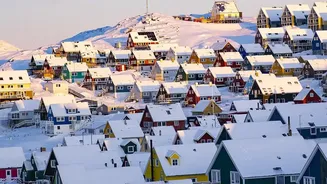
The rainbow of houses lining Greenland's coast is more than just a cheerful sight; it's a living tradition. The practice dates back to the colonial era, when colours were used as a practical code to identify a building's function. Red was often for churches,
schools, or trade buildings, while yellow signified hospitals and the homes of medical staff. Green was for telecommunications or power plants, blue for fish factories, and black for police stations. While homeowners are no longer bound by this system, the love for bright, bold colours persists, adding a layer of warmth and identity to the towns that stand against the stark, majestic Arctic environment. It's a visual language that brings life and joy to the long, white winters.
Ilulissat: City of Icebergs
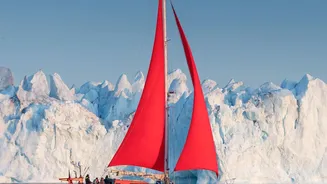
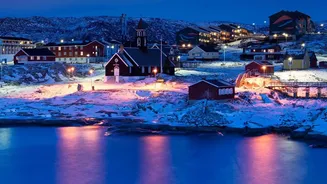
Ilulissat, Greenland's third-largest town, is arguably its most famous, and for good reason. Its name means 'Icebergs' in Greenlandic, and it sits at the mouth of the UNESCO World Heritage-listed Ilulissat Icefjord. Here, colossal mountains of ice calve from one of the world's most active glaciers, filling the fjord and drifting out into Disko Bay. The colourful houses of the town create a stunning contrast with the pale blues and whites of the floating giants. Visitors can hike along well-marked trails for breathtaking views, take boat tours to get up close to the icebergs, or explore the area's human history at the Sermermiut settlement, which has been inhabited for 4,500 years. The modern Icefjord Centre, which opened in 2021, offers deep insights into the science and culture of the region.
Qaqortoq: The Artistic Southern Hub
As the largest town in South Greenland, Qaqortoq is a hub of culture, education, and art. Its name means 'The White Palace', but the town itself is a canvas of colour. Perched on a hillside around a natural harbour, its buildings are a cheerful mix of bright hues. Qaqortoq is home to Greenland's only public fountain and a charming town square surrounded by historic colonial-era buildings, including the local museum. What truly sets the town apart is the 'Stone and Man' project, an open-air art installation featuring over 40 sculptures carved into the town's granite bedrock by various artists. The surrounding area offers access to the stunning Hvalsey Church Ruin, a well-preserved Norse site, and the Uunartoq hot springs, where you can bathe in naturally warm water while icebergs float by in the nearby fjord.
Kulusuk: Gateway to the Remote East
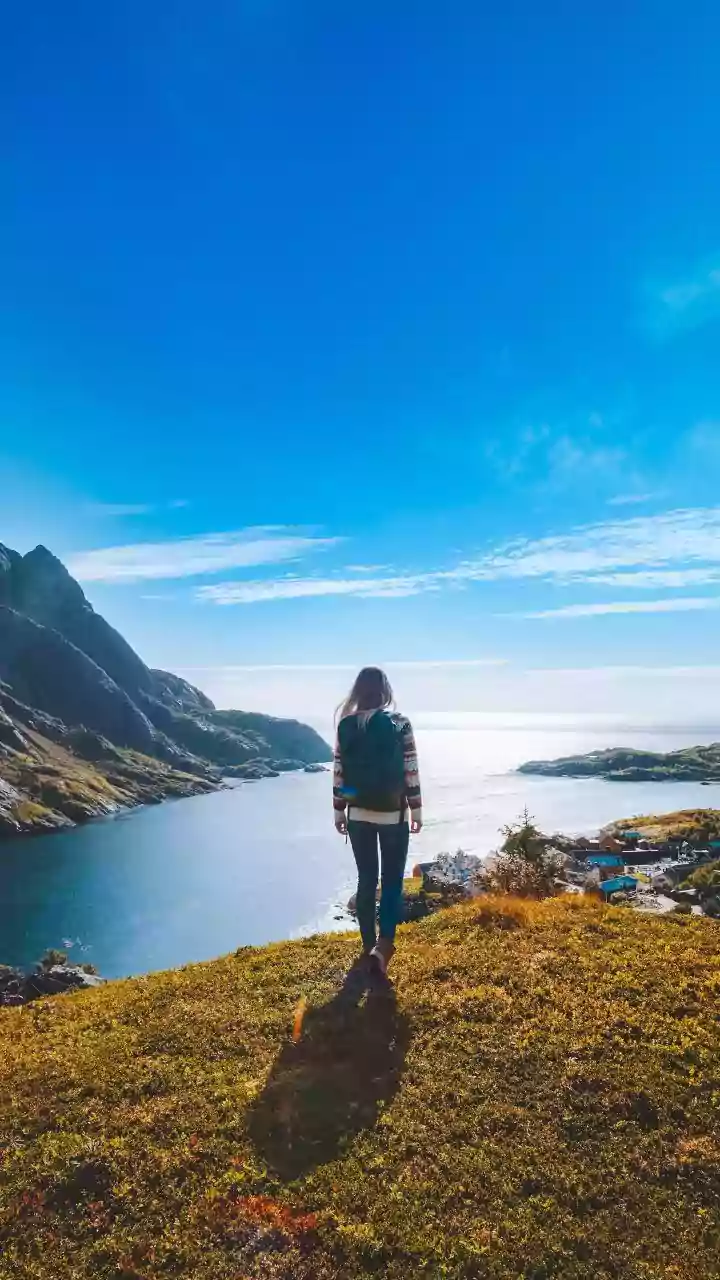
For a glimpse into a more remote and traditional way of life, Kulusuk serves as the gateway to East Greenland. This small settlement of around 250 people is located on a rocky island surrounded by jagged peaks and ice-filled waters. Life here is still closely tied to hunting and fishing. The brightly painted wooden houses offer a warm welcome to visitors arriving at the island's international airport, which connects this isolated region to the outside world. Kulusuk is a place to experience authentic local culture, from drum dancing and storytelling to seeing artisans carve intricate figures. The surrounding nature is the main attraction, with opportunities for iceberg cruises, glacier hikes, and dog sledding in the winter.
Nuuk: A Capital of Contrasts
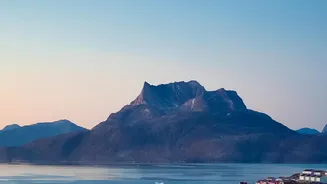
As Greenland's capital and largest city, Nuuk offers a fascinating blend of old and new. Modern architecture, like the Katuaq cultural centre, stands alongside the traditional, colourful houses of the colonial harbour, where the city was founded in 1721. Strolling through neighbourhoods like Myggedalen ('Mosquito Valley') reveals rows of picturesque, multi-coloured homes set against the dramatic backdrop of the iconic Sermitsiaq mountain. Despite its status as a growing urban centre, Nuuk is deeply connected to nature. The vast Nuuk Fjord system, the second-largest in the world, begins at the city's edge, offering incredible opportunities for boat tours, fishing, and hiking. The Greenland National Museum provides a deep dive into 4,500 years of the island's history, including the famous Qilakitsoq mummies.