





A top AI executive predicts that diseases like cancer could be relics of the past within a decade, thanks to artificial intelligence. This bold claim has sparked both excitement and skepticism. So, what’s the story behind the headline?
The Bold Prediction
The claim comes
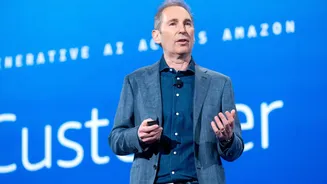
from Dario Amodei, the CEO of Anthropic, a major player in the AI industry and developer of the AI model Claude. In a video released in November 2026, Amodei suggested that AI's ability to accelerate biological research could lead to cures for major diseases like cancer, Alzheimer's, and heart disease in less than a decade. He envisions an 'age of miracles' where AI helps solve problems that have eluded scientists for generations. Amodei's confidence stems from the idea that AI can analyze massive datasets, form hypotheses, and identify promising treatments far faster than traditional methods. This isn't a one-off comment; he has previously argued that AI could help cure most diseases within a 5-to-10-year window. This places him alongside other tech leaders, like Google DeepMind's CEO, who believe AI is on the cusp of revolutionizing medicine.
AI's Current Role in Oncology
To understand this future-facing claim, it's important to see how AI is already impacting cancer care today. Artificial intelligence is not a new concept in oncology; it's an increasingly powerful tool for doctors and researchers. One of its primary uses is in medical imaging. AI algorithms can analyze CT scans, MRIs, and mammograms, often detecting subtle patterns or early-stage tumors that might be missed by the human eye. This leads to earlier and more accurate diagnoses, which is critical for successful treatment. Beyond detection, AI assists in classifying cancer subtypes from pathology slides and can help predict how a tumor might behave. These applications don't replace doctors but act as a powerful support system, enhancing their ability to make quick and informed decisions while reducing the burden of repetitive tasks.
From Diagnosis to Drug Discovery
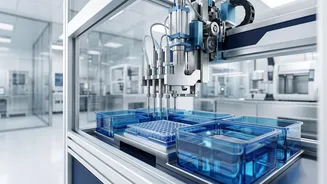
The heart of Amodei's prediction lies in AI's potential to revolutionize drug discovery and personalized medicine. Traditionally, finding a new drug is a decade-long, billion-dollar process of trial and error. AI promises to dramatically shorten that timeline. By processing vast amounts of genetic and molecular data, AI can identify new drug targets, predict how different compounds will interact with cancer cells, and even design entirely new molecules from scratch. This allows researchers to move from screening millions of compounds to testing a small number of highly promising candidates. Companies are already partnering with AI firms like Anthropic to speed up this process. For example, AI has helped design improved versions of cell therapies and identified drug candidates that bind more effectively to cancer cells. This shift towards 'precision oncology' means creating tailored treatments based on a patient's specific genetic makeup, improving effectiveness and reducing side effects.
Optimism vs. Reality
While the potential is undeniable, many experts urge caution regarding the ten year timeline. Critics, including physicians and biotech executives, have called the prediction 'impossible' and overly ambitious, suggesting it is more about generating IPO hype than medical reality. They point out that even if AI can identify a promising drug candidate in weeks, that molecule must still undergo years of rigorous and expensive clinical trials to prove its safety and efficacy in humans. The biological complexity of cancer—which is not one disease but hundreds—presents another massive hurdle. Furthermore, significant challenges remain in implementing AI in healthcare, including issues of data privacy, algorithmic bias, regulatory compliance, and the 'black box' problem, where it is not always clear how an AI reached its conclusion. Gaining the trust of clinicians and integrating these new tools into existing hospital systems are also major obstacles.