


Capturing the Fireball on Camera
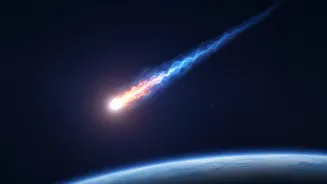
The first and most crucial step in tracing a meteor is to see it from multiple angles. Scientists rely on networks of specialized cameras to do this. Organizations like NASA's All Sky Fireball Network and the global CAMS and GMN projects have hundreds
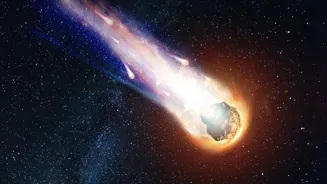
of cameras that constantly watch the night sky. These aren't just single observatories; they are vast, often continent-spanning networks that can include contributions from professional and amateur astronomers alike. When a meteor appears, the goal is to have at least two, and ideally more, cameras record its fiery passage through the atmosphere. This provides the raw data needed for the next step: creating a 3D model of its path.
Cosmic Geometry and Triangulation
With observations from different locations, researchers can use a method called triangulation. By comparing the meteor's position against the backdrop of distant stars from each viewpoint, they can calculate its precise trajectory, altitude, and speed as it enters Earth's atmosphere. Think of it like pointing at a bird from two different spots in a field; by combining your lines of sight, you can pinpoint its exact location in the air. Automated software now helps process the image data from multiple stations to reconstruct the atmospheric flight path with incredible accuracy. This calculation reveals how fast the meteoroid was travelling and the angle at which it hit the atmosphere, which are essential pieces of the puzzle.
Calculating the Original Orbit
Once scientists have determined the meteor's velocity and trajectory just before it entered our atmosphere, they can effectively rewind the clock. They use this data as a starting point to calculate the object's original path around the Sun. This process involves complex calculations that account for Earth's gravitational pull, which alters the meteoroid's path as it approaches. The result is a precise heliocentric orbit—the unique elliptical path the object followed through the solar system before its dramatic encounter with Earth. This orbit acts like a cosmic address, providing a powerful clue about where the meteoroid came from.
Finding the Parent Body
With the orbit calculated, the final step is to play cosmic matchmaker. Astronomers compare the meteoroid's orbit with the known orbits of asteroids and comets. Most meteorites are fragments of asteroids from the main asteroid belt between Mars and Jupiter. If the calculated orbit of the meteoroid closely matches that of a known asteroid, scientists can confidently identify it as the 'parent body'. For example, data from NASA's Dawn mission has strongly linked a whole class of meteorites (the HED group) to the giant asteroid Vesta. In rare cases where a meteorite survives the fall and is recovered, its chemical composition can be analyzed. This provides another layer of evidence, as trapped gases or specific mineral ratios can be matched to the known geology of places like Mars or the Moon.