







Waterproof vs. Water-Resistant: The Core Difference
The first step in choosing a reliable raincoat is understanding terminology. "Water-resistant" and "waterproof" are often used interchangeably, but they represent very different levels of protection. A water-resistant jacket can handle light drizzle for
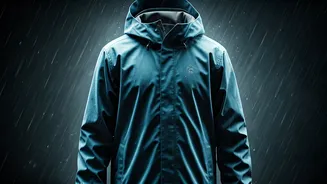
a short period. Its fabric is tightly woven, making it difficult for water to penetrate, and it often has a water-repellent coating. However, in sustained rain, it will eventually soak through. A genuinely waterproof jacket, on the other hand, provides a complete barrier to water. This is achieved through advanced fabric technology and construction methods designed to keep you dry even in a heavy, prolonged storm. For true protection against a serious downpour, waterproof is non-negotiable.
Decoding Fabric Technology and Ratings
The heart of a waterproof jacket is its fabric. Most high-quality raincoats use a multi-layer system. The outer layer is typically a durable fabric treated with a Durable Water Repellent (DWR) finish. This coating makes water bead up and roll off the surface, preventing the outer fabric from becoming saturated—a phenomenon known as 'wetting out'. Beneath this lies a waterproof, breathable membrane or coating, the component that does the heavy lifting. Technologies like GORE-TEX, eVent, and other proprietary membranes contain microscopic pores that are too small for water droplets to pass through from the outside, but large enough to allow sweat vapour to escape from the inside. The waterproof capability is measured by a Hydrostatic Head (HH) test, rated in millimetres (mm). A rating of 5,000mm is a starting point, but for serious rain, you should look for jackets rated at 10,000mm or higher. For extreme conditions, ratings can go up to 20,000mm and beyond.
The Unsung Heroes: Seams and Zippers
A waterproof fabric is useless if water can sneak in through the weak points. Stitching a jacket creates thousands of tiny holes where water can penetrate. That's why quality rainwear features "seam sealing." This means the seams are covered with waterproof tape on the inside to block any leaks, a feature that is essential for a jacket to be considered fully waterproof. Similarly, zippers are a common failure point. Standard zippers have gaps between the teeth that water can easily get through. High-quality raincoats solve this with water-resistant zippers, which often feature a polyurethane coating or a rubberised seal to block moisture. Some jackets use a "storm flap," an extra flap of fabric that covers the zipper as an additional line of defence. Without sealed seams and protected zippers, even the most advanced fabric will fail in a downpour.
Breathability: Staying Dry from the Inside Out
Staying dry isn't just about keeping rain out; it's also about letting sweat escape. If a jacket isn't breathable, moisture from your body gets trapped inside, leaving you feeling clammy and wet, as if the jacket leaked. This is why breathability is just as crucial as waterproofness, especially if you're active. Breathability is measured by its Moisture Vapour Transmission Rate (MVTR), expressed in grams per square meter per 24 hours (g/m²/24h). The higher the number, the more breathable the fabric. For casual use, a rating around 5,000g/m²/24h might suffice. For more strenuous activities like hiking, look for ratings of 10,000g/m²/24h to 20,000g/m²/24h or higher to ensure your sweat can evaporate effectively, keeping you comfortable.
Smart Features That Make a Difference
Beyond the technical specifications, practical design features separate a great raincoat from a merely adequate one. A well-designed hood is crucial; it should be adjustable to offer a snug fit that turns with your head and doesn't block your peripheral vision. A stiff brim can also help keep rain off your face. Adjustable cuffs, typically with Velcro tabs, allow you to seal out wind and rain at your wrists. Similarly, a drawcord at the hem can prevent water from splashing up from below. Finally, consider the pocket design. Are they positioned where a backpack hip belt might cover them? Do they have waterproof zippers or storm flaps to protect your belongings? These thoughtful details contribute significantly to your overall comfort and protection when the weather turns serious.