




The New Space Race Is Commercial
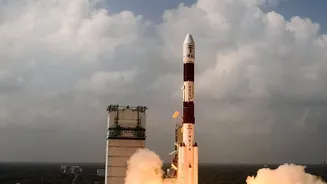
For decades, space was the exclusive domain of government agencies. Today, a radical shift is underway. India's space ecosystem is experiencing a massive boom, driven by the landmark Indian Space Policy of 2023. This policy officially opened the doors
for private companies to design, build, and launch their own space hardware. The government established the Indian National Space Promotion and Authorisation Centre (IN-SPACe) to act as a facilitator, helping startups access ISRO's world-class facilities and expertise. The result has been a gold rush of investment, with funding for the sector crossing $871 million across more than 285 companies. This policy shift allows ISRO to focus on pioneering research and deep space exploration, while private players handle commercial manufacturing and services.
Lessons from a Lunar Pioneer
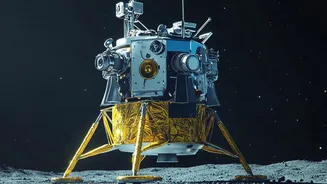
The ambition to send a private Indian rover to the Moon is not entirely new. A decade ago, Bengaluru-based TeamIndus captured the nation's imagination as a finalist in the Google Lunar XPrize, a global competition to land a privately-funded rover on the Moon. Backed by prominent Indian business leaders, the startup aimed to land its rover by 2018. While they successfully developed and demonstrated their landing technology, the team ultimately could not overcome the immense financial and logistical hurdles to meet the competition's deadline. The story of TeamIndus serves as both an inspiration and a cautionary tale; it proved that the engineering talent existed in India but highlighted that funding and commercial viability were the true final frontiers.
The Next Generation of Moon-Chasers
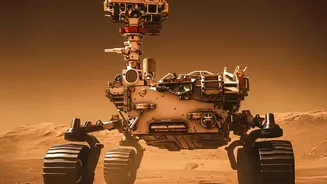
Today, a new and more robust ecosystem is taking shape. While many startups focus on satellites and launch vehicles, the expertise for developing lunar hardware is being cultivated within them. A prime example is Kepler Aerospace, a Bengaluru startup that recently raised $8 million for its satellite projects. Significantly, one of its co-founders, Kiran Sharma, previously worked on a lunar nano-rover project at a European university. This demonstrates a crucial trend: experienced talent, including former ISRO scientists, is flowing into the private sector, bringing with them the specialised knowledge required for complex missions. These new companies are building the foundational technologies—from propulsion systems to autonomous navigation—that are the essential building blocks for any future rover.
The 'Frugal Innovation' Advantage
India's key differentiator on the global stage is its proven ability in 'frugal innovation'—delivering high-tech solutions at a fraction of the cost. This is the playbook Indian space startups are adopting. The 'low-cost' in their rover designs doesn't imply low quality. Instead, it comes from extreme capital efficiency, innovative local manufacturing, and the ability to build reliable systems without the overheads of legacy space players in other countries. This cost-competitiveness is a powerful advantage in the emerging market for commercial space services. As international agencies and private companies plan missions to the Moon for resource prospecting, scientific research, and technology demonstrations, they will be looking for partners who can deliver mission-critical hardware affordably. Indian startups are positioning themselves to be the go-to suppliers.