






The Core Idea: Redefining Flow
The magic of layout restructuring isn't about breaking down walls; it's about reimagining the flow and function of your home. A premium look is often synonymous with a sense of order, space, and intentional design. By strategically guiding the eye and creating
distinct functional zones, you can make even a compact apartment feel expansive and thoughtfully planned. The first step is to declutter. A clean, organised space is the foundation upon which a high-end aesthetic is built. Luxury is rarely associated with clutter, so removing unnecessary items and ensuring everything has its place allows each design choice to breathe and make an impact.
Use Furniture to Create Zones
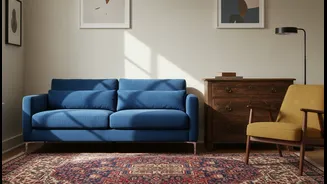
One of the most powerful damage-free tools is your own furniture. Instead of pushing everything against the walls, which can create a static and uninviting 'hall' effect, try 'floating' your furniture. Pull your sofa away from the wall and place a console table behind it. Arrange an armchair and a side table to form a distinct conversation nook. A strategically placed area rug can anchor a living space, visually separating it from a dining area within the same open-plan room. This technique carves out functional zones, making a single room serve multiple purposes with elegance and clarity, much like a well-designed luxury suite.
Smart Partitions for Separation
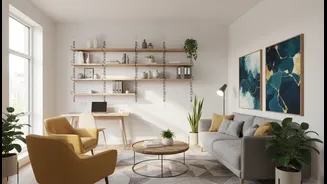
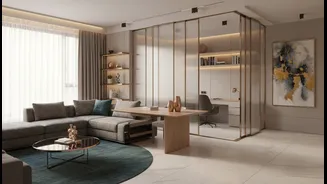
To take zoning a step further, consider non-permanent partitions. These are rental-friendly solutions that create physical and visual separation without a single nail. Options range from elegant folding screens and traditional wooden jaali dividers to modern, open-backed shelving units. An open bookshelf, for instance, can separate a workspace from your living area while still allowing light to pass through, maintaining a sense of openness. You can also use curtains hung from the ceiling on a simple track to cordon off a sleeping area in a studio apartment, adding a layer of softness and privacy.
Layered Lighting as a Design Tool
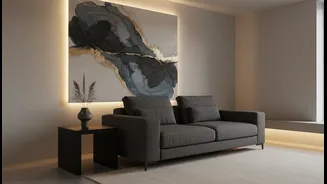
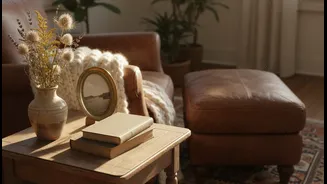
Never underestimate the power of good lighting, which is often a major differentiator between a standard flat and a premium one. Most rental homes rely on harsh, single-source overhead lighting. To create a high-end look, you need to layer your lights. This involves combining three types: ambient (overall illumination, like a stylish ceiling fixture), task (focused light for activities, like a reading lamp or under-cabinet lights), and accent (to highlight artwork or architectural features). Using a combination of floor lamps, table lamps, and even plug-in wall sconces adds depth, warmth, and sophistication, allowing you to highlight the zones you've created.
Mirrors and a Cohesive Palette
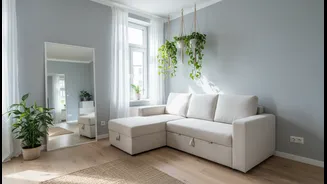
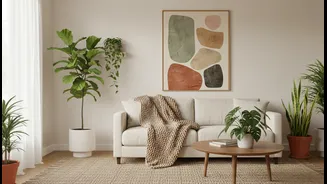
Mirrors are a classic tool for a reason: they are masters of illusion. A large, well-placed mirror can visually double the size of a room, bounce light into dark corners, and act as a piece of statement art. Consider leaning a full-length mirror against a wall in a narrow hallway or hanging a large one opposite a window to maximize natural light. To tie everything together, stick to a cohesive colour palette. A controlled palette of neutrals—like beiges, greys, and off-whites—with one or two accent colours creates visual harmony that makes a space feel intentional and expensive, even if the individual elements are not.