




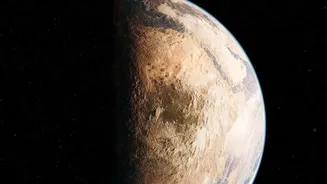
A Glimpse Into an Alien Sky
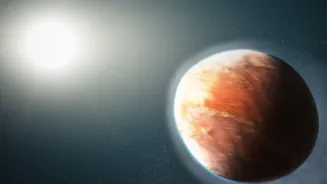
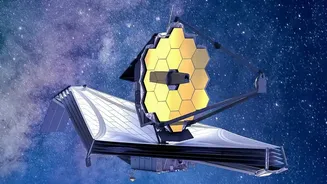
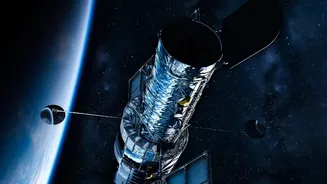
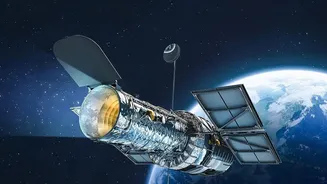
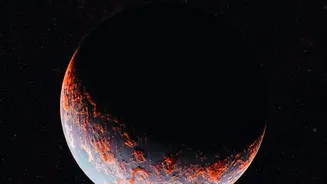
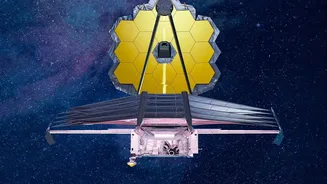
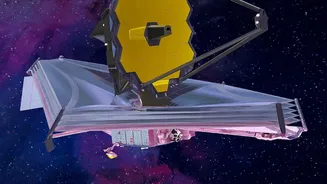
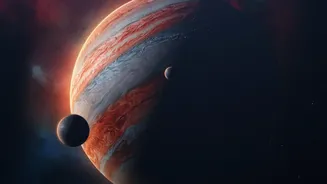
Some 120 light-years from Earth, in the constellation Leo, orbits an exoplanet named K2-18 b. This world, roughly 8.6 times the mass of our own planet, has become a focal point for astronomers. Using the unprecedented power of the James Webb Space Telescope
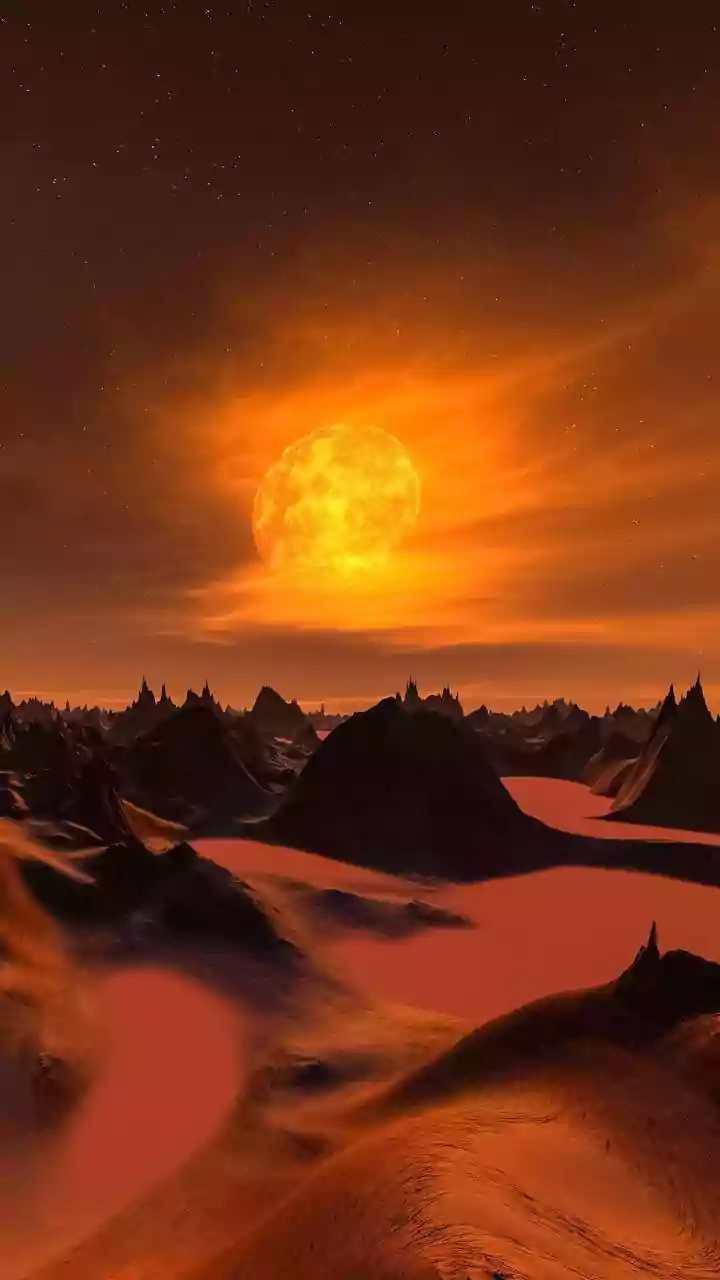
(JWST), an international team of scientists has confirmed the presence of both methane and carbon dioxide in its atmosphere. The detection of carbon-based molecules is a monumental step, as carbon is a fundamental building block of life as we know it. These findings give us the most detailed look yet into the atmospheric makeup of a planet residing in the habitable zone of its star—the region where conditions could be just right for liquid water to exist on its surface.
How Telescopes Read Distant Atmospheres
Detecting gases on a world trillions of kilometres away is a remarkable feat of technology and ingenuity. Astronomers achieved this using a technique called transmission spectroscopy. As K2-18 b passed in front of its cool dwarf star, the JWST carefully analyzed the starlight that filtered through the planet's atmospheric fringe. Different gas molecules absorb specific wavelengths of light, leaving a unique chemical 'fingerprint' in the star’s spectrum. By decoding these signatures, scientists could confidently identify the presence of methane and carbon dioxide. This method essentially allows the telescope to 'smell' the chemical composition of a far-off world, transforming a tiny point of light into a subject of detailed chemical analysis.
A Potential 'Water World'?
The combination of methane and carbon dioxide, along with a notable lack of ammonia, has led scientists to a tantalizing hypothesis: K2-18 b could be a 'Hycean' world. This theoretical class of planet is defined by a hydrogen-rich atmosphere and a surface entirely covered by a vast liquid water ocean. For years, the search for extraterrestrial life has focused on smaller, rocky, Earth-like planets. However, Hycean worlds like K2-18 b are now considered highly promising candidates because their thick atmospheres are easier to observe. The chemical mix detected by the JWST is consistent with predictions for a planet that hosts a massive ocean, opening up the thrilling possibility of a water-rich environment far beyond our solar system.
The Chemical Fingerprints of Life?
While the presence of carbon is exciting, the JWST data hinted at something even more profound: a possible trace of dimethyl sulfide (DMS). This is significant because, on Earth, DMS is a substance that is only known to be produced by life, primarily by phytoplankton in marine environments. The combination of methane and carbon dioxide with a possible DMS signal on a potential ocean world is exactly what some models predict a living planet might look like. However, scientists are exercising extreme caution. The DMS signal is not yet definitive and requires further validation. If confirmed, it would be the strongest indicator of biological activity found beyond Earth to date, but for now, it remains a compelling question mark.
Not Aliens Yet: The Road Ahead
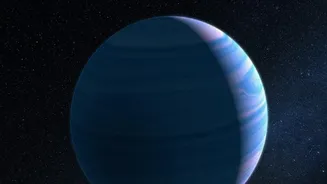
It is crucial to stress that this discovery is not proof of alien life. The Hycean world model is a leading interpretation, but other scientists suggest K2-18 b could be a gaseous 'mini-Neptune' with high-pressure conditions and no habitable surface. Furthermore, even if there is an ocean, the observed gases could potentially be produced by unknown geological or chemical processes that don't involve life. The next step is for astronomers to conduct follow-up observations with the JWST. They will aim to confirm the DMS signal and search for other biosignature gases. Each new piece of data will help refine the models and paint a clearer picture of whether K2-18 b is a sterile gas giant or a living, breathing ocean world.