







The New Age of Travel
Millennials and Gen Z are redefining travel in India. Instead of one long annual holiday, many prefer shorter, more frequent weekend trips to explore new cities, attend cultural events, or simply escape the daily grind. This trend, however, often clashes
with a significant financial hurdle: accommodation. A decent hotel for two nights in a popular city can easily consume a major chunk of a weekend travel budget, forcing many to either compromise on quality or cut their trips short. This dilemma has created a demand for smarter travel solutions that maximise both time and money, allowing for exploration without the financial strain.
A Train That Doubles as a Hotel
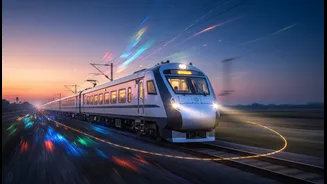
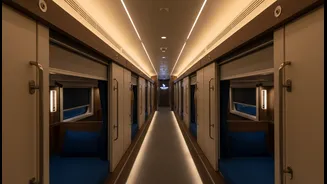
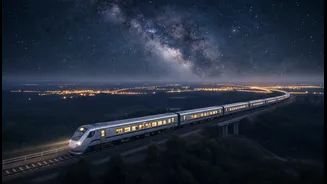
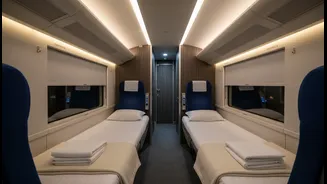
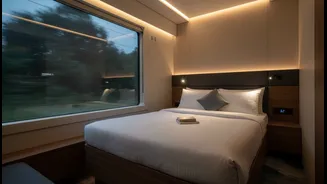
Enter the Vande Bharat sleeper, Indian Railways' modern answer to overnight travel. Launched in early 2026, these trains are specifically designed to connect cities between 800 and 1,200 kilometres apart — the perfect distance for an overnight journey. Unlike their chair-car counterparts, these are full-fledged sleeper trains with AC First, Second, and Third-tier coaches, allowing passengers to travel comfortably through the night and wake up in their destination city. By departing in the evening and arriving in the morning, the train essentially functions as a mobile hotel, completely eliminating the need and cost for one night's stay. This simple switch in travel mode is proving to be a revolutionary concept for weekend warriors.
Your Guide to Overnight Routes
The Vande Bharat sleeper network is expanding rapidly, already connecting several major hubs perfect for a quick getaway. The inaugural service, which started in January 2026, connects Howrah (Kolkata) with Kamakhya (Guwahati), a boon for those looking to explore the Northeast. More recently, in July 2026, a new route was launched connecting the spiritual city of Varanasi with Chheharta near Amritsar, linking two of North India’s most iconic destinations. Beyond these, services are operational on high-demand corridors like Delhi-Mumbai, Delhi-Kolkata, and Mumbai-Chennai. With more routes, such as the highly anticipated Bengaluru-Mumbai line, expected to launch soon, the options for an affordable weekend trip are growing every few months.
The Financial Advantage
The primary appeal of the overnight Vande Bharat is the direct and substantial cost saving. Let's break it down. A ticket on a Vande Bharat sleeper is priced competitively, often just 10-15% more than a similar class on a Rajdhani Express. For example, fares on the first sleeper route were estimated to be between ₹2,300 and ₹3,600. Now, compare that to the cost of a mid-range hotel in a city like Varanasi or Amritsar, which can easily range from ₹3,000 to ₹5,000 per night. By choosing the train for your Friday night travel, you arrive on Saturday morning having saved that entire hotel expense. For a solo traveller or a couple, this can mean saving anywhere from ₹3,000 to over ₹5,000 on a single two-day trip, money that can be spent on food, experiences, and sightseeing instead.
More Than Just Saving Money
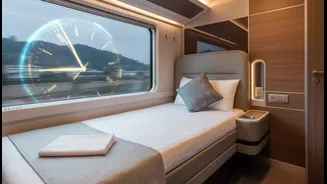
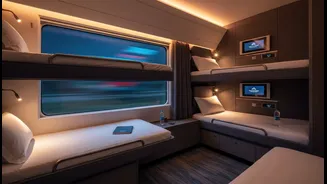
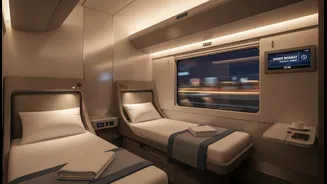
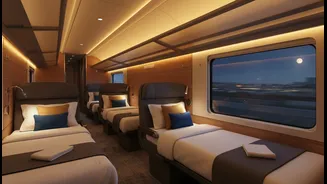
While the financial benefit is compelling, the advantages of the Vande Bharat sleeper extend further. Firstly, it saves precious time. Instead of spending a whole day on a bus or in a chair-car train, you travel while you sleep, effectively adding a full day to your itinerary. You arrive in the morning feeling fresh and ready to explore, rather than tired from a long day's journey. Secondly, the experience itself is a significant upgrade. These modern trainsets offer enhanced comfort with wider berths, personal reading lights, and charging points for every passenger. Features like automatic doors, bio-vacuum toilets, and superior ride quality make the journey smoother and more pleasant than on older sleeper trains, making it a premium experience without a hefty price tag.