





How Forecasts Traditionally Work
For decades, weather prediction has been the domain of massive supercomputers running Numerical Weather Prediction (NWP) models. These systems use the laws of physics—equations governing fluid dynamics and thermodynamics—to simulate the atmosphere's future
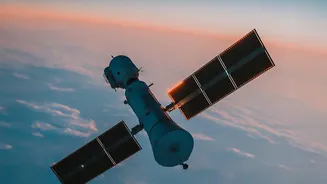
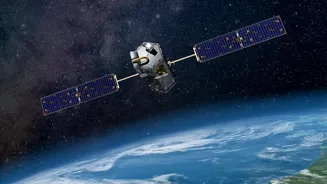
state. They start with current observations from satellites, weather balloons, and ground stations, and then crunch the numbers to project conditions forward. While incredibly powerful, these physics-based models are computationally intensive, often taking hours to produce a single forecast on vast supercomputers. This process has been the gold standard, but it has its limits in speed and resolution.
The AI Revolution in Meteorology
Artificial intelligence is changing the game entirely. Instead of solving complex physics equations from scratch, AI models like Google's GraphCast and Nvidia's FourCastNet learn from data. They are trained on decades of historical weather data, allowing them to recognize complex patterns that lead to specific weather outcomes. The result is a dramatic leap in efficiency. An AI model can generate a 10-day forecast in under a minute on a single machine, a task that takes a supercomputer hours. This speed allows for the creation of large 'ensemble' forecasts—running many variations to gauge probabilities—which was previously too costly and time-consuming.
What AI Does Best: Speed and Scale
The primary advantage of AI is its incredible speed and ability to process vast datasets. Models like GraphCast have shown they can outperform the top traditional models in medium-range forecasting (3-10 days) on a majority of metrics. They have demonstrated remarkable skill in predicting the tracks of large-scale systems like hurricanes, sometimes days earlier than conventional methods. AI also excels at 'nowcasting,' predicting immediate conditions like rainfall in the next 90 minutes. By identifying subtle signals across immense amounts of data, AI cuts through the noise, providing forecasters with a powerful first draft of what's to come.
The Irreplaceable Human Meteorologist
Despite these advances, AI is not a silver bullet. Its biggest weakness is that it learns from past data. This makes it less reliable for predicting unprecedented or record-breaking extreme weather events, which are becoming more common. Studies have shown AI models can underestimate the intensity of extreme heatwaves or cold spells because they lack historical examples. Furthermore, AI can sometimes produce physically unrealistic results or 'hallucinate' storm structures that aren't quite right. This is where human expertise becomes critical. Meteorologists provide local knowledge, spot when a model's output seems physically impossible, and interpret the data with nuance and judgment. Their role is shifting from data cruncher to expert interpreter and risk communicator.
A Powerful Partnership for the Future
The future of weather forecasting isn't a battle of AI versus humans, but a deep collaboration. The most effective approach combines the strengths of both: AI's speed and pattern-recognition with the critical thinking and real-world experience of human forecasters. In this 'human-in-the-loop' model, AI systems generate rapid, data-driven forecasts. Human meteorologists then analyze, verify, and refine these outputs, adding crucial context about local impacts and potential inconsistencies. They can identify when an AI forecast for a cyclone might look right on track but has an unrealistic wind structure. This partnership frees up meteorologists to focus on what they do best: applying judgment, communicating risk, and ensuring forecasts are translated into actionable warnings that can save lives and protect property.