





The Cosmic Culinary Challenge
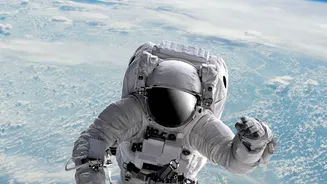
Sending food into space is far more complicated than just packing a lunchbox. In the microgravity environment of a spacecraft, simple things we take for granted become major engineering problems. Crumbs from bread or biscuits don't fall to the floor;
they float, posing a risk to sensitive equipment and air vents. For this reason, astronauts often use tortillas instead of bread. Refrigeration is also not an option, as the heat generated by a fridge wouldn't dissipate properly in zero gravity, creating dangerous hotspots. Furthermore, space travel itself changes the human body. Astronauts often experience a diminished sense of taste and smell, similar to having a bad cold, because their sinuses cannot drain without gravity's pull. This makes food taste bland, requiring meals to be more flavourful or spicy than their Earth-bound versions to be appealing.
India's Multi-City Space Kitchen
For decades, the Defence Food Research Laboratory (DFRL) in Mysuru, a lab under the DRDO, has been the pioneer in creating ready-to-eat meals for India's armed forces and has now applied that expertise to space. They have developed an extensive menu featuring over two dozen items specifically for the Gaganyaan mission. More recently, the effort has expanded, bringing in specialists from Hyderabad. The ICMR-National Institute of Nutrition (NIN) in Hyderabad is now also developing special food formulations, focusing on nutritional balance, including micronutrients and antioxidants, while carefully managing sodium levels. This collaborative effort ensures that the menu for India's astronauts is not only delicious but also perfectly optimised for health and safety in the harsh conditions of space.
From Kitchen to Cosmos
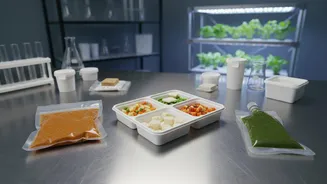
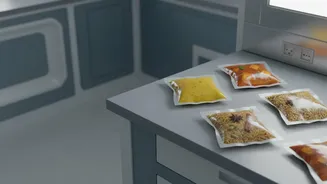
So, how do you make chicken biryani or moong dal halwa space-ready? The process is a marvel of food science. The primary technology used is retort processing, a method that sterilises food after it has been sealed in a multi-layered, flexible pouch. The sealed pouch is heated under high pressure, which kills any microorganisms and enzymes, allowing the food to remain stable for years without refrigeration or preservatives. The scientists must also ensure the food has low fragmentation, meaning it won't crumble or create floating particles. This is achieved by using binders or preparing foods in semi-solid and paste-like forms that are easy to consume. The final products are lightweight, compact, and often require just a small amount of water to be rehydrated and heated before eating.
A Taste of Home in Zero Gravity
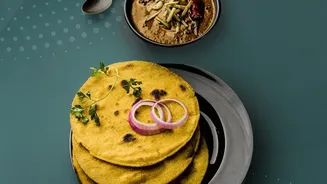
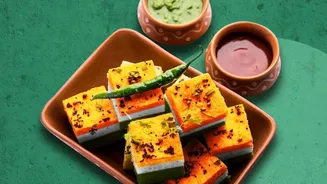
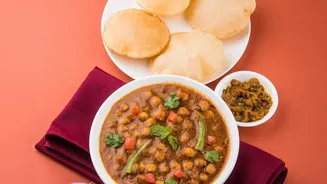
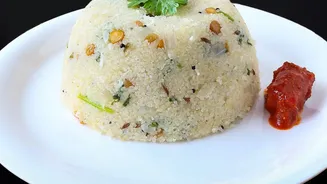
The psychological boost of having familiar, comforting food cannot be overstated, especially during a high-stress space mission. The menu prepared for the Gaganyaan crew reads like a feast: Idli-sambhar, upma, vegetable pulav, chicken biryani, shahi paneer, aloo paratha, and even desserts like suji halwa are on the list. However, getting these dishes certified for spaceflight is a monumental task. As astronaut Shubhanshu Shukla recently shared from his experience on a mission to the International Space Station, the qualification process is incredibly rigorous. While a large menu of Indian dishes was prepared for his mission, only three—gajar ka halwa, moong dal ka halwa, and amras—were able to complete the stringent safety and performance tests in time, a testament to the challenges involved. This experience provides invaluable feedback for ensuring a wider menu is ready for India's own Gaganyaan crew.
The Smart Tiffin Box and Beyond
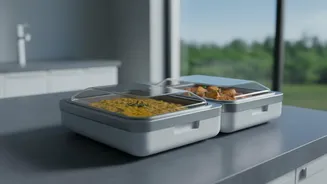
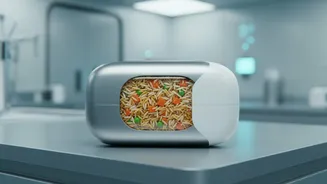
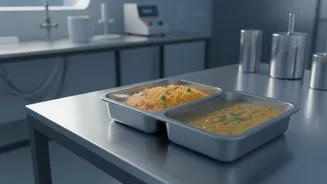
The innovation doesn't stop with the food itself. Ananth Technologies, a private firm based in Hyderabad, is working with DFRL to develop a smart food container—essentially, a high-tech 'tiffin box' for space. This steel container will be fitted with sensors and electronics to monitor the food's condition, providing real-time data to ground control and ensuring an extra layer of safety for the astronauts. This marriage of traditional Indian cuisine with advanced technology showcases the comprehensive, self-reliant approach of India's space programme. As scientists continue to refine these meals, they are tackling challenges that will be crucial for future deep-space missions to the Moon or Mars, where food will need to last for five years or more.