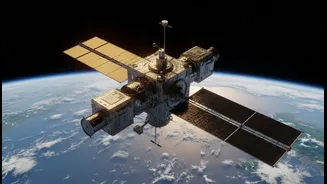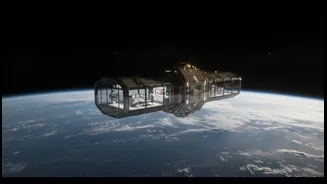




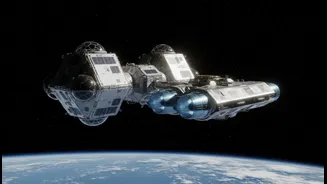




The End of an Era, The Start of a Race
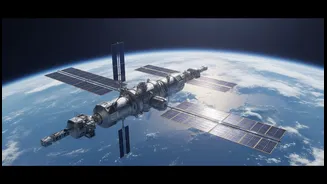
The ISS, a symbol of global cooperation that has hosted thousands of experiments since 2000, is aging. Its technical life is limited, and maintenance costs are rising. NASA has committed to operating the station through 2030, after which a specially designed
vehicle will guide it to a controlled reentry over a remote patch of the South Pacific Ocean. This looming retirement creates a critical gap. Without a replacement, we could lose our continuous human presence in low-Earth orbit (LEO). To prevent this, NASA is turning to the private sector, aiming to become just one customer among many in a new orbital economy. This has kicked off a race among several ambitious companies to build the world's first commercially owned and operated space stations.
Meet the New Contenders
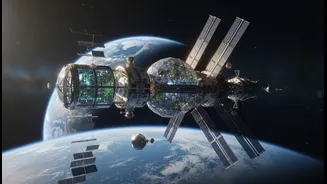
A handful of key players are leading the charge, each with a unique approach to building a home in the heavens. Axiom Space plans to first attach its modules to the ISS starting as early as 2026 before detaching to become a free-flying, independent station. The company has already flown multiple private astronaut missions to the ISS, giving it valuable operational experience. Another major project is Starlab, a joint venture between Voyager Space and Airbus, which plans to launch a large, single-module station on a SpaceX Starship rocket around 2029. Meanwhile, companies like Sierra Space are developing expandable habitats. Its LIFE module inflates on orbit to the size of a small apartment building. Finally, Vast aims to launch its Haven-1 station in 2027, hoping to be the first commercial station in orbit.
A Business Park in the Sky
So, what will people do on these new stations? The business model extends far beyond space tourism for the ultra-wealthy. These platforms are being designed as 'mixed-use business parks' in space. The primary customers will likely be sovereign space agencies like NASA, who can rent space for their astronauts to conduct research without the overhead of owning a station. This frees up NASA's budget to focus on deep-space missions to the Moon and Mars under the Artemis program. Beyond government clients, companies are betting on new markets. These include in-space manufacturing of unique materials like fiber optics or 3D-printed organs, which are easier to produce in microgravity. Pharmaceutical companies could also conduct advanced biotechnology research, potentially leading to new drug discoveries.
Navigating the Path Forward
The transition isn't without challenges. Building a space station is an incredibly expensive and complex undertaking. Securing a viable business case that doesn't solely rely on NASA as a primary customer is a major hurdle these companies must clear. In early 2026, NASA briefly considered shifting its strategy, proposing a government-owned 'core module' that commercial companies could attach to, citing concerns that the market wasn't yet strong enough for fully independent stations. However, after strong pushback from the industry, which argued they were ready and had secured significant private capital, NASA reversed course in July 2026, recommitting to its original plan of supporting free-flying commercial destinations. The agency is now moving forward with a process to award contracts to at least two providers, with the goal of having a crewed flight test in 2029.