





1. Establish a Core Color Palette
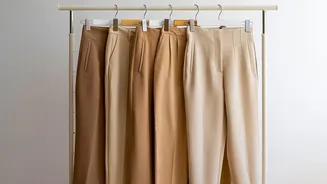
The secret to a wardrobe where everything magically matches is a cohesive color palette. This doesn't mean you're restricted to black and white, unless that's your style. Start by choosing two to four neutral base colors that you love and that flatter
you. Think navy, charcoal, camel, cream, or olive. These will be the foundation for your most significant pieces, like coats, trousers, and blazers. Once your neutrals are set, select two or three accent colors that reflect your personality and pair well with your base tones. This structure, often following an 80/20 rule (80% neutrals, 20% accents), ensures maximum mix-and-match potential, making it simple to create polished outfits without overthinking.
2. Prioritize Quality Over Quantity
A versatile wardrobe is built on pieces that last. Instead of chasing fast-fashion trends that fade after a few wears, invest in well-made garments from quality materials like wool, cotton, linen, and leather. A high-quality blazer, a perfectly cut white t-shirt, or a durable pair of dark-wash jeans will serve you better than a dozen cheaper alternatives. These items not only look more refined but also withstand repeated wear, becoming reliable staples you can build countless outfits around. Think of it as investing in your daily confidence. A wardrobe full of pieces you love to wear is more valuable than one overflowing with impulse buys. This shift in mindset from quantity to quality is fundamental to simplifying your style.
3. Follow the ‘Rule of Three’
Before adding any new item to your closet, apply the 'Rule of Three'. Can you style this new piece with at least three other items you already own? If the answer is no, it's likely not a versatile addition. This simple guideline prevents the purchase of 'wardrobe orphans'—those beautiful but impractical items that only work with one specific thing. For example, that classic trench coat should work over your jeans and a t-shirt, a midi dress for work, and tailored trousers. A well-chosen pair of jeans should pair with blazers, sweaters, and simple tees. This mental checklist ensures every piece is a team player, actively contributing to a flexible and functional wardrobe rather than just taking up space.
4. Embrace the Power of Layering
Versatility isn't just about individual pieces; it's about how they work together. Mastering layering allows you to adapt outfits for different temperatures and occasions, effectively expanding your wardrobe's potential. A simple slip dress can be worn on its own in summer, over a t_shirt for a casual look, or under a structured blazer for a more professional setting. Key layering essentials include timeless outerwear like a trench coat or a wool coat, a well_cut blazer, and quality knitwear such as cashmere or merino wool sweaters. These items allow you to transition your core pieces through the seasons, giving you more wear out of everything you own and proving that a smaller wardrobe can be incredibly adaptable.
5. Accessorize with Intention
Accessories are the secret weapon of a minimalist wardrobe. The right shoes, bag, belt, or piece of jewelry can completely transform the feel of a basic outfit, giving you more style mileage from your core clothing items. A simple uniform of a white shirt and trousers can be styled for work with leather loafers and a structured handbag, or made weekend_ready with a pair of sleek sneakers and a casual tote. Instead of buying a new outfit for every occasion, think about how a different accessory can change your look. Investing in a few high_quality , versatile accessories gives you the power to dress your core outfits up or down , adding personality and polish without adding clutter to your closet.