





A Month-Long Celestial Festival
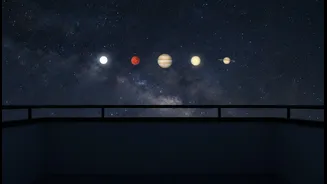
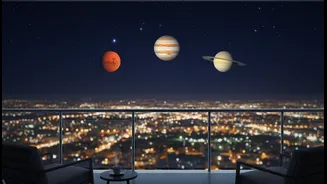
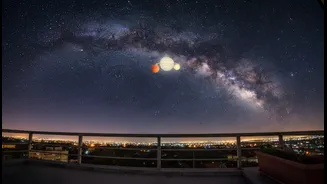
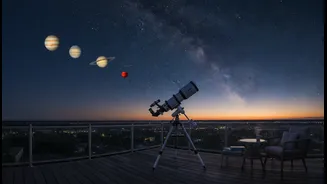
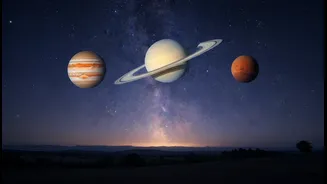
Forget what you think you know about stargazing needing a heavy-duty telescope and years of training. July 2026 is presenting a parade of planets that are bright enough to be seen with the naked eye. While not a single straight line, several planets are putting
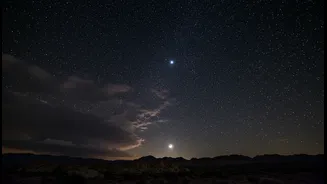
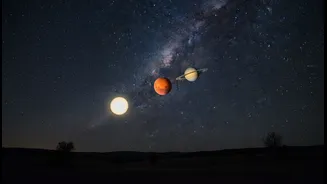
on a show throughout the month. In the evening, the dazzlingly bright Venus will command the western sky just after sunset. For early risers, the pre-dawn eastern sky will feature a stately procession of Saturn and the unmistakable reddish dot of Mars. These events are less of a single lineup and more of a month-long festival, with planets and the Moon creating beautiful pairings on different dates.
Understanding the 'Clear Horizon Window'
The phrase “clear horizon window” might sound technical, but it’s a simple concept that is your key to unlocking these views. It refers to two things. First, it’s about timing: the magical window after sunset or before sunrise when the sky is dark enough for stars and planets to pop out, but your target is still high enough above the horizon to be seen clearly. Second, it’s about your location. You need a literal clear view of the horizon, free from tall buildings or trees, especially for objects that are low in the sky. For India, July can be a blessing. While the monsoon brings clouds, the periods between spells of rain can offer exceptionally clear air, washed clean of dust and haze, creating perfect viewing conditions.
Your Viewing Calendar for July
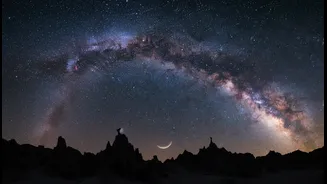
Grab your calendar and mark these dates. The show starts right away. In early July, look west after sunset to catch brilliant Venus and, for a few days, the giant planet Jupiter before it slips into the sun’s glare for the month. The real action for night owls and early birds is in the eastern sky before dawn. On July 4, Mars will have a very close encounter with the planet Uranus. While Mars is easy to spot, this event provides a rare chance to find the much fainter Uranus, which usually requires optical aid. On the morning of July 7, the Last Quarter Moon will pass near Saturn, making the ringed planet easy to identify. A few days later, on July 11, you can see a stunning trio: a thin crescent Moon, Mars, and the beautiful Pleiades star cluster. Finally, on the evening of July 17, the Moon will have its date with Venus in the west, creating a breathtaking pair.
The 'No Gear Needed' Promise
The headline’s promise holds true for the stars of the show. Venus is the brightest object in the night sky after the Moon. Jupiter, Saturn, and Mars are also all easily visible to the naked eye, appearing as exceptionally bright, non-twinkling stars. The beauty of these July events is that they involve these bright, easy-to-spot planets. You don’t need binoculars or a telescope to appreciate them. However, if you do have a simple pair of binoculars, they can enhance the view, revealing the crescent phase of Venus or helping you spot Uranus near Mars on July 4th. But they are by no means essential to enjoy the spectacle.
Tips for the Best Stargazing Experience
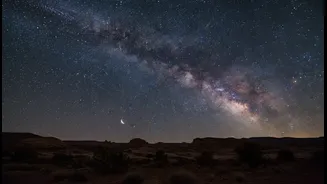
To make the most of these celestial events, a little preparation goes a long way. First, try to get away from the glare of city lights; a local park or a rooftop with an unobstructed view can work wonders. Second, give your eyes about 15-20 minutes to adjust to the darkness. Avoid looking at your bright phone screen during this time. Stargazing apps can be a great help in identifying what you're looking at—just be sure to switch them to 'night mode' to preserve your night vision. Remember to look west for evening events and east for morning ones. And don’t be discouraged by monsoon clouds; just wait for a clear night, and the cosmos will be waiting for you.