





A Policy Shift Ignites the Sector
For decades, India's journey into space was almost exclusively driven by the state-run Indian Space Research Organisation (ISRO). However, a historic government decision in June 2020 to open the sector to private enterprise changed the trajectory entirely.
This was solidified by the Indian Space Policy 2023, which created a clear framework for non-governmental entities to participate in everything from building rockets and satellites to providing launch services. To oversee this new landscape, the Indian National Space Promotion and Authorisation Centre (IN-SPACe) was established as a single-window agency to promote, authorize, and supervise private space activities. This regulatory certainty has been the primary driver of growth, transforming the ecosystem and giving entrepreneurs the confidence to invest their time and capital into ambitious space ventures.
The New Titans of Indian Space
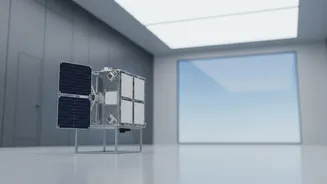
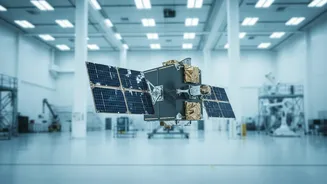
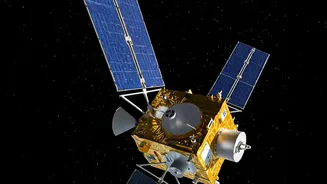
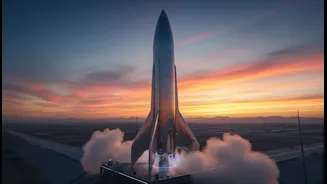
This policy shift has unleashed a torrent of entrepreneurial energy. The number of Indian space startups has skyrocketed from single digits just six years ago to over 450 today. Many of these ventures are led by young founders, some of whom are former ISRO scientists. Hyderabad-based Skyroot Aerospace, co-founded by Pawan Kumar Chandana and Naga Bharath Daka, made history by launching India's first privately developed rocket, Vikram-1, into orbit. This achievement made India only the third country, after the US and China, to have a private company with orbital launch capability. Another key player is Agnikul Cosmos, incubated at IIT-Madras, which developed the world's first single-piece 3D-printed rocket engine. In Bengaluru, Pixxel, backed by investors like Google, is building a constellation of hyperspectral imaging satellites to provide detailed Earth observation data.
Fueling the Rocket with Fresh Capital
The rapid growth has been matched by a surge in investment. Indian space startups have attracted approximately $380-390 million in funding over the last three years. In 2026 alone, they have already secured around $150-160 million. This influx of capital comes from venture capitalists and global tech giants who see immense potential in India's cost-effective innovation. The government is also playing a crucial role in funding. Initiatives like a dedicated venture capital fund of around $120 million and other technology adoption funds are being set up to support emerging companies. This combination of private investment and public support is creating a robust financial ecosystem, allowing hardware-intensive companies to move from the drawing board to the launchpad.
Challenges Beyond Gravity
Despite the momentum, the path is not without its obstacles. Space ventures are capital-intensive and have long gestation periods, which can make it difficult to secure patient capital, especially at the early seed stage. Many startups still face limited access to specialized testing facilities, which are crucial for developing and validating complex space hardware. Furthermore, while the Indian government and ISRO are becoming major customers, the domestic market for some advanced space services is still maturing, forcing some startups to look abroad for clients. Experts note that while founders may be technically brilliant, a gap sometimes exists between creating advanced technology and finding a paying market for it on the ground.
India’s Celestial Ambition
The rise of the private space sector is about more than just business; it represents a fundamental shift in India's technological and economic aspirations. The country's space economy, valued at around $8.4 billion today, is projected to grow to $44 billion by 2033. This growth is expected to create high-value jobs and position India as a global hub for space technology and manufacturing. By opening the sector, ISRO can now focus more on deep-space exploration and scientific research, while private firms drive commercial innovation. This symbiotic relationship is not only accelerating India's capabilities but also inspiring a generation of students and young professionals to pursue careers in science and technology, ensuring that the nation's reach for the stars has only just begun.