



The Power of Two Exercises
When space and time are limited, efficiency is everything. That’s the beauty of squats and planks. They are compound exercises, meaning they work multiple muscle groups at once. The bodyweight squat is a powerhouse for your lower body, targeting your glutes,
quads, and hamstrings, while also engaging your core for stability. Think of it as the foundational movement for building functional strength — the kind you use every day when sitting, standing, and lifting. The plank, on the other hand, is a masterclass in core strength. It builds endurance in your abs, back, and shoulders, which is crucial for improving posture after long hours of studying. Together, they provide a surprisingly comprehensive workout without needing a single piece of equipment.
Your 20-Minute Strength Plan
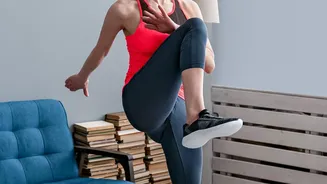
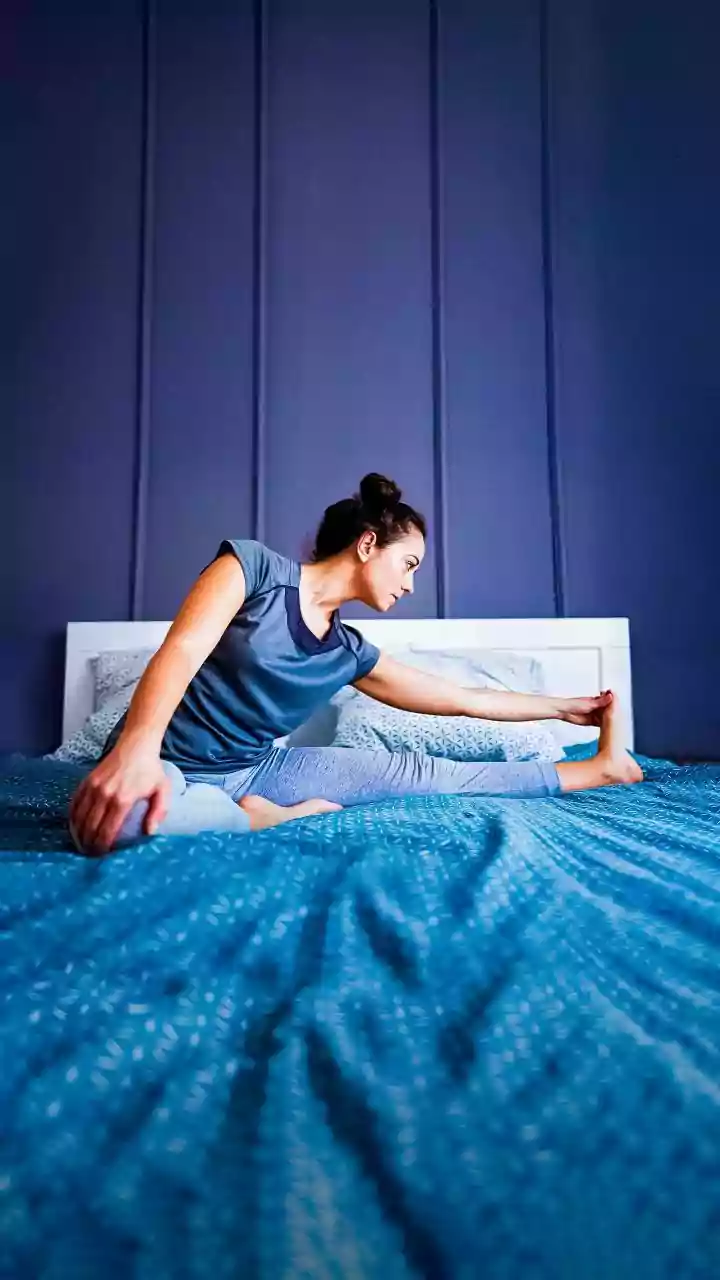
This routine is designed for maximum effect in minimum time, using intervals to keep your heart rate up and muscles engaged. All you need is a timer. Here's the structure: 1. Warm-Up (3 minutes): Start with light movement to prepare your body. Do 60 seconds of jogging on the spot, followed by 60 seconds of jumping jacks (or step-jacks), and finish with 60 seconds of gentle torso twists and arm circles. 2. The Main Circuit (15 minutes): You will perform five rounds of the following two-exercise circuit. For each round, you'll do 40 seconds of squats, rest for 20 seconds, then hold a plank for 40 seconds, and rest for 20 seconds. This completes one round. Round 1-5: Bodyweight Squats: 40 seconds Rest: 20 seconds Plank: 40 seconds * Rest: 20 seconds 3. Cool-Down (2 minutes): Finish with some light stretching. Hold a quad stretch (pulling your heel towards your glute) for 30 seconds on each leg. Then, go into a child’s pose to stretch your back and shoulders for 60 seconds.
Perfecting Your Bodyweight Squat
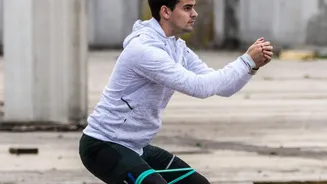
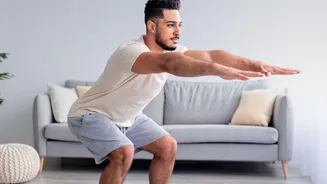
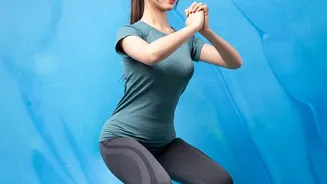
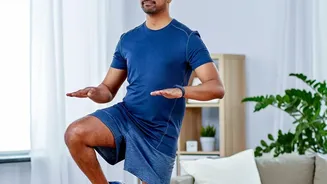
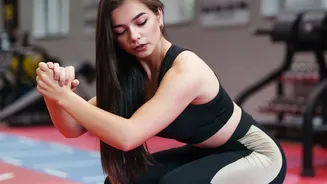
Proper form is crucial to get results and prevent injury. Stand with your feet slightly wider than shoulder-width apart, with your toes pointing slightly outwards. Keep your chest up and your shoulders back. Initiate the movement by pushing your hips back as if you're about to sit in a chair. Lower yourself until your thighs are parallel to the floor, or as low as you can comfortably go while keeping your back straight. Your heels should stay firmly on the ground. A common mistake is letting your knees cave inward; actively push them slightly outward to keep them aligned with your feet. Press through your heels to return to the starting position.
Holding a Strong and Steady Plank
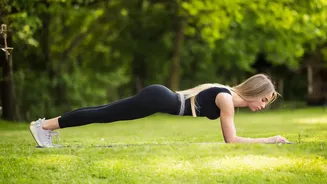
The plank looks simple, but it demands full-body tension. For a forearm plank, place your forearms on the floor with your elbows stacked directly under your shoulders. Extend your legs straight behind you, resting on your toes. Your body should form a straight line from your head to your heels. To achieve this, engage your core by pulling your belly button towards your spine, and squeeze your glutes. Don't let your hips sag towards the floor or rise too high; both are common errors that reduce the exercise's effectiveness. Keep your neck in a neutral position by looking at the floor a few inches in front of your hands. Most importantly, remember to breathe steadily throughout the hold.
Listen to Your Body and Progress
Consistency is more important than intensity when you're starting. If a 40-second plank is too challenging, start with 20 seconds and build up. You can also modify the plank by dropping to your knees. If a full squat is difficult, place a chair behind you and practise squatting until you gently touch the seat before standing back up. As you get stronger, you can make the routine more challenging. Try holding the plank for longer, or add a 'pulse' at the bottom of your squat (a small up-and-down movement) to increase the burn. The key is to challenge yourself without causing pain. Listen to your body and adjust as needed.