
Meet NASA's New Cosmic Cartographer
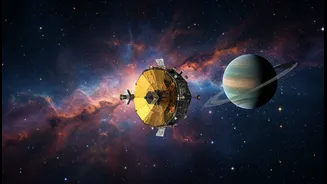
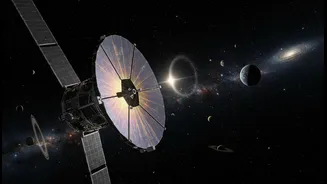
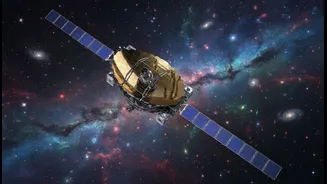
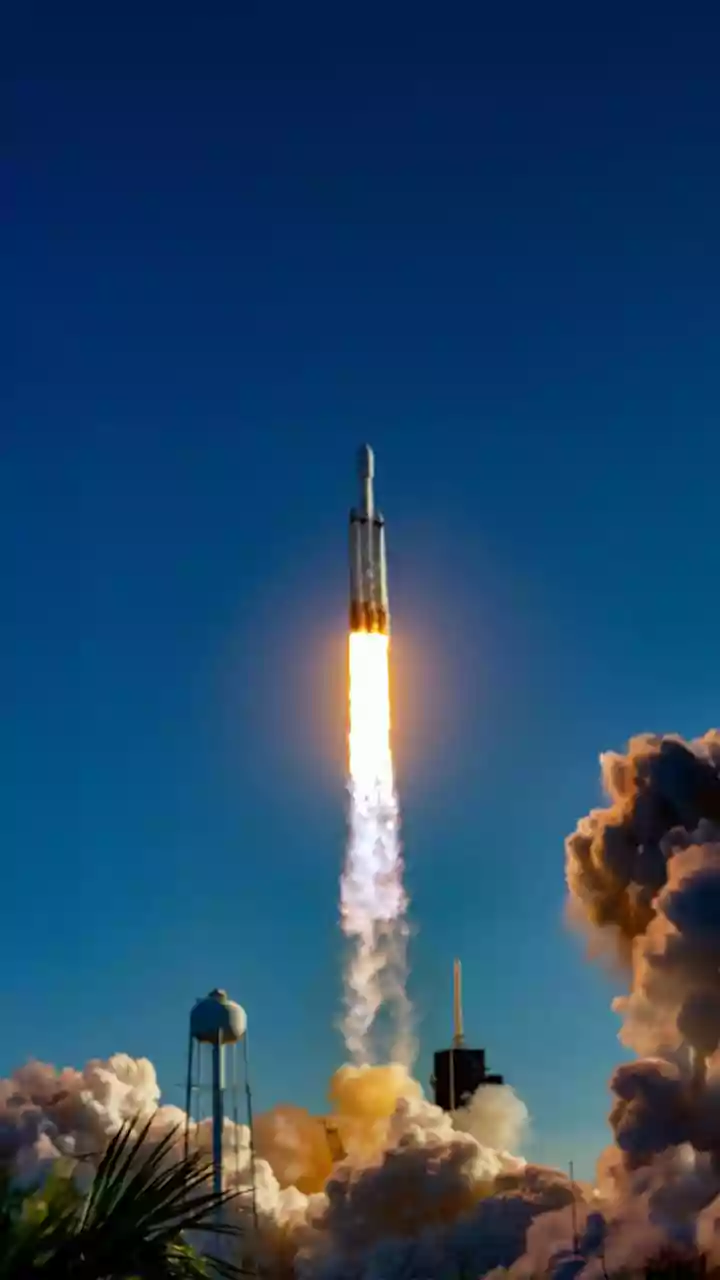
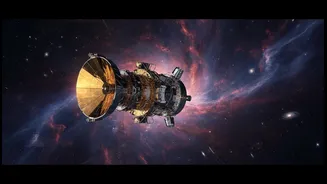
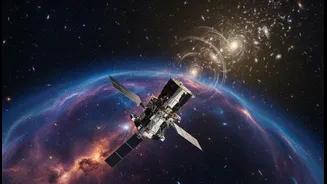
Set to launch on a SpaceX Falcon Heavy rocket on August 30, 2026, the Nancy Grace Roman Space Telescope is NASA's next great observatory. Named after the agency's first Chief of Astronomy, Nancy Grace Roman, who was instrumental in the creation of the Hubble
Space Telescope, this mission is designed with a different philosophy. While telescopes like Hubble and the James Webb Space Telescope (JWST) zoom in to study individual objects in painstaking detail, Roman is built for breadth. Its primary goal is to conduct vast surveys of the sky, mapping the universe faster and more broadly than ever before. The telescope itself features a 2.4-meter primary mirror, the same size as Hubble's, but its key innovation is its Wide-Field Instrument (WFI). This powerful camera gives Roman a field of view at least 100 times larger than Hubble's infrared camera, allowing it to create enormous cosmic panoramas with the same sharp resolution.
A Panoramic Window on the Universe
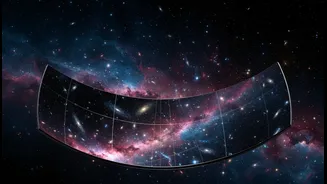
This immense field of view is what sets Roman apart and enables its revolutionary survey capabilities. Consider this: to create a mosaic of our neighboring Andromeda galaxy, Hubble had to take over 400 separate images. Roman could capture the same area in just two. Over its five-year primary mission, Roman is expected to image more than 50 times the amount of sky that Hubble has covered in over three decades of operation. This ability to rapidly map huge swaths of the cosmos will provide astronomers with an unprecedented wealth of data. Instead of looking at the universe through a pinhole, Roman will offer a sweeping vista, enabling the statistical study of billions of cosmic objects. This is crucial for tackling some of the biggest questions in cosmology, which require enormous sample sizes that are impractical for other telescopes to obtain.
Hunting for Dark Energy
One of Roman's primary missions is to investigate the mysterious force known as dark energy, which is causing the expansion of the universe to accelerate. To do this, it will undertake a massive High-Latitude Wide-Area Survey, mapping the 3D positions of hundreds of millions of galaxies. By studying how these galaxies are distributed and how their light has been stretched and distorted by gravity—a phenomenon called weak gravitational lensing—scientists can trace the influence of dark energy over cosmic history with ten times more precision than current methods. The survey will also detect tens of thousands of Type Ia supernovae, exploding stars that serve as 'standard candles' for measuring cosmic distances. By tracking these supernovae across billions of years, Roman will create a detailed history of the universe's expansion, helping to determine if dark energy's strength has changed over time.
A Census of a Thousand New Worlds
Beyond cosmology, Roman is set to become one of the most prolific planet-hunting missions ever launched. Using two different detection methods, it is expected to find thousands of new worlds, or exoplanets. Its main technique will be gravitational microlensing. This occurs when a star or planet passes in front of a more distant star, and its gravity acts like a lens, briefly magnifying the background star's light. This method is sensitive enough to find planets with masses as low as Mars, and even 'rogue' planets that don't orbit a star at all. In addition, Roman is projected to find around 100,000 exoplanets by spotting the tiny dip in a star's light as a planet transits, or passes in front of it. The sheer number of discoveries will create a massive statistical census, helping scientists understand the demographics of planets throughout our galaxy.