



We all want to breathe cleaner air at home, and two popular solutions dominate the conversation: leafy houseplants and electric air purifiers. But which one actually works? And where do open windows fit in? The science might surprise you.
The Myth of the Purifying Plant
The belief that
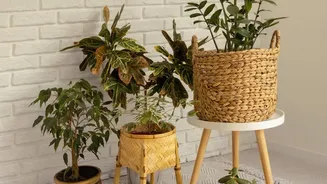
houseplants can scrub our indoor air clean is a persistent one, largely born from a well-known 1989 NASA study. The study showed that, in a small, sealed chamber, certain plants could indeed remove volatile organic compounds (VOCs) like benzene and formaldehyde from the air. However, subsequent research has shown this doesn't translate to real-world homes and offices. The problem is a matter of scale. A typical room has a much larger volume of air and constant air exchange from drafts, doors opening, and ventilation systems. To replicate the cleaning power seen in the NASA lab, you would need an impractical number of plants—estimates range from 10 to 1,000 plants per square metre of floor space, essentially turning your home into a dense jungle. While plants can remove tiny amounts of VOCs, their effect is too slow to compete with the normal air exchange in a building.
The Power of a HEPA Purifier
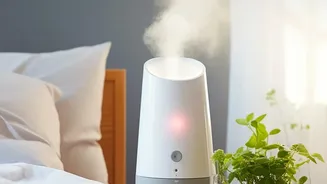
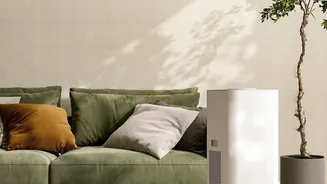
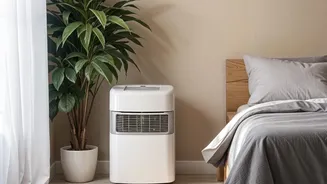
An air purifier, on the other hand, is a mechanical workhorse. Models equipped with a High-Efficiency Particulate Air (HEPA) filter are engineered to do one job: force large volumes of air through a fine mesh. A true HEPA filter is certified to trap 99.97% of airborne particles down to 0.3 microns in size. This includes common irritants like dust, pet dander, pollen, mould spores, and the fine particulate matter (PM2.5) found in smoke and haze. For gases and odours, many purifiers also include an activated carbon filter, which absorbs VOCs and other chemical fumes that HEPA filters can't catch. The key to a purifier's effectiveness is its Clean Air Delivery Rate (CADR), which measures how much clean air it provides in a specific-sized room. A single air purifier can clean the air in a room multiple times per hour, a rate thousands of times faster than a plant.
The Open Window Dilemma
So, should you just seal your home and run a purifier 24/7? Not quite. This is where ventilation—opening a window—becomes crucial. Indoor air can become stale, accumulating pollutants generated inside, such as CO2 from breathing and VOCs from cooking, cleaning products, and furniture. Opening a window for even 15-30 minutes can quickly dilute these built-up indoor pollutants. However, this comes with a significant trade-off, especially in urban areas. Opening a window also invites outdoor pollutants in. If you live near a busy road or in a city with poor air quality, you could be letting in more PM2.5, dust, and pollen than you are letting out. The decision to open a window should be strategic. It's best done when outdoor air quality is good, which you can check using local air quality index (AQI) apps. On high-pollution days, it's wiser to keep windows closed and rely on a purifier.
A Layered Strategy for Clean Air
The debate shouldn't be 'purifiers versus plants', but rather how to best combine all available tools. The most effective strategy for clean indoor air is a layered one. Think of an air purifier as the heavy lifter, responsible for actively removing harmful particulate matter that plants cannot. Think of houseplants as a supplement. While they won't clean your air in a measurable way, they are proven to have other benefits, such as boosting mood, reducing stress, and adding a bit of humidity to dry indoor air. Finally, view ventilation as a necessary flush. Use it deliberately to reduce CO2 and indoor-generated pollutants when the outdoor air is clean enough to do so. This combination approach gives you the mechanical filtration of a purifier, the psychological benefits of plants, and the essential air exchange from smart ventilation.