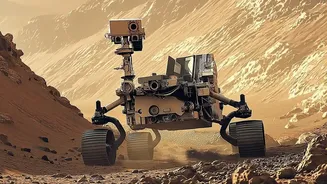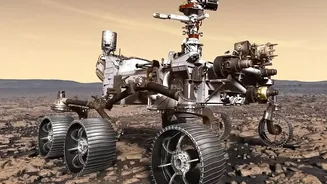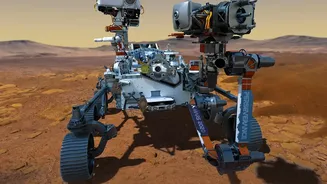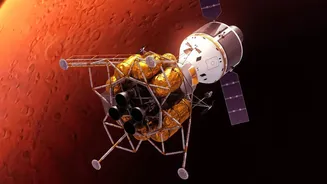

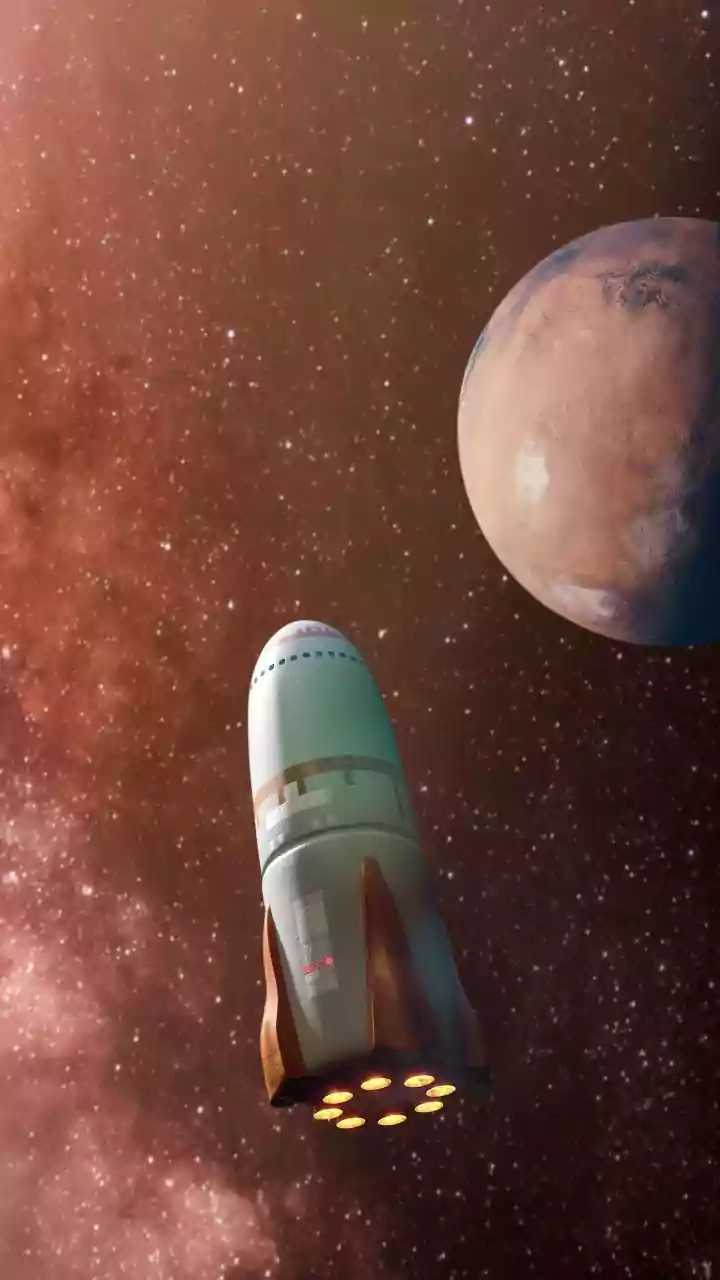

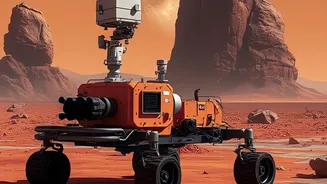
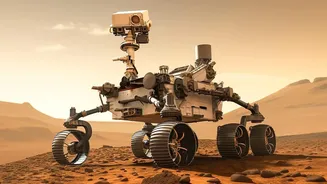
For decades, the question of how best to explore Mars has sparked a fascinating debate: should we send robots or humans? While rovers are safer and cheaper, the allure of human footprints on the red dust persists. The core of this debate often boils down
not to ambition, but to biology and the immense challenge of keeping humans alive so far from home.
The Case for Robots
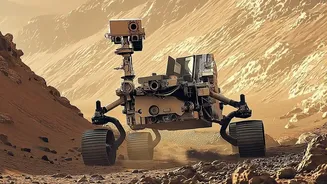
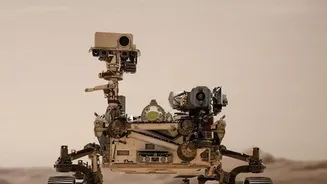
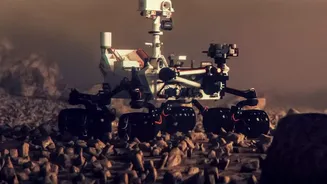
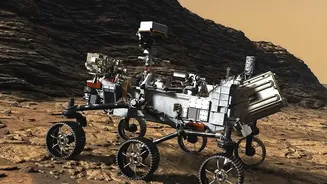
To date, every successful mission to the Martian surface has been robotic, and for good reason. Machines don't need to eat, drink, or breathe. They are immune to the psychological stress of isolation and confinement. Furthermore, they are far less expensive and risky; a mission failure results in the loss of equipment, not human lives. Rovers like Perseverance have performed incredible science, from analysing rock compositions to demonstrating the production of oxygen from the Martian atmosphere. These robotic pioneers have been instrumental in paving the way for future exploration, providing invaluable data that helps scientists understand the planet's environment and identify resources without endangering astronauts.
The Irreplaceable Human Element
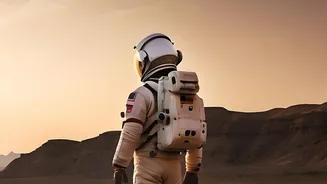
Despite the success of robotic missions, many scientists argue that humans are exponentially more efficient explorers. A human geologist can make intuitive leaps, identify promising samples, and perform complex tasks in minutes that might take a rover days or weeks to complete. Astronauts are adaptable and can troubleshoot problems on the spot, a flexibility that robots currently lack. The scientific return from the Apollo missions on the Moon, which lasted only a few days, was immense, producing thousands of scientific papers. This highlights the sheer productivity of having human intellect and dexterity on another world, capable of serendipitous discoveries that a pre-programmed robot might miss.
The Air We Can't Breathe
The single greatest challenge for a human mission is life support. It starts with air. The Martian atmosphere is incredibly thin—about 1% of Earth's—and is composed of 95% carbon dioxide. Astronauts would need a constant supply of breathable oxygen. Bringing it all from Earth is not feasible for a long-term mission, as a crew of four on a 1,000-day journey would require tons of consumables. The alternative is to make oxygen on Mars, a concept known as In-Situ Resource Utilization (ISRU). NASA's MOXIE experiment successfully produced oxygen from atmospheric carbon dioxide, proving the concept is viable. However, scaling this technology up to support a crew reliably for years is a monumental engineering task.
Finding Water on a Desert Planet
Water is just as critical, needed not only for drinking but also for growing food, hygiene, and even producing rocket fuel by splitting it into hydrogen and oxygen. While Mars appears to be a dry desert, scientists know there are vast quantities of water ice locked in the polar caps and below the surface. Future astronauts would essentially become miners, needing to excavate and melt this ice to get liquid water. The water is often not pure and may be mixed with briny, toxic salts like perchlorates, which would need to be filtered out before it could be used.
The Martian Grocery Run
Feeding a crew on Mars is another complex problem. Relying solely on pre-packaged food from Earth is impractical due to the immense weight and volume required for a multi-year mission. The solution is to grow food on-site, but Martian soil, or regolith, is not farmer-friendly. It lacks essential organic nutrients and contains toxic compounds. Scientists are experimenting with techniques like hydroponics and using beneficial fungi or bacteria to make the regolith more fertile. Early experiments have shown that while growing certain crops is possible, it requires a carefully controlled environment and likely a system to treat the soil and recycle waste to create fertilizer.
A Shield Against the Cosmos
Finally, humans need protection from Mars itself. The planet has a very thin atmosphere and lacks a global magnetic field, leaving its surface exposed to dangerous levels of galactic cosmic rays and solar radiation. Long-term exposure significantly increases the risk of cancer and other health issues. Habitats would need to be heavily shielded, potentially by being built underground or covered with Martian soil. Even the water and waste from the crew could be strategically used as shielding material. Spacesuits, too, would require advanced radiation protection for any work done on the surface. This constant, invisible threat remains one of the most significant barriers to long-term human habitation on Mars.