
A One-Way Trip to a Hellish World
Sometime in the early 2030s, a one-meter-wide titanium sphere will detach from its mothership and begin a fiery, one-way journey. For about 63 minutes, this descent probe, the heart of the DAVINCI mission, will fall through the thick, toxic atmosphere
of Venus. It's a world with crushing pressures, clouds of sulfuric acid, and surface temperatures hot enough to melt lead. The probe is not designed to survive landing; its entire purpose is to gather as much data as possible during that single, final descent, transmitting gigabytes of information before it is inevitably destroyed. This is NASA's first atmospheric probe mission to Venus in over 40 years, and it has to get it right on the first try.
What Exactly Is the DAVINCI Mission?
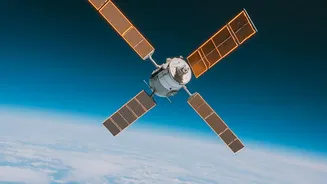
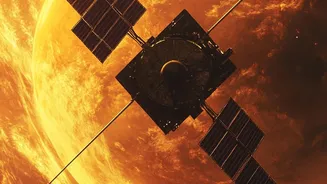
DAVINCI stands for Deep Atmosphere Venus Investigation of Noble gases, Chemistry, and Imaging. It is a two-part mission: a spacecraft that will perform multiple flybys of Venus, and the descent probe that will plunge into its atmosphere. While the main spacecraft studies cloud movements and maps the surface from orbit, the probe will perform the mission's most daring task: directly sampling the atmosphere. The goal is to understand how Venus, a planet so similar to Earth in size and mass, became our solar system's poster child for a runaway greenhouse effect, while Earth became a haven for life. By studying Venus, scientists hope to learn more about how terrestrial planets, including our own, form and evolve.
The Scientific Treasure Hunt
The “useful science” DAVINCI must capture is a treasure trove of clues about Venus's past. A primary goal is to determine if Venus ever had an ocean. Scientists believe our sister planet may have once been habitable, with liquid water on its surface billions of years ago. The mission will hunt for evidence by measuring the composition of the atmosphere, looking for noble gases and other chemical signatures that can reveal its history. The probe will also investigate the mysterious, mountainous highland regions known as "tesserae." The landing site, Alpha Regio, is a tessera twice the size of Texas, which may be an ancient continent composed of rocks that could hold clues to the planet's formation and whether water once played a role in shaping its surface.
A Suitcase Full of Science
To accomplish this, the descent probe is packed with a suite of sophisticated instruments. The Venus Mass Spectrometer (VMS) will inhale atmospheric gases to analyze their chemical makeup, sniffing out trace elements and noble gases. The Venus Tunable Laser Spectrometer (VTLS) will provide further detail on specific gases related to the planet's climate history. As the probe falls, the Venus Descent Imager (VenDI) will snap the first-ever high-resolution images from below the clouds, showing us the surface of Alpha Regio in detail. These instruments are shielded within the titanium sphere, designed to withstand the immense heat and pressure for just long enough to complete their critical measurements.
Why Venus, Why Now?
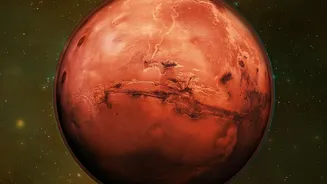
For decades, Mars has captured the lion's share of attention and funding for planetary exploration. But a renewed focus is turning toward Venus. It serves as a natural laboratory for understanding climate change and the conditions that make a planet habitable—or hostile. DAVINCI is part of a new wave of Venus exploration, joined by NASA's VERITAS orbiter and missions from the European Space Agency. After decades of relying on data from Soviet missions in the 1970s and 80s, this new flotilla of spacecraft will revolutionize our understanding of Earth's so-called twin. Recent tests of DAVINCI's camera systems in Utah, simulating the descent over terrain similar to Alpha Regio, show that preparations for this daring plunge are already well underway.