





The Brain’s Inner Guardians
Deep inside every one of our long-lived brain cells, or neurons, lies a command centre called the nucleus. It holds our genetic blueprint and directs the cell’s activities. But this nucleus isn't a sealed vault. It needs to communicate with the rest of the cell,
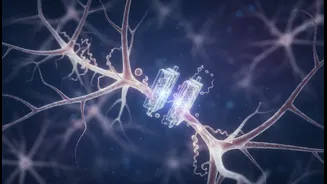
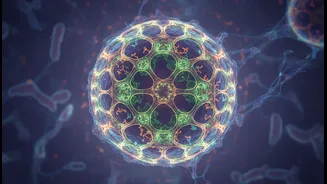
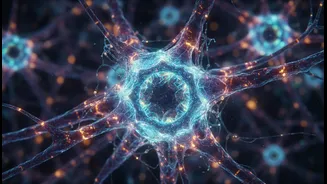
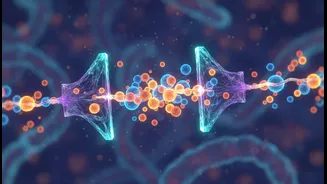
sending out instructions and receiving essential proteins. This communication happens through sophisticated doorways known as nuclear pore complexes (NPCs). Think of them as the microscopic gatekeepers of the brain cell. These intricate structures, made of proteins called nucleoporins, form regulated tunnels in the nuclear membrane, meticulously controlling the two-way traffic of molecules. This transport system is fundamental for keeping our neurons healthy and functional.
A Flaw in the Traffic Control
In a young, healthy brain, these gatekeepers are vigilant, ensuring only the right molecules pass through at the right time. But a growing body of evidence shows that as we age, these NPCs can start to fail. They can become leaky, damaged, or simply fewer in number. This deterioration isn't just a random sign of wear and tear; it appears to be a key event in the aging process and the onset of neurodegenerative diseases like Alzheimer's, Parkinson's, and Huntington's disease. When the gatekeepers become compromised, the cell's delicate balance is thrown into disarray. Harmful proteins might get in, essential ones might get trapped, and the nucleus can lose its ability to properly regulate the cell.
Connecting Leaky Gates to Cognitive Loss
The link between these failing gates and cognitive decline is becoming increasingly clear. For example, in Alzheimer's disease, the toxic protein Tau has been shown to directly interact with and damage these nuclear pore complexes. This damage can create a vicious cycle: the NPCs malfunction, disrupting transport, which in turn leads to more toxic protein buildup and cellular stress. This breakdown in nucleocytoplasmic transport is now seen not just as a side effect of disease, but as a potential early driver of the whole pathological process. The failure to maintain this fundamental barrier can lead to inflammation, oxidative stress, and ultimately, the death of the very brain cells we rely on for thinking and memory.
Another Gatekeeper at the Surface
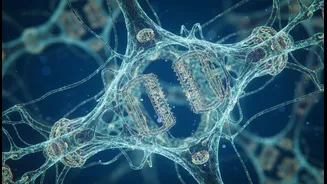
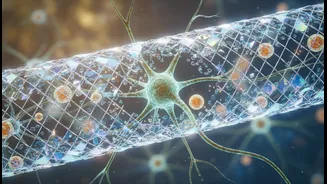
Interestingly, NPCs are not the only gatekeepers being studied. Very recent research highlights another structure, the membrane-associated periodic skeleton (MPS), a lattice-like frame just under the neuron's outer surface. Scientists once thought this was just for structural support, but new findings show it acts as a physical gatekeeper controlling what the cell absorbs from its surroundings, a process called endocytosis. In lab experiments modeling Alzheimer's, a weakened MPS allowed neurons to take in the precursors to toxic amyloid proteins much more rapidly. This suggests a two-level security system: one at the cell's outer surface and one at the nucleus, both of which can fail with age and disease.
A New Frontier for Treatment
The discovery that these gatekeeper systems are so crucial opens up exciting new possibilities for therapies. If scientists can figure out why NPCs and the MPS weaken with age, they might be able to develop treatments to reinforce them. Instead of just clearing out toxic proteins after they have already formed and caused damage, future therapies could focus on strengthening the cellular gates to prevent the problems from starting. This could involve stabilizing the NPCs to prevent leaks or boosting the resilience of the outer MPS. While this research is still in its early stages, it represents a fundamental shift in how scientists are thinking about brain aging, moving from chasing symptoms to targeting the root causes of cellular failure.