



A Historic First: Catching an Orbital Spacecraft
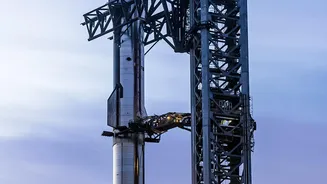
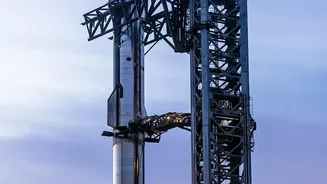
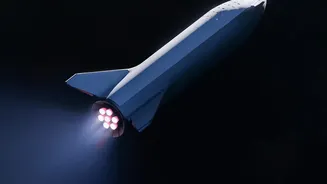
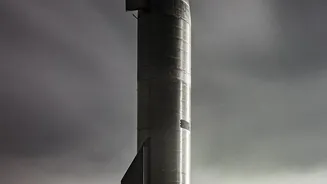
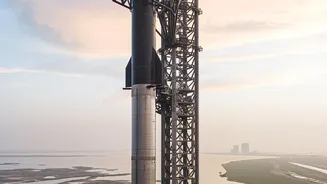
For the first time in history, an orbital-class spacecraft was caught rather than landed. On November 14, after a nearly 22.5-hour mission, the Starship upper stage, known as Ship 42, returned from orbit, streaked across the sky, and was successfully
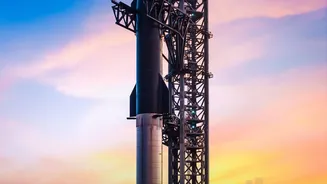
grabbed by the giant mechanical 'chopstick' arms of its launch tower at Starbase, Texas. This unprecedented maneuver is the cornerstone of SpaceX's vision for a fully and rapidly reusable rocket system. The spacecraft completed 14 orbits of Earth after launching the previous day and even deployed 26 Starlink satellites, turning a test flight into a partially operational mission. The successful catch proves that the most complex part of the recovery system—bringing the massive upper stage back from orbital velocity to a precise point on the ground—is possible.
The Booster's Unplanned Detour
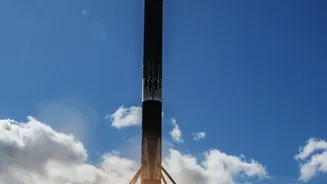
While the Starship spacecraft achieved its primary goal, its ride to space, the Super Heavy booster, did not. The plan was for a 'double catch': the booster, called Booster 22, was supposed to perform a flip maneuver after separation, fly back to the launch site, and be caught by the same tower arms just minutes after liftoff. However, flight controllers aborted the catch attempt. Instead, the 236-foot-tall booster was deliberately guided away from land for a controlled splashdown in the Gulf of Mexico, where it ultimately exploded just before hitting the water. This automatically triggered diversion prevented what could have been a dangerous failure near the launch pad.
The Alarm That Changed Everything
The critical decision to divert the booster was not due to a failure of its guidance system, but rather the system working as intended. Early indications from SpaceX suggest the booster's 'boostback burn'—the engine firing needed to reverse its course—ended prematurely due to a 'low fuel mass alarm'. This alarm signalled that the booster might not have had enough propellant to safely complete the complex landing and catch maneuver. The autonomous Guidance, Navigation, and Control (GNC) system detected that the booster was not in the correct position or on the right trajectory for a safe catch and automatically triggered the abort sequence, prioritizing the safety of the ground infrastructure.
A 'Successful Failure' in Context
For SpaceX, an explosion isn't always a total failure. The company operates on an iterative design philosophy, where test flights are designed to push vehicles to their limits to gather data. The booster's flight provided invaluable information on why the fuel alarm was triggered, which engineers will now investigate. While this was the first attempt to catch this newer, more powerful 'V3' version of the Super Heavy booster, SpaceX has successfully caught older versions on previous flights. The fact that the safety protocols worked perfectly, diverting a potentially errant rocket, is a success in itself. The mission demonstrated both halves of the recovery challenge are possible, just not yet on the same flight.
What This Means for the Future
This flight, known as Flight 15, marks a massive leap forward for the Starship program. Successfully catching the upper stage was seen as the 'holy grail' of reusability, a critical step toward making Starship a low-cost, airplane-like space launch system. Proving this capability is essential for SpaceX's ambitious plans, including deploying thousands more Starlink satellites, flying NASA astronauts to the Moon under the Artemis program, and ultimately building a city on Mars. While the booster issue needs to be resolved, the historic catch of the Starship spacecraft has moved the company significantly closer to its goal. The focus will now be on analyzing the booster's data, correcting the issue, and attempting the full double catch on a future flight.