





The Undisputed Champions: Tuesday, Wednesday, and Thursday
Across numerous global and Indian studies, a consensus has formed: the middle of the week is the new heart of in-office work. Tuesday, Wednesday, and Thursday have become the most popular days for employees to commute and collaborate in person. Data from
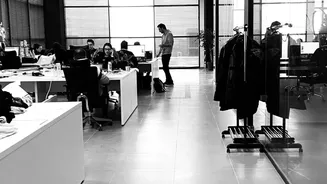
workplace analytics firms consistently shows that office occupancy on these three days is significantly higher, sometimes more than double that of Mondays and Fridays. Recent data from 2026 confirms this 'mid-week rush' is a stable and continuing trend. In India, where many tech and services firms have embraced hybrid models, a three-day in-office week has become a popular arrangement. This clustering effect creates a predictable rhythm, with offices buzzing with activity mid-week and becoming noticeably quieter at the start and end of the week.
The Psychology Behind the Mid-Week Model
Why has this specific 'TWaT' (Tuesday, Wednesday, and Thursday) schedule become so dominant? The logic combines the desire for focused work with the need for collaborative energy. Employees often use Mondays to ease into the week from home, catching up on emails and planning tasks without the disruption of a commute. This allows for deep, focused work. Fridays, similarly, are treated as a day to wrap up tasks and transition into the weekend, a flexibility that employees highly value. The middle of the week is therefore reserved for the activities that benefit most from physical presence: team meetings, brainstorming sessions, client interactions, and cultural onboarding. Companies schedule their most important meetings on these days to maximise attendance, creating a self-reinforcing cycle where people come in because that's when everyone else is there.
The Ghost Office and The Crowded Cafe
While the mid-week model provides a predictable structure, it also creates new challenges for companies. The primary issue is inefficient space utilisation. Offices can feel like ghost towns on Mondays and Fridays but face overcrowding mid-week, with shortages of desks and meeting rooms. This makes it difficult for real estate and facilities managers to plan effectively. Some businesses are now grappling with how to either incentivise attendance on quieter days or redesign their office spaces to better handle these peaks and troughs. The rise of flexible desking and 'hoteling' systems, where employees book desks in advance, is a direct response to this fluctuating demand. However, this can meet resistance from employees who miss having a permanent, personal space.
The Indian Context: Adapting to Local Realities
In India, the hybrid model's adoption is widespread, particularly within the massive tech industry and the growing number of Global Capability Centres (GCCs). Reports from 2026 indicate that about 45% of Indian tech workers are in a hybrid model, with a two-to-three day office week being the norm. Indian companies face unique considerations, such as notoriously long commute times in major metro areas like Mumbai, Bengaluru, and Delhi. The ability to avoid peak traffic on Mondays and Fridays is a significant contributor to employee well-being and a major driver of the mid-week office preference. Consequently, some Indian firms are exploring 'hub-and-spoke' models, with smaller, distributed offices in suburban areas to reduce the commuting burden.
Mandate or Flexibility: The Next Big Question
As the mid-week pattern solidifies, the next debate is about who gets to decide. While many companies currently allow employees to choose their in-office days, a growing number are implementing 'structured hybrid' models with mandated 'anchor days' to ensure teams are physically together. The argument for mandates is that they guarantee the collaboration and connection that offices are meant to foster. The counter-argument is that strict mandates remove the very flexibility that makes hybrid work so appealing, potentially leading to employee dissatisfaction and attrition. Research shows that hybrid work can reduce quit rates by a third, an advantage companies are hesitant to lose. Finding the right balance between coordinated team time and individual autonomy is proving to be the next frontier for workplace strategists.