






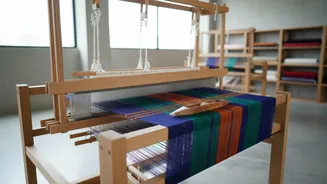
The Heritage-Quality Paradox
For generations, the Indian handloom industry has been a cornerstone of cultural expression and rural employment, second only to agriculture. Its strength lies in its diversity—unique weaves, regional motifs, and the artisan's personal touch. However,
this very uniqueness creates a paradox. In a competitive global market, the lack of uniform standards for quality, colour fastness, durability, and even sizing has been a significant hurdle. Competing against the consistent output of power looms, handloom products often struggle to command the premium they deserve due to inconsistencies that can deter bulk buyers and export markets. This has left a sector that employs millions, a majority of whom are women, in a vulnerable position.
A Tech-Powered Hub for Weavers
In a significant move to address these long-standing issues, the government has inaugurated the Centre of Excellence for Handloom Technology (CoE-HT) at the Indian Institute of Technology (IIT) Delhi. Launched in early August 2026, this initiative represents a landmark effort to modernize the sector by integrating cutting-edge research and technology with traditional craftsmanship. The Centre is envisioned as a national knowledge and innovation hub, bringing together academia, industry, designers, and weavers to create a future-ready ecosystem. The goal is not to replace the artisan's skill but to augment it, ensuring that the final product is not only beautiful but also meets rigorous global standards.
From the Lab to the Loom
The Centre’s mandate is both ambitious and practical, focusing on several key areas. Research will be conducted on loom modernization and ergonomics to reduce the physical strain on weavers and increase productivity. Another major focus is sustainability, including the development of eco-friendly dyeing systems. Perhaps most critically, the Centre will leverage artificial intelligence and digital technologies. This includes creating a national digital repository of handloom knowledge and developing AI-enabled tools for design and quality control. The plan involves training at least 1,000 weavers, faculty members, and handloom professionals over the next five years, ensuring the technology transfer happens at the grassroots level.
Standardisation's Ripple Effect
Standardisation is not just about technical specifications; it is about building trust and value. For weavers, adhering to recognised standards means their products can fetch better prices and gain access to previously unreachable markets, both domestic and international. Initiatives like the 'India Handloom' brand, which certifies high-quality products with zero defects, are strengthened by a dedicated research center that can provide scientific backing to these quality claims. For consumers, it provides assurance of authenticity and quality, distinguishing genuine handloom from mass-produced imitations. This helps preserve the cultural value of handloom products, turning them into prized possessions rather than mere commodities.
Weaving a Global and Digital Future
The establishment of the Centre of Excellence is part of a broader vision for the handloom sector. Alongside technological upgrades, the government launched five flagship initiatives to accelerate digital transformation. These include a mobile app for monitoring loom productivity, a digital learning platform called Handloom e-Vidya, and an accelerator platform to support startups in the sector. The Kalagriha Handloom Studio aims to connect contemporary consumer tastes with authentic products, leveraging digital tech to bridge the gap. By combining the scientific precision of an institution like IIT Delhi with the timeless artistry of millions of weavers, India is not just preserving a heritage but is actively creating a sustainable and globally competitive future for it.