






For centuries, the root causes of many diseases have been a profound mystery. Now, Google's DeepMind is using artificial intelligence to decode our very DNA, offering a glimpse into a future where we can predict and understand illnesses like never before.
A New Generation of AI Biologists
Google's research division, DeepMind, has unveiled a new generation of artificial intelligence models that are tackling one of the most complex challenges in medicine: understanding how tiny variations in our DNA can lead to diseases. Building on the success of past projects like AlphaFold, which predicted the structure of nearly every known protein, newer tools like AlphaMissense and the recently announced AlphaGenome 2 are taking the next logical step. Instead of just mapping the machinery of life, they are trying to predict when that machinery will break. These AI models sift through millions of genetic mutations to flag which ones are likely harmless and which could be pathogenic, or disease-causing.
How Does It Work?
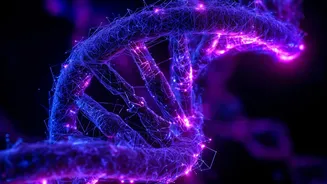
Imagine your DNA is an enormous instruction manual for building and running your body. A 'missense mutation' is like a single spelling mistake in that manual. An individual has thousands of these mutations, and most of them do nothing harmful. The challenge is finding the few critical typos that can cause conditions like cystic fibrosis, cancer, or rare genetic disorders. To find them, DeepMind trained its AI on vast databases of human and primate genetic information. By comparing countless examples, the model learns to distinguish which types of genetic changes are common and therefore likely benign, and which are rare and potentially dangerous. The latest model, AlphaGenome 2, goes even deeper by analysing how a DNA change affects specific types of cells, such as an immune cell versus a heart cell, a critical distinction since a mutation's impact can vary wildly depending on where in the body it occurs.
From Prediction to Explanation
The goal isn't just to label mutations as 'good' or 'bad'. The ultimate aim is to understand 'why' they are harmful. AlphaGenome 2, for example, can predict how a specific DNA variant might alter gene activity in certain immune cells, a finding that previously required difficult and time-consuming laboratory experiments. In one test, the model was able to independently replicate a recent discovery linking a gene called ETS2 to inflammatory bowel disease by predicting its effect on specific gut cells. By providing a score indicating the likelihood of a mutation causing disease, tools like AlphaMissense have classified 89% of the 71 million known missense mutations, a task where human experts have so far only classified 0.1%. This provides researchers with a powerful guide, helping them prioritise which mutations to study in the lab.
The Impact on Medicine and Drug Discovery
The implications for healthcare are enormous. For patients suffering from rare diseases, a faster diagnosis can be life-changing, ending a long and painful 'diagnostic odyssey'. By pinpointing the likely genetic cause of an illness, AI can help doctors make more accurate diagnoses and move toward treatment more quickly. In the pharmaceutical industry, this technology promises to accelerate drug discovery. Instead of spending months or years on lab experiments, researchers can use AI predictions to identify the most promising biological targets for new drugs. This could dramatically reduce the time and cost of developing new therapies and pave the way for a new era of personalised medicine, where treatments are tailored to a person's unique genetic profile.
Despite the immense potential, it's important to note that these are research tools, not diagnostic instruments. The predictions made by models like AlphaMissense and AlphaGenome 2 are not meant to be used on their own to diagnose patients. A human expert must still validate the findings and interpret what they mean in a clinical context. Furthermore, the increased detail of these new models comes with a higher computational cost, making them more resourceintensive to run. However, Google has made the data from its predictions freely available to the scientific community, a move intended to spur further research and discovery worldwide. As the technology continues to evolve, it will become a vital partner to scientists, helping them unravel the complex interplay between our genes and our health.