






Cosmic Nurseries: Where Stars Are Born
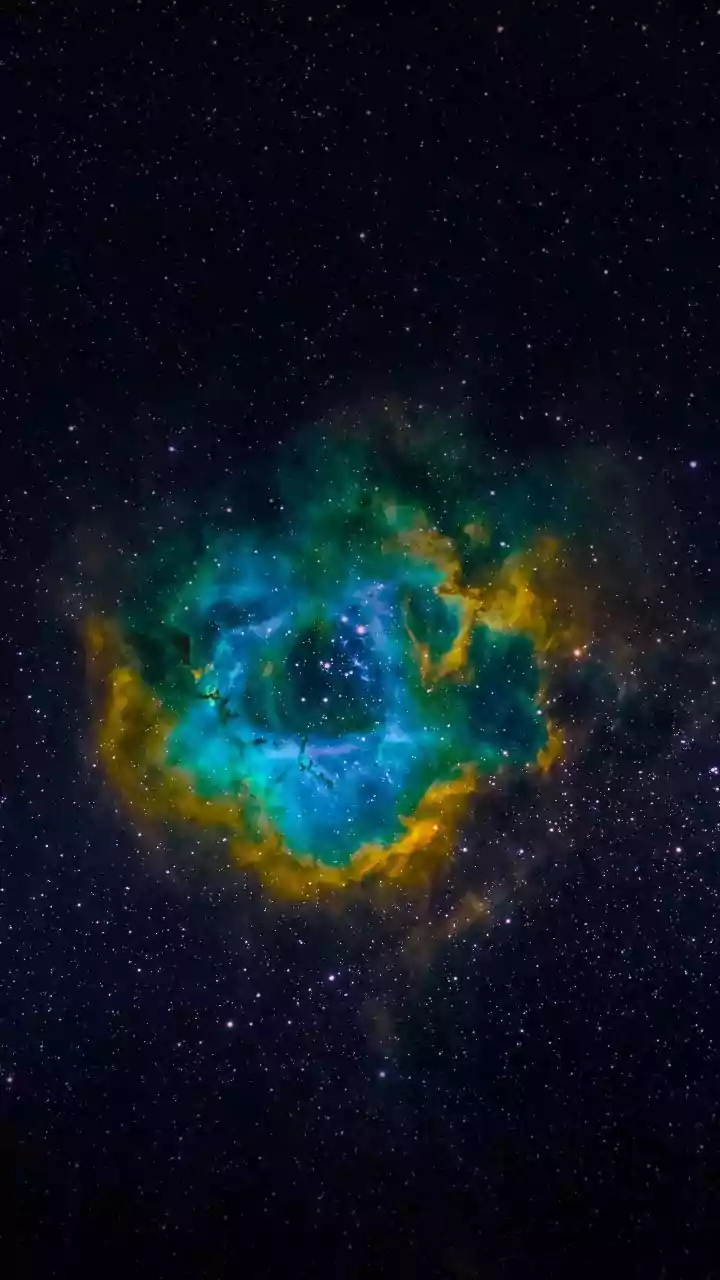
Every star begins its life inside a nebula, a vast and beautiful cloud of gas and dust. Recent images from the James Webb Space Telescope (JWST) have pierced through these dusty cocoons to show us the very first steps of star birth in breathtaking detail.
Gravity slowly pulls dense clumps of gas and dust together. As these clumps get denser, they heat up and start to glow, forming what astronomers call a protostar. These baby stars are still gathering mass from the cloud around them, often creating spectacular jets of material that blast out into space. For a long time, these early stages were hidden from view by the very dust that creates them, but infrared telescopes like Webb can see through the haze, revealing the chaotic and vibrant environments where stellar systems are born.
The Main Sequence: A Star’s Long Adulthood
Once a protostar has gathered enough mass and its core becomes hot and dense enough, a process called nuclear fusion begins. This is the moment a star is truly born. It enters the longest phase of its life, known as the 'main sequence'. During this period, which can last for billions of years, the star is in a stable state. The immense outward pressure from the fusion in its core perfectly balances the inward pull of its own gravity. Our own Sun is a main-sequence star, steadily converting hydrogen into helium in its core. The latest observations help scientists refine their models of this process by studying huge populations of stars in nearby galaxies, confirming how these stellar engines power the cosmos.
The Beginning of the End: Red Giants
Nothing lasts forever, not even a star. When a star like our Sun starts to run out of hydrogen fuel in its core, its life enters a new, more dramatic phase. Without the outward push from hydrogen fusion, gravity begins to win, and the core starts to contract and heat up. This new heat causes the star's outer layers to expand enormously, swelling up to hundreds of times its original size. The star becomes a red giant. This process is not just a change in size; the star's colour shifts to red because its outer surface cools down as it expands. While Webb and Hubble can study these aging stars in other galaxies, they give us a preview of our own Sun’s distant future, when it will one day expand to engulf the inner planets of our solar system.
A Spectacular Finale: Nebulae and Supernovae
How a star dies depends on its mass. For a star like the Sun, its red giant phase ends with it puffing its outer layers away into space, creating a beautiful, glowing structure called a planetary nebula. At the centre, the hot, dense core of the star remains as a white dwarf. But for stars much more massive than our Sun, the end is far more violent. These giants die in a cataclysmic explosion called a supernova. For a brief period, a single supernova can outshine an entire galaxy. New multi-telescope images combining data from Chandra and JWST show the intricate, expanding shells of gas from these explosions, known as supernova remnants. These structures, like Cassiopeia A, are rich with newly forged elements and glow for thousands of years.
Cosmic Legacy: We Are Made of Stardust
The explosive deaths of massive stars are not just an ending; they are a crucial part of the cosmic story of life. The incredible heat and pressure inside a supernova forge heavy elements—everything from the oxygen we breathe to the iron in our blood and the calcium in our bones. These elements, created in the heart of a dying star, are blasted out into the galaxy. Over billions of years, this enriched gas and dust collects to form new stars, new planets, and, on at least one world, life. So when NASA and the ESA release these stunning new pictures of nebulae and supernova remnants, they are not just showing us distant objects. They are showing us the cosmic factories that created the very ingredients of our world and ourselves. Every beautiful image is a portrait of our own cosmic ancestry.