






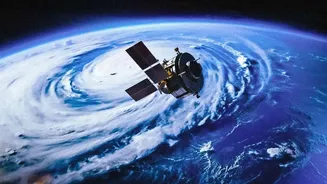

You’ve likely heard the term El Niño, but the one currently underway is making headlines. Forecasters at the World Meteorological Organization (WMO) report this powerful climatic event is set to continue well into early 2027, promising more heat and extreme
weather globally.
Understanding the El Niño Phenomenon
At its core, El Niño is a natural climate pattern marked by the unusual warming of surface waters in the eastern tropical Pacific Ocean. Occurring every two to seven years, it begins when the usual east-to-west trade winds weaken. This allows the vast pool of warm water normally found near Asia to shift eastward, toward South America. This change might seem distant, but it has a domino effect, disrupting atmospheric circulation and altering weather patterns across the globe, including temperature and rainfall.
Why This Event is Considered 'Powerful'
Not all El Niño events are created equal. The current one is being classified as 'very strong' or a 'super El Niño' by scientists. This distinction is based on how much the sea surface temperatures rise above their average. To qualify as very strong, the temperature anomaly typically needs to exceed 2.0°C. According to the WMO, this event is already pushing global temperatures to record levels in 2026 and is expected to have its greatest impact in the year after its development—meaning 2027 is a critical year to watch. The UN has warned that Pacific sea-surface temperatures could rise significantly above normal between November 2026 and January 2027.
The Forecast Into Early 2027
Recent forecasts from major climate centers like the WMO and NOAA show a near-unanimous consensus: El Niño conditions are expected to persist through the Northern Hemisphere's winter and into the early months of 2027. There is a high probability of it remaining a strong event through at least March 2027. After that, models suggest a transition toward 'ENSO-neutral' conditions around April to June. Interestingly, some initial forecasts from the Indian National Centre for Ocean Information Services (INCOIS) suggest a possibility of its cooler counterpart, La Niña, developing in time for the 2027 monsoon season, though this remains an early prediction.
Impact on India’s Monsoon and Agriculture
For India, the primary concern with a strong El Niño is its historical correlation with weaker southwest monsoons. The monsoon delivers about 75% of the country's annual rainfall and is the lifeblood of its agricultural sector, where over half the farmland is rain-fed. A deficit in monsoon rains can lead to drought conditions, deplete water reservoirs, and reduce soil moisture, affecting both Kharif and subsequent Rabi crop plantings. This has already been observed, with uneven rainfall in 2026 impacting Kharif crops like rice, pulses, and oilseeds. A prolonged El Niño raises fears of continued stress on agriculture, potentially leading to lower crop yields and higher food prices.
Beyond the Rains: Heatwaves and the Economy
The influence of El Niño extends beyond the monsoon. It is often associated with higher-than-average temperatures and more intense heatwaves across India, a trend that poses significant public health risks. The economic ripple effects are also substantial. Reduced agricultural output can impact rural incomes and demand, which in turn can affect overall GDP growth. While India maintains significant foodgrain stocks in its central pool to act as a buffer, a poor harvest could still strain supply chains and fuel inflation. The phenomenon also affects marine ecosystems, as warmer ocean temperatures can disrupt fisheries, impacting the livelihoods of coastal communities.