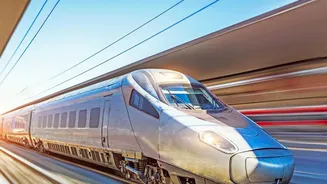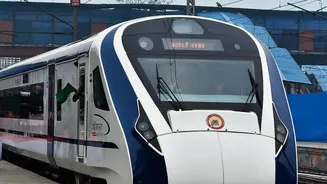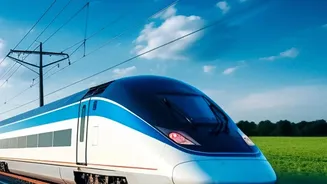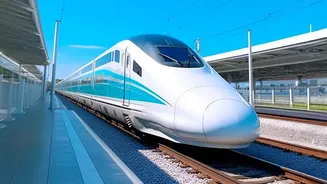




India's long-awaited bullet train dream is inching closer to reality. In a significant development for the Mumbai-Ahmedabad High-Speed Rail corridor, the stretch connecting Surat and Vapi in Gujarat has been chosen to be the first to open.
A Landmark Moment for a Mega Project
The roar of
a bullet train travelling at over 300 kmph is set to become a reality in India, and the industrial corridor of South Gujarat will be the first to experience it. Railway Minister Ashwini Vaishnaw has confirmed that the approximately 100-kilometre section between Surat and Vapi is scheduled for launch in the last quarter of 2027, marking the inaugural phase of the ambitious 508-km Mumbai-Ahmedabad High-Speed Rail (MAHSR) project. This phased approach means the Railways is not waiting for the entire, complex corridor to be completed before starting services. After years of planning, delays due to land acquisition issues in Maharashtra, and the COVID-19 pandemic, this announcement signifies that serious construction, which began in earnest only in 2021, is yielding tangible results.
Why the Surat-Vapi Section Is First
The decision to prioritise the Surat-Vapi stretch is a strategic one, driven largely by faster progress in the Gujarat portion of the project. Land acquisition and construction have moved at a much quicker pace here compared to Maharashtra. This segment connects two of Gujarat’s most vital economic powerhouses: Surat, a global hub for diamonds and textiles, and Vapi, a major industrial centre known for its chemical and pharmaceutical units. Choosing a section where construction is advanced allows the National High Speed Rail Corporation Limited (NHSRCL) to operationalise a part of the network, test systems, and demonstrate the project's viability. Recent milestones include the successful energisation of the overhead electrical equipment on the 50-km Surat-Bilimora section, a critical step towards trial runs.
An Engine for Economic Growth
The introduction of high-speed rail is expected to be more than just a transportation upgrade; it's anticipated to be a powerful catalyst for regional economic integration. By drastically cutting travel time, the bullet train will make it easier for professionals and business executives to commute between these industrial belts, potentially allowing people to work in one city while living in another. This enhanced connectivity is expected to attract new investments, encourage the expansion of corporate offices, and boost the real estate markets around the new stations. Officials anticipate that the areas surrounding the Surat and Vapi stations will develop into new economic zones with commercial spaces, hotels, and residential projects.
Impressive Construction and 'Made-in-India' Trains
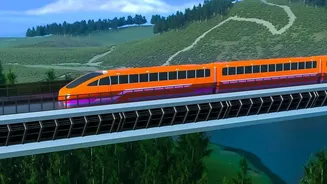
The scale of construction is immense. As of late 2026, significant progress has been made, with hundreds of kilometres of viaducts and support piers erected. Civil construction work at eight stations, including Surat and Vapi, is complete, with architectural finishing now underway. Adding to the 'Made-in-India' push, the trainsets for the corridor are being built indigenously. The first trainset, designated B28 and designed for speeds up to 280 kmph, is being manufactured by a consortium of ICF and BEML. Track trials for this new train are expected to begin by mid-2027, paving the way for the scheduled passenger service launch later that year.
The Road Ahead for the Full Corridor
While the Surat-Vapi launch is a celebrated milestone, the entire Mumbai-Ahmedabad corridor is still a work in progress. The most complex engineering challenge remains in Maharashtra, particularly the construction of a 21-km tunnel which includes India's first undersea rail tunnel beneath Thane Creek. Work on this section is advancing, with large tunnel boring machines deployed in mid-2026. The phased opening strategy allows the project to deliver benefits early while continuing to work on more challenging sections. The launch of the first bullet train service in 2027 will not only be a historic moment for Indian Railways but will also serve as a crucial proof of concept for the future of high-speed travel across the nation.