







What Are Smart Reading Assistants?
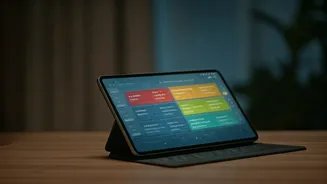
At its core, a smart reading assistant is an AI-powered application designed to help students improve their reading skills. Unlike a static e-book or a pre-recorded lesson, these assistants are interactive. A student reads a passage aloud into a device’s
microphone, and the software listens, analyses, and provides real-time feedback. It can correct pronunciation, define unknown words, and ask comprehension questions. Think of it less as a digital book and more as a patient, always-on-duty reading tutor that works at the student's exact pace. These tools are becoming increasingly important in diverse classrooms across India, where a single teacher may be managing students with a wide range of reading abilities.
Decoding 'Vocabulary Gradients'
The phrase 'vocabulary gradient' sounds complex, but the idea behind it is simple and intuitive. It refers to the carefully controlled introduction of new and challenging words. Imagine trying to learn a new skill. If the challenge is too steep, you get frustrated and give up. If it’s too easy, you get bored. The most effective learning happens in that sweet spot of 'productive struggle'.
A smart reading assistant uses a vocabulary gradient to keep a student in this zone. It analyses a text and ensures it contains a high percentage of words the student already knows, mixed with a small, manageable number of new ones. This creates a gentle upward slope—or 'gradient'—of difficulty. If the AI detects that a student is struggling, it can flatten the gradient by suggesting an easier text. If the student is excelling, it can make the next text slightly more challenging. This dynamic adjustment is what separates smart assistants from traditional, one-size-fits-all reading lists.
How Progress Tracking Really Works
The magic of these systems lies in their ability to track progress with incredible detail. This isn't just about marking a chapter as 'read'. As a student reads aloud, the AI engine is collecting multiple data points. It measures fluency (how many words are read correctly per minute), identifies miscues (where the student substitutes, omits, or mispronounces a word), and can even analyse prosody (the rhythm and intonation of speech) to gauge confidence.
After a reading session, the assistant might serve up a quick quiz to check for comprehension, not just word recognition. All this data is compiled into a detailed, evolving profile of the student's abilities. The system doesn't just know that a student is a 'slow reader'; it might identify that they specifically struggle with multi-syllable words or certain vowel-consonant blends. This granular data is invaluable for both the student, who gets targeted practice, and the teacher, who gets a clear report on where to focus their support.
The Benefits of a Personalised Path
The most significant advantage of this technology is its ability to deliver true personalisation at scale. In a traditional classroom of 30 or 40 students, it's nearly impossible for one teacher to provide continuous, one-on-one reading guidance to every child. Technology can help bridge that gap. For students who are struggling, the shame or fear of making mistakes in front of peers is removed. They can practise with the AI assistant in a private, non-judgemental setting, building confidence with every successful passage.
For advanced readers, the system prevents boredom by constantly serving up new, engaging, and appropriately challenging content. This adaptive approach helps maintain motivation and fosters a genuine love for reading. Furthermore, by automating the tedious parts of progress monitoring, it frees up teachers to focus on what they do best: inspiring, mentoring, and providing the human connection that technology can't.
Challenges and the Human Element
Despite the promise, these tools are not a perfect solution. Important questions around data privacy and security must be addressed, especially when dealing with children's learning data. There is also the risk of a widening digital divide, where students with access to these technologies pull even further ahead of those without. Moreover, over-reliance on any single tool can be detrimental. Reading is not just about decoding words; it’s about understanding context, appreciating nuance, and connecting with human stories. An AI cannot replicate the shared joy of a teacher reading a story aloud with passion and emotion. The most effective educational models will use these assistants as powerful tools to support—not replace—the invaluable role of the human teacher.