





As winter approaches, maintaining fitness and stability becomes crucial. The simple step-up is more than just a leg exercise; it's a powerful tool for enhancing balance and coordination, helping you navigate the season safely.
Why Winter Demands Better Balance
Winter weather often means
navigating icy pavements, snow-covered paths, and slippery surfaces, which significantly increases the risk of slips and falls. Good balance is your first line of defence. It involves a complex interplay between your brain, inner ear, and muscles to keep you upright and stable. When you practice exercises that challenge your balance, you're not just getting stronger; you're training your body to react more quickly and effectively to unexpected shifts in terrain. This improved proprioception—your body's awareness of its position in space—is essential for preventing injuries during the colder months.
The Biomechanics of the Step-Up
The step-up is a functional, unilateral exercise, meaning it works one leg at a time. This is key to its effectiveness for improving balance. When you step onto an elevated platform, you force the muscles in your standing leg—particularly your glutes, quadriceps, and hamstrings—to work harder to stabilise your entire body. Your core muscles and smaller stabilising muscles around your hips and ankles are also engaged to prevent you from wobbling. This single-leg challenge directly mimics real-world movements like climbing stairs or stepping over an obstacle, helping to correct muscle imbalances between your legs and building a more stable foundation.
How to Perform the Perfect Step-Up
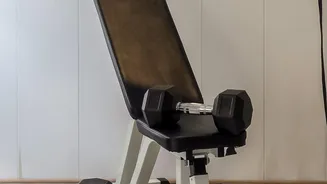
Proper form is crucial to maximise benefits and avoid injury. Start with a sturdy, stable platform, like a low bench or the bottom step of a staircase. The ideal height is one that allows your knee to form a 90-degree angle when your foot is on the step. To perform the move, place your entire right foot firmly on the platform. Keep your chest up and core engaged. Drive through your right heel to lift your body up, placing your left foot beside your right. The power should come from your lead leg, not from pushing off with your back foot. Step back down with the left foot first, followed by the right, landing softly. Complete all reps on one side before switching to the other to ensure the muscle is properly fatigued.
Variations for Every Fitness Level
The beauty of the step_up is its versatility. If you're a beginner or have balance concerns, start with a very low step, even just a few inches high, and perform the exercise next to a wall for support. As you get stronger, you can increase the height of the platform. For an intermediate challenge, hold light dumbbells in each hand to add resistance. This turns the step_up into a powerful strength_building exercise. Advanced users can try explosive step_ups (without weight) by jumping off the box, or lateral step_ups, which target the inner and outer thighs and add a different coordination challenge.
Adding Step_Ups to Your Winter Routine
Since step_ups require minimal equipment, they are an ideal exercise for an at_home winter fitness plan. Aim to incorporate them into your routine 2–3 times per week. A good starting point is to perform 3 sets of 10–15 repetitions per leg. Focus on controlled movements rather than speed. You can pair step_ups with other bodyweight exercises like squats, planks, and lunges to create a well–rounded workout that builds strength, endurance, and, most importantly, the stability you need to stay active and safe all winter long.