




The Overcast Conundrum
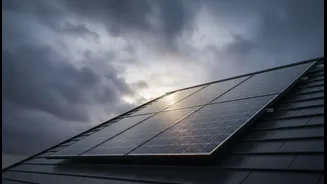
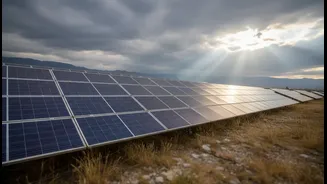
Traditional solar panels are at their best under bright, direct sunlight. Their photovoltaic cells are optimized to convert a specific spectrum of light into electricity. On cloudy days, this sunlight becomes diffuse, scattered by the atmosphere and water
droplets. While panels don't stop working entirely, their output can plummet significantly. Under heavy overcast skies, a typical solar panel might only generate 10% to 25% of its rated capacity. This drop in performance is a major hurdle for regions with frequent cloud cover, making grid-scale solar power less reliable and rooftop installations less appealing for households and businesses that need consistent power.
A Breakthrough in Resilience
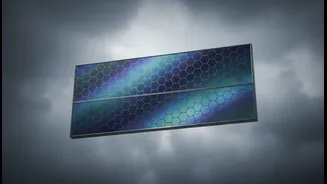
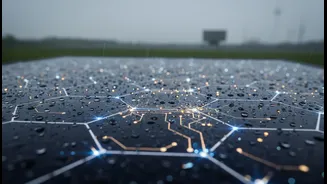
A major step forward was announced in July 2026 by a research team at The Hong Kong Polytechnic University. They developed a new type of thin-film solar cell that is not only highly efficient but also remarkably durable when partially shaded. Shading from clouds is a big problem for thin-film technologies, as it can create negative voltage that damages the cells over time. This new design, which layers perovskite and organic materials, can withstand this stress, retaining over 90% of its efficiency even when subjected to conditions that would degrade other panels. This addresses a critical weakness, marking a significant move toward making these advanced solar technologies practical for real-world use.
The Magic of Perovskite Tandem Cells
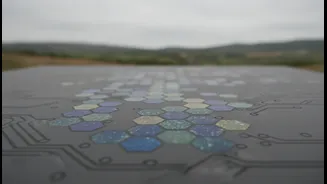
The hero material behind many of these advances is perovskite, a synthetic crystalline material that is shaking up the solar industry. Unlike the thick, rigid silicon wafers in most panels, perovskites can be produced as a thin, flexible, and lightweight film. Their true power, however, is unlocked when they are layered on top of traditional silicon in what is called a "tandem cell". The two materials work as a team: the perovskite layer captures high-energy light (like blues and greens), while the silicon layer below absorbs lower-energy light (like reds) that passes through. By capturing a wider range of the light spectrum, these tandem cells can generate significantly more power from the same amount of sunlight, pushing lab-tested efficiency records past 34%.
A Monsoon-Ready Solution for India
For a country like India with ambitious solar targets, this technology could be a game-changer. The monsoon season, which lasts for roughly four months, coincides with a significant dip in solar energy generation. Materials that perform well in diffuse light could smooth out this seasonal variability, making solar power a more stable and predictable part of the nation's energy mix. This would de-risk investments in large solar farms and make rooftop solar a more viable proposition for millions, particularly in regions like the Northeast and coastal areas that experience prolonged cloudy weather. Consistent year-round generation would strengthen India's energy security and accelerate its transition away from fossil fuels.
From the Lab to Your Rooftop
Despite the exciting breakthroughs, it will be some time before these next-generation panels are widely available and affordable. The biggest challenge for perovskites has historically been durability, though recent research is rapidly solving these issues. Scaling up manufacturing from lab prototypes to commercial-scale production presents another significant hurdle. In the meantime, the market is already adapting. Commercially available technologies like Heterojunction (HJT) and TOPCon panels are engineered for better low-light performance than standard cells. Similarly, bifacial panels, which can capture reflected light from their rear side, also offer an advantage in diffuse light conditions. These existing options provide a bridge to the even more efficient technologies on the horizon.