


Redefining the 'Goldilocks' Zone
Scientists have long focused on the 'habitable zone', an area around a star where it's not too hot and not too cold for liquid water to exist on a planet's surface. This is often called the 'Goldilocks zone'. The assumption was that finding an Earth-sized
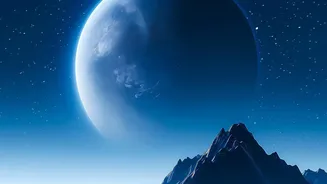
planet in the habitable zone of a Sun-like star was the jackpot. But this thinking is being challenged. Some scientists now argue that a planet could be 'superhabitable'—a world with conditions even more conducive to the flourishing of life than Earth. This idea, first detailed by researchers René Heller and John Armstrong in 2014, forces us to consider that our planet might just be good enough, but not necessarily the best that the universe has to offer.
What Makes a Planet 'Super'?
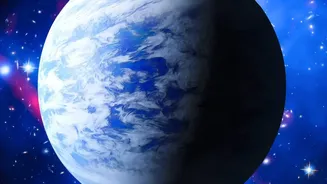
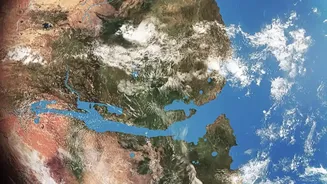
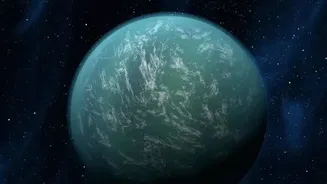
Several factors could make a planet more life-friendly than Earth. According to research led by geobiologist Dirk Schulze-Makuch, an ideal world might be a little older, larger, warmer, and wetter than our own. A planet about 1.5 times Earth's mass, for example, would be better at retaining its internal heat, powering geological activity like plate tectonics, and its stronger gravity could hold onto a protective atmosphere for longer. An average temperature about 5 degrees Celsius warmer than Earth's, combined with higher humidity, could lead to richer biodiversity. The key is stability over immense timescales, giving complex life a chance to not only emerge but to thrive and diversify. Earth is about 4.5 billion years old, but the sweet spot for a superhabitable world might be between 5 billion and 8 billion years.
Meet the 'Just Right' Stars
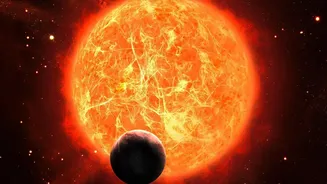
A superhabitable planet needs a superhabitable star. While our Sun, a G-type star, has done a fine job, it's not the most common or the most stable type. Enter the K-dwarf star, also known as an orange dwarf. These stars are the unsung heroes in the search for life, representing a perfect middle ground. They are cooler and smaller than our Sun but warmer and less volatile than the most common stars, the tempestuous red dwarfs (M-dwarfs), which are known for powerful flares that could strip a nearby planet of its atmosphere. K-dwarfs are about twice as common as Sun-like stars in our galaxy, giving us more targets to search.
A Longer Runway for Life
The single greatest advantage of K-dwarf stars is their incredible lifespan. Our Sun will burn for about 10 billion years and is already nearly halfway through its life. In another billion years or so, it will grow hotter, eventually making Earth uninhabitable. K-dwarfs, however, are marathon runners. They can remain stable for anywhere from 15 billion to 45 billion years—several times longer than our Sun. This extended, stable period provides a much longer runway for life to arise and evolve. It took nearly 4 billion years for intelligent life to appear on Earth. Imagine what could develop on a hospitable planet with two or three times that much time. This longevity is why some astronomers call K-dwarfs the true 'Goldilocks stars'.
The Search for a Better Earth
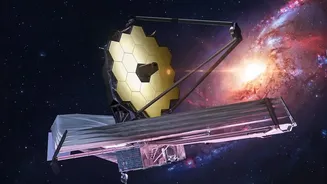
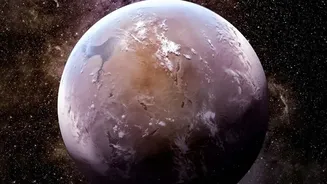
Applying these criteria, Schulze-Makuch and his team identified 24 exoplanet candidates from a pool of over 4,500 that could be superhabitable. None of them met every single criterion, but they represent the most promising targets for future study with advanced instruments like the James Webb Space Telescope. One of the most promising, KOI 5715.01, is a planet orbiting a K-dwarf star about 2,965 light-years away. It's estimated to be about 5.5 billion years old and has a potentially more ideal surface temperature than Earth. While we are a long way from confirming life on any of these worlds, the concept of superhabitability has fundamentally shifted the goalposts. The search is no longer just for a second Earth, but for a planet that might be even better.