


A Veteran's Unique Vision
Launched in 1990, the Hubble Space Telescope has been a revolutionary tool for over three decades, fundamentally changing our understanding of the cosmos. But with the arrival of the larger, infrared-specialised JWST, some questioned Hubble’s future.
The sceptics’ argument is straightforward: why continue to invest in a decades-old telescope when a more powerful successor is available? However, this view overlooks a crucial detail. While often billed as Hubble's successor, JWST is more of a complement than a replacement. The two telescopes are designed to see the universe in different kinds of light. JWST is optimised for infrared, allowing it to peer through dust and see the universe's earliest structures. Hubble, on the other hand, remains the master of the ultraviolet and visible light spectrums. This is not a matter of old versus new, but of having the right tool for the right job.
The Power of Ultraviolet Light
Hubble’s most recent triumphs highlight why its specific capabilities are irreplaceable. Recent observations of the galaxy MXDFz4.4, which existed just 1.4 billion years after the Big Bang, detected ionizing ultraviolet light that had never been seen from such an early galaxy. This discovery, which relied on Hubble's unique sensitivity to UV radiation, offers crucial clues as to how the early universe transitioned from an opaque fog to the transparent cosmos we see today. This is a feat that infrared-focused telescopes cannot achieve. Because Earth’s atmosphere blocks most UV light, such observations are only possible from space, making Hubble the premier tool for this type of science. This unique capability is also essential for studying the environments around young exoplanets, where UV radiation from a host star shapes a planet's atmosphere and potential habitability. Without Hubble, a huge part of the cosmic puzzle would remain unseen.
A History of Defying Doubt
This isn't the first time Hubble has had to silence sceptics. After its 1990 launch, a flaw in its primary mirror produced blurry images, turning the ambitious project into a national embarrassment. Critics were loud and plentiful, but NASA orchestrated a daring shuttle mission to install corrective optics, giving the telescope the sharp vision it was always meant to have. Just a few years later, in 1995, then-director Robert Williams used his discretionary time to point Hubble at a seemingly empty patch of sky for ten straight days—a move many senior astronomers considered a foolish waste of a precious resource. The result was the legendary Hubble Deep Field, an image revealing thousands of previously unseen galaxies that fundamentally changed cosmology. Time and again, Hubble has rewarded bold scientific choices and proven its immense value.
Stronger Together: A Tale of Two Telescopes
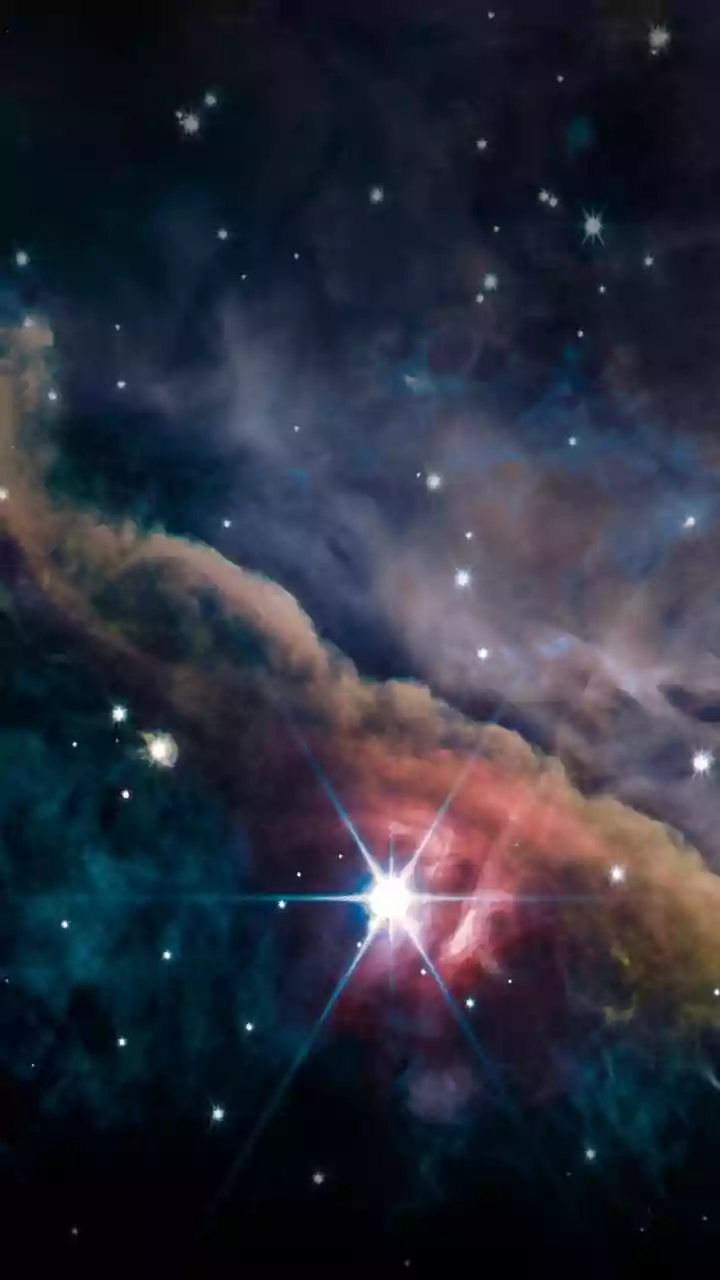
Rather than competing, Hubble and JWST are proving to be a powerful scientific duo. Astronomers are now routinely combining observations from both platforms to create some of the most comprehensive views of the universe ever assembled. By merging Hubble's visible and UV data with Webb's infrared insights, scientists gain a multi-wavelength perspective that neither telescope could provide alone. For example, when studying the galaxy cluster MACS0416, Hubble excelled at identifying young, star-forming regions (which shine brightly in blue and UV light), while Webb revealed older, dustier galaxies that glow in the infrared. This collaborative approach has also been used to refine measurements of the universe's expansion rate, a persistent puzzle in cosmology known as the Hubble Tension. The synergy between the two telescopes gives astronomers the best of both worlds, confirming the reliability of past discoveries while pushing into new frontiers.