
First, What Exactly Is the Helix Nebula?
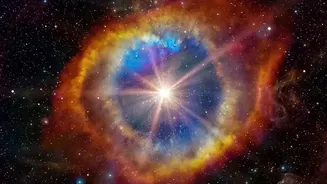
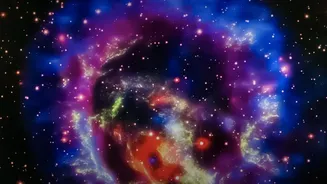
The Helix Nebula is what astronomers call a 'planetary nebula.' Despite the name, it has nothing to do with planets. It’s the beautiful, glowing remnant of a star that was once much like our own Sun. Located about 650 light-years from Earth in the constellation
Aquarius, it's one of the closest and most-studied objects of its kind. For thousands of years, the star at its center has been shedding its outer layers of gas into space. The core of the star, a super-hot white dwarf, now illuminates all that expelled material, creating the ghostly, eye-like shape that has captivated stargazers for centuries. In essence, the Helix Nebula offers a preview of the fate that awaits our own Sun in about five billion years.
So, What Are These 'Gas Pillars'?
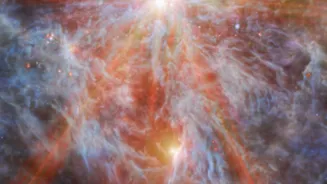
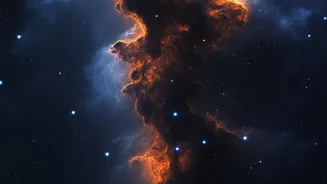
The headline's 'gas pillars' are scientifically known as 'cometary knots,' and Webb’s new image reveals them in unprecedented detail. They aren't solid pillars, but rather enormous, tadpole-shaped clumps of gas and dust. Each one is vast—many are larger than our entire solar system. These knots form along the inner ring of the nebula where fierce, hot winds from the central dying star crash into cooler gas that was ejected much earlier. The cooler, denser gas gets compressed into these knotty structures, with long tails that stream away from the star's radiation and wind, much like a comet's tail streams away from the Sun. While earlier telescopes like Hubble could see some of these knots, Webb has revealed thousands of them.
Why Is Webb's View So Different?
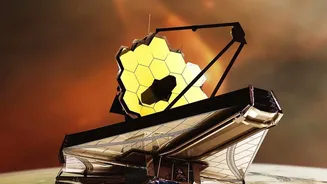
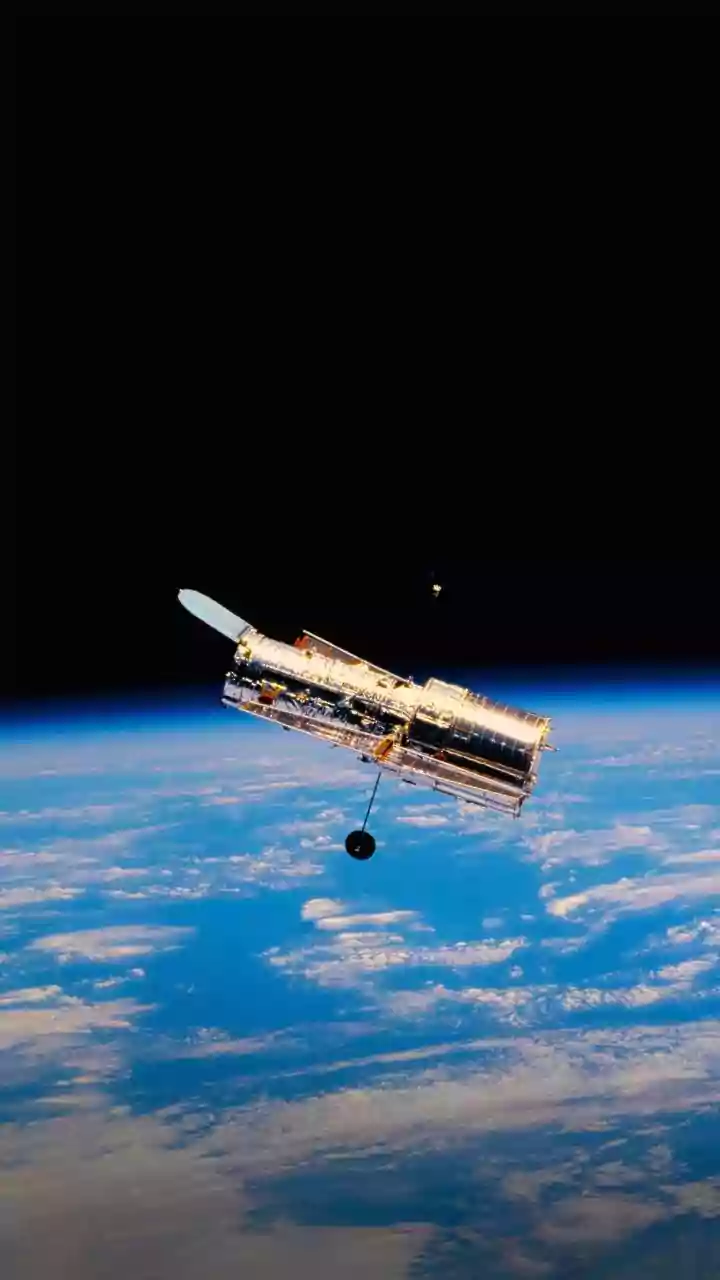
The James Webb Space Telescope sees the universe in infrared light, which is invisible to the human eye. This capability is the key to its stunning new perspective on the Helix Nebula. While optical telescopes like Hubble show the ethereal glow of the ionized gas, Webb’s NIRCam (Near-Infrared Camera) can peer through the haze and see the cooler, denser molecular hydrogen that makes up the bulk of these cometary knots. This allows scientists to see the structure of the nebula with incredible clarity, showing the stark transition from the hottest gas near the star to the coolest material farther out. The result isn't just a prettier picture; it's a far more complete map of the material being shed by the dying star.
What Does This Discovery Tell Us?
This detailed view is about more than just a star's dramatic end; it's also about a new beginning. These cometary knots act as protective shields for even cooler gas and dust within them. This shielded material contains the raw ingredients—like carbon, oxygen, and hydrogen—that are necessary to form future generations of stars and, eventually, new planets. By studying how these knots survive the harsh radiation from the central star, astronomers can better understand the cosmic recycling process. The material forged inside one star doesn't just dissipate; it gets returned to the cosmos, bundled up in these knots and seeded throughout the galaxy, waiting to create something new. It’s a crucial step in the cycle of stellar life and death that ultimately made our own world possible.