






The Rise of the Night Seeker
Welcome to the world of astro tourism, a travel trend centered on experiencing the night sky in all its unobscured glory. It’s more than just casual stargazing; it’s about intentionally seeking out locations with minimal light pollution to witness celestial
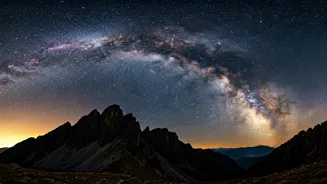
phenomena, from meteor showers to the shimmering arc of the Milky Way. So why the sudden surge in popularity? Experts point to a confluence of factors. First, rampant light pollution in and around urban areas has made a truly dark sky an endangered environment. For more than 80% of Americans, the Milky Way is completely invisible from their homes. This scarcity has turned a clear night view into a destination-worthy experience. Second, there's a growing desire for authentic, mindful travel that connects us to the natural world. In an age of digital fatigue, spending a night under the cosmos offers a profound sense of perspective and a powerful digital detox.
What to Expect: A Universe of Awe
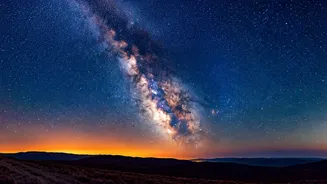
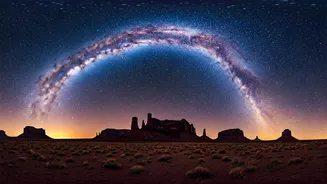
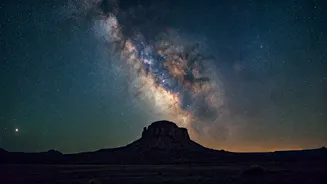
For the uninitiated, the first time seeing a sky free from artificial light can be a deeply moving experience. The familiar smattering of stars seen from a suburb explodes into a glittering, three-dimensional tapestry. The Milky Way, often just a faint concept, reveals itself as a vast, textured river of light stretching from horizon to horizon. Constellations become lost in a sea of countless other stars you never knew were there. It’s a sensory experience that’s both humbling and invigorating. You don’t need to be an astronomy expert to appreciate it. The goal isn’t to identify every celestial body, but to simply stand in awe of the scale of the universe and our place within it. This sense of wonder is the core appeal driving thousands to pack their bags and head for the dark.
America's Premier Celestial Sanctuaries
The United States is blessed with vast, protected lands that make for world-class astro tourism destinations. The key is to look for areas certified by the International Dark-Sky Association (IDA), which recognizes parks and communities committed to preserving the night.
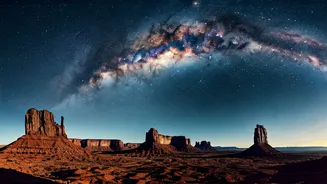
- The Desert Southwest: This region is the undisputed king of dark skies. Parks like Great Basin National Park in Nevada (one of the darkest places in the Lower 48), Death Valley National Park in California, and Utah’s “Mighty 5” (Zion, Bryce Canyon, Capitol Reef, Arches, and Canyonlands) offer jaw-dropping celestial views amidst iconic landscapes.
- The Rockies and Beyond: Head north to find pristine skies in places like Headlands International Dark Sky Park in Michigan, the first of its kind, or Central Idaho’s Dark Sky Reserve, a massive 1,400-square-mile swath of protected land.
- The East Coast: While more challenging due to population density, exceptional spots still exist. Cherry Springs State Park in Pennsylvania is renowned among astronomers on the East Coast, and Cape Hatteras National Seashore in North Carolina offers the rare chance to see the Milky Way over the Atlantic.
Gearing Up for the Galaxy (Without Breaking the Bank)
You don't need a PhD or an expensive telescope to join the trend. The beauty of astro tourism is its accessibility. The most important piece of gear is your own eyes, but a few items can enhance the experience. The most important piece of gear is your own eyes, but a few items can enhance the experience. A good pair of binoculars (a standard 7x50 or 10x50 is perfect) will reveal stunning detail in the moon, planets, and dense star fields of the Milky Way. Download a stargazing app like SkyView Lite or Star Walk 2 to your phone; these apps use your location to identify constellations and planets in real-time. Critically, bring a flashlight with a red-light setting. Red light preserves your night vision, allowing your eyes to stay fully adapted to the dark, which can take up to 30 minutes. Finally, even on a summer night, temperatures can drop significantly after sundown, so dress in warm layers and consider bringing a blanket or chair for comfortable viewing.