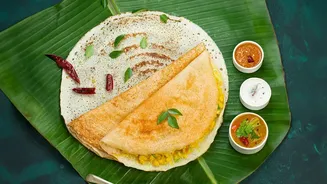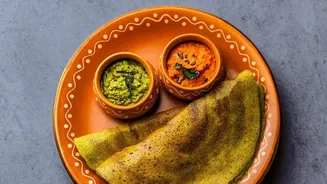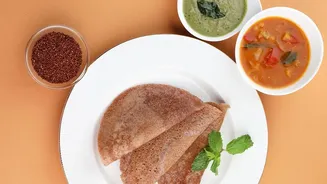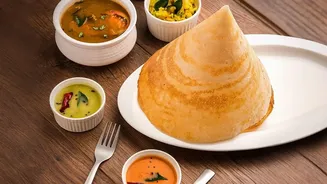



The traditional dosa holds a special place in the heart of Indian cuisine, but the lengthy process of soaking and fermenting can be a challenge for a busy lifestyle. Enter the oats dosa: a modern, quick, and nutritious alternative.
What Exactly is an Oats Dosa?
An oats dosa is a savoury
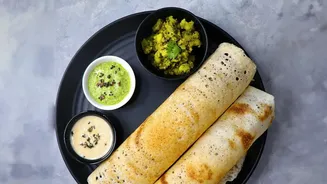
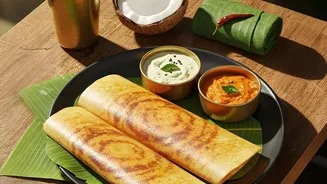
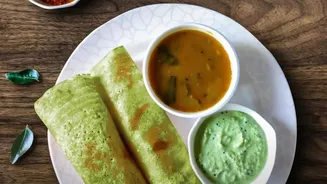
crepe made primarily from powdered oats instead of the traditional fermented rice and urad dal batter. It’s a creative reinterpretation of a classic, designed for speed and health without completely sacrificing the beloved dosa experience. Most recipes combine powdered oats with other flours like rice flour and semolina (rava or sooji) to achieve a desirable texture. This mixture is then combined with water or buttermilk, along with spices like cumin seeds, ginger, green chillies, and fresh herbs, to form a thin batter. Unlike its traditional counterpart, it’s a dish that brings together the wholesome goodness of oats with the familiar form of a South Indian favourite.
The 'Quick' Advantage: No Fermentation Needed
The single biggest advantage of an oats dosa is that it eliminates the need for overnight soaking and fermentation. A traditional dosa batter requires at least 8-12 hours for the rice and lentils to soak and then ferment, a process that demands significant planning. In contrast, most instant oats dosa batters can be ready in about 20-30 minutes. This typically involves a short resting time of 15-20 minutes after mixing the ingredients, which allows the flours to hydrate properly and the flavours to meld. This drastic reduction in preparation time makes it an incredibly practical option for a last-minute breakfast, a quick dinner, or a healthy snack.
A Healthier Breakfast Hero
Swapping rice for oats brings a significant nutritional upgrade. Oats are celebrated for their high content of dietary fibre, particularly a soluble fibre called beta-glucan, which is known to help manage cholesterol levels. This fibre also promotes a feeling of fullness, which can aid in weight management. Compared to white rice, which makes up the bulk of traditional dosa batter, oats generally have a lower glycemic index, meaning they cause a slower, more gradual rise in blood sugar levels. Furthermore, oats are a good source of protein and essential minerals like iron and magnesium, making the oats dosa a more nutritionally dense option. This makes it a particularly good choice for those looking for a healthier, fibre-rich start to their day.
Taste and Texture: Managing Expectations
While it’s a brilliant alternative, it is important to know that an oats dosa is not an exact replica of a classic fermented dosa. The taste is distinctly different, with a mild, earthy, and slightly nutty flavour from the oats. The texture also varies. While a traditional dosa is known for its signature crispness and delicate chew, an oats dosa is often softer. However, when made with a very thin, watery batter—similar to a rava dosa—it can yield a wonderfully lacy and crisp texture. The final result depends heavily on the recipe, the ratio of flours used, and the heat of the pan. It’s best viewed not as a replacement, but as a delicious and distinct dish in its own right.
Making It at Home: The Simple Process
Creating oats dosa at home is remarkably simple. The first step is usually to grind rolled or instant oats into a fine powder. This oat flour is then mixed in a bowl with rice flour and semolina. To this dry mix, you add curd or buttermilk and water to form a lump-free batter. The key to a lacy, crisp dosa is a thin, free flowing batter. Finally, chopped onions, green chillies, ginger, cumin seeds, and curry leaves are stirred in for flavour. After a brief rest, the batter is poured onto a hot tawa, starting from the edges and moving inwards, without spreading it like a traditional dosa. Cooked on medium heat with a drizzle of oil or ghee, it’s ready when the edges turn golden brown and begin to lift from the pan.