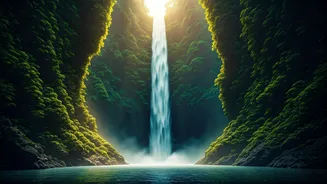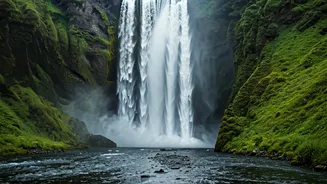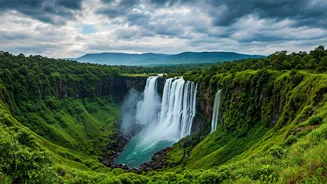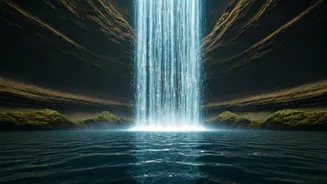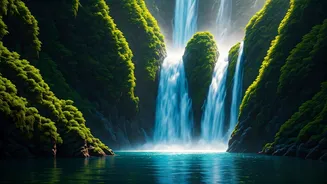



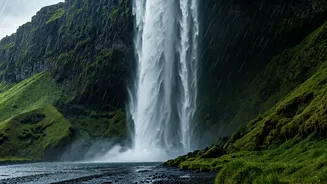
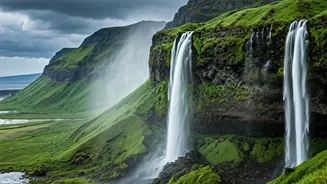
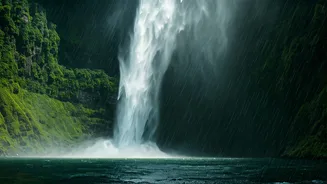


What Exactly Is a Reverse Waterfall?
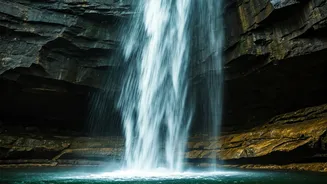
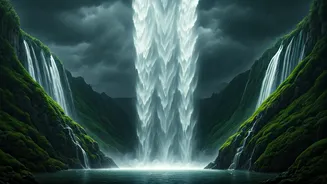
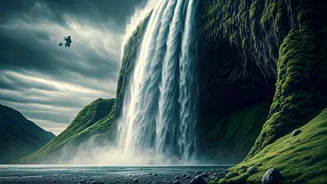
First, let's clear up the name. A reverse waterfall isn't technically a waterfall flowing backwards from bottom to top. It's an optical illusion created by a fascinating intersection of geography and meteorology. What you're seeing is a regular waterfall—water
flowing over a cliff or escarpment—being hit by winds so powerful that the water is blown upwards and backwards, over the cliff edge. From a distance, it looks as if the water is magically defying gravity. The water that gets blown up is often just a fine mist or spray, but in extreme conditions, a significant volume can be pushed back, creating a truly spectacular sight that feels like something out of a fantasy film.
The Science Behind the Spectacle
The phenomenon relies on two key ingredients: a steep cliff and extremely strong winds. Reverse waterfalls typically occur in coastal areas or mountainous regions where gusts of wind are funnelled up the face of a cliff. When a storm rolls in or during seasons with consistently high winds (like the monsoon), the upward pressure of the wind, known as an updraft, can become stronger than the downward pull of gravity on the falling water. For this to happen, wind speeds often need to exceed 75 kilometres per hour. The shape of the cliff also plays a role; a sharp, vertical drop acts like a ramp, directing the wind straight upwards with maximum force, atomising the falling water into a spray and launching it skyward.
India's Monsoon Magic
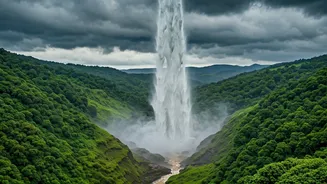
For audiences in India, this isn't just a distant internet phenomenon. The Western Ghats in Maharashtra are famous for their own spectacular reverse waterfalls, which come to life during the peak of the monsoon season. One of the most famous examples is at Naneghat, a mountain pass near Pune. Every year, as the south-west monsoon brings heavy rains and powerful winds, trekkers and tourists flock to witness the cascades here flow upwards. Other notable spots include Samrad village, Malshej Ghat, and various viewpoints near Lonavala. These local wonders become social media stars annually, with countless videos capturing the surreal beauty of water being whipped back up the lush, green mountainsides.
Why the Internet Is Obsessed
The reason reverse waterfalls have become such a viral sensation is simple: they are perfectly suited for the internet age. The visuals are stunning, instantly shareable, and create a sense of wonder and disbelief. They are a classic example of 'Is this real?' content that drives clicks, comments, and shares. The short, looping format of platforms like Instagram Reels and TikTok is ideal for capturing the hypnotic, continuous motion of the water being blown upwards. It's a natural phenomenon that looks like a special effect, sparking curiosity and conversation. The fact that it's a real, explainable event only adds to the fascination, turning a simple video into a learning moment.
A Global Phenomenon
While India has its own stunning examples, reverse waterfalls are a global occurrence. They have been documented in the United Kingdom, particularly on the coast of the Peak District, where strong Atlantic winds batter the cliffs. In Chile, the 'Cascada Invertida' is another well-known example. There are also reports of similar events in Ireland and on the Royal National Park cliffs near Sydney, Australia. Each location shares the same core ingredients: a dramatic drop-off point and a weather system capable of producing gale-force updrafts. This global context reminds us that while the sight may seem magical, it's a testament to the raw, predictable power of nature's physics at work around the world.