




A Celestial Masterpiece Identified
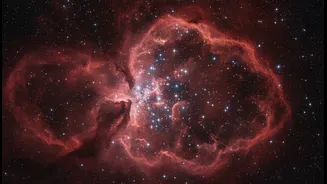
When the Hubble Space Telescope celebrated its 25th anniversary in orbit in 2015, NASA and the European Space Agency released a breathtaking image to mark the occasion. It was a portrait of cosmic fireworks: a brilliant cluster of around 3,000 stars nestled
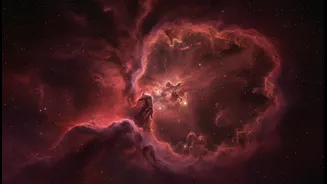
within a spectacular, sprawling nebula. This region is officially known as Westerlund 2 and its surrounding gas cloud, Gum 29. Located approximately 20,000 light-years away in the constellation Carina, this stellar nursery is a landscape of celestial mountains, pillars, and valleys of dust and gas. While many of Hubble’s images have become household names, like the iconic Pillars of Creation, this anniversary portrait of a magnificent 'red cloud' remains one of astronomy’s most significant and beautiful, yet somehow underrated, treasures. It’s more than just a pretty picture; it’s a direct window into the chaotic and powerful processes that build galaxies.
The Science Behind the Crimson Glow
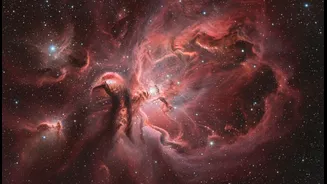
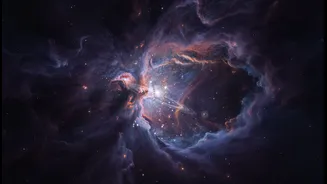
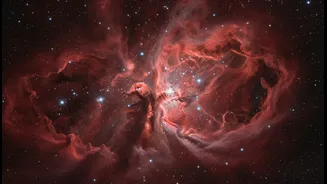
The most striking feature of the Gum 29 nebula is its dramatic red hue, punctuated by the brilliant blue and white light of young stars. This crimson color isn't arbitrary; it’s the signature of energized hydrogen gas. At the heart of Westerlund 2 are some of the hottest, brightest, and most massive stars in our entire Milky Way galaxy. These behemoths, only about two million years old, unleash unimaginable torrents of ultraviolet radiation and powerful stellar winds — streams of charged particles traveling at incredible speeds. This intense energy blasts into the surrounding hydrogen cloud from which the stars were born, stripping electrons from the atoms and causing the gas to glow in this characteristic reddish light. The entire nebula is essentially being hollowed out and sculpted by its own brilliant, violent offspring, creating a fantasy landscape of towering pillars and dense filaments.
Inside a Turbulent Stellar Nursery
Westerlund 2 isn't just a spectacle; it's a vital cosmic laboratory for understanding star formation. Because the cluster is so young, it gives astronomers a snapshot of stars in their infancy. The massive stars at its core live fast and die young, and their immense energy output profoundly affects their environment. Studying this region helps scientists understand how these giants influence the next generation of stars. The same radiation that makes the nebula glow is also eroding the gas and dust that could form smaller, sun-like stars and their planets. In fact, later observations revealed that while smaller stars farther from the core retained the dusty disks needed to form planets, those closer to the massive central stars had their planet-forming material stripped away. It's a dramatic example of cosmic location being everything, demonstrating how the presence of massive stars can dictate the fate of their smaller neighbors.
Why Has It Remained in the Shadows?
Despite being chosen for a major anniversary, Westerlund 2 doesn’t always get the same level of public recognition as other Hubble subjects. The Pillars of Creation in the Eagle Nebula, for example, captured the public imagination with a name and shape that were instantly memorable. The Orion Nebula is visible to the naked eye, giving it an accessibility that a distant object in Carina lacks. Westerlund 2 is a more abstract, sprawling vista. Its beauty is in its chaotic complexity—the interplay of thousands of stars, the folds of gas, and the sheer scale of the creation and destruction happening within. It may not have a simple, catchy name, but its scientific and aesthetic value are immense. It represents one of the most photogenic examples of a turbulent stellar breeding ground ever observed, a true masterpiece of cosmic art and science combined.