






Why Job Seekers Are Turning to AI
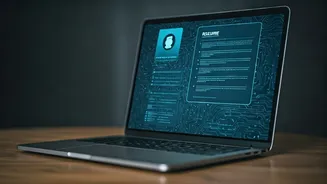
It’s no surprise that job seekers are embracing AI. Faced with the daunting task of tailoring applications for numerous roles, tools like ChatGPT offer a powerful shortcut. They can help overcome writer's block, suggest professional phrasing, and structure
a resume from scratch in minutes. For many, AI is a way to save hours of work, improve grammar, and get a head start on an otherwise tedious process. It can even help identify key skills from a job description to include in your application, making the task of customisation feel much more manageable.
The Hidden Risks of an AI-Generated CV
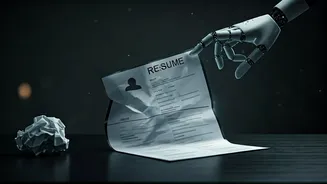
Despite the convenience, relying too heavily on AI carries significant risks. The biggest issue is generic, impersonal content. AI models learn from vast amounts of online data, which can lead to resumes filled with overused buzzwords like "results-driven" and "team player" that sound robotic and fail to convey your unique personality. Hiring managers have become skilled at spotting this overly polished, yet hollow, language. There's also the danger of factual inaccuracies, as AI can "hallucinate" or fabricate details about your experience. While applicant tracking systems (ATS) don't specifically detect or penalise AI use, a generic, keyword-stuffed resume can still fail to impress the human recruiter who ultimately makes the decision.
The Golden Rule: AI as an Assistant, Not an Author
The smartest way to use ChatGPT is to think of it as a collaborator, not a ghostwriter. It’s a tool for brainstorming, editing, and polishing—not for creating the final product from whole cloth. Your career story, achievements, and personality are what make you a unique candidate, and these are things AI cannot replicate authentically. Use it to generate ideas for bullet points, suggest stronger action verbs, or rephrase a clumsy sentence. But the final document must be thoroughly edited and rewritten in your own voice, reflecting your actual experiences and accomplishments. Many recruiters are fine with candidates using AI for support, but they want the final product to be human-led, showing your own effort and skills.
A Practical Guide to Using ChatGPT Smartly
To get the best results, you need to be strategic. First, provide detailed and specific prompts. The principle of "garbage in, garbage out" applies directly; the more context you provide about your background, skills, and the target role, the better the output will be. Feed it your existing resume and the specific job description, then ask it to tailor your experience to match the role's requirements. Ask it to quantify your achievements by turning your duties into measurable results. For example, instead of just saying you "managed a team," provide the numbers and ask it to phrase it powerfully. Always fact-check every detail it generates, from dates to job titles. Finally, read the entire CV out loud. If it doesn't sound like something you would say in an interview, it needs more editing.
The Final Word: Your CV is Your Story
While AI tools are becoming more integrated into the hiring process on both sides of the table, the human element remains your greatest asset. A successful CV is more than a list of tasks; it’s a marketing document that tells a compelling story about your value and potential. An AI can help structure the narrative, but you are the author. By using AI as a powerful assistant to refine your message, you can create a CV that is both polished and personal. The goal is an AI-assisted, human-perfected document that stands out for the right reasons—your unique skills, measurable achievements, and authentic voice. It is that human touch that ultimately captures a recruiter's attention and lands you the interview.