



The Magic of a Truly Dark Sky
In most of our towns and cities, a canopy of artificial light, known as light pollution, veils the cosmos. It creates a persistent glow that obscures all but the brightest stars and planets, making the full grandeur of the night sky a rare sight. This
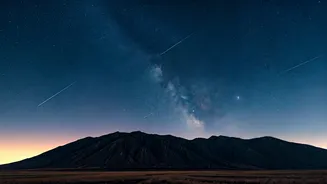
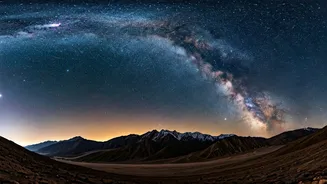
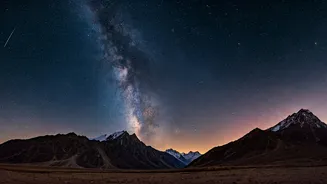
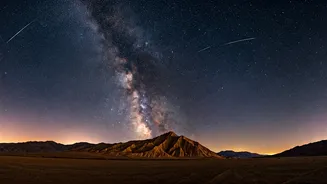
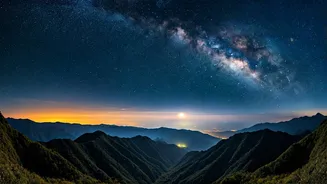
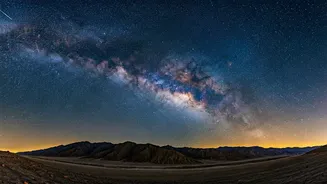
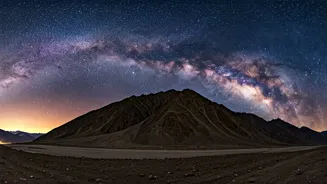
is where Ladakh stands apart. It offers what is becoming a global rarity: true, profound darkness. A dark sky isn't just about the absence of city lights; it’s a pristine canvas that allows the faint, shimmering light of distant galaxies, nebulae, and, most excitingly, meteors to become visible. The experience of standing under a sky brimming with stars is a powerful reminder of our place in the universe, something increasingly lost to modern life.
Ladakh: India's Astronomical Haven
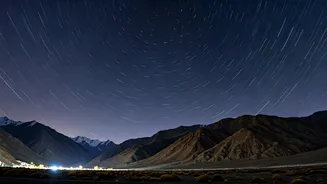
Perched at an average altitude of over 10,000 feet, Ladakh’s high-altitude desert environment provides a unique combination of factors perfect for astronomy. The thin, dry air reduces atmospheric distortion, making the stars appear sharper and brighter. Its remote location, far from major urban centers, means minimal light pollution. This is why the region is home to India’s first and only Dark Sky Reserve, located in Hanle. The Hanle Dark Sky Reserve, established in 2022, is a protected area where measures are actively taken to limit artificial light, preserving the natural darkness for both scientific research and astro-tourism. With over 300 clear nights a year, Hanle offers some of the best stargazing conditions in the world, allowing even the faintest celestial events to be seen with stunning clarity.
What's in the Sky Right Now?
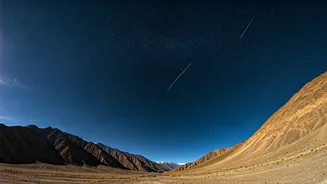
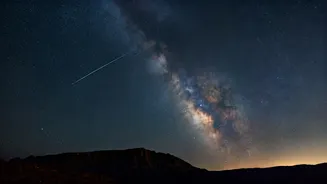
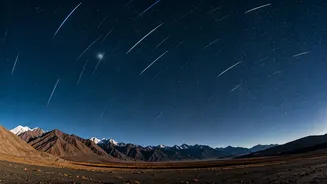
July 2026 is an exciting time for skywatchers in Ladakh. The Alpha Capricornids meteor shower, active from July 3rd to August 15th, is underway. While not a dense shower, producing about five meteors per hour, it is famous for its exceptionally bright and dramatic fireballs, which can be vivid enough to outshine the moonlight. Joining the show are the Southern Delta Aquariids, active from July 12th. Together, they create a double-header celestial event. While their official peak is at the end of the month, meteors from these showers can be spotted throughout July. Beyond meteors, other celestial events this month include planetary alignments, like the Moon's close approach to Saturn on July 7th and Mars on July 11th, adding more interest to the pre-dawn sky.
How to Watch the Show
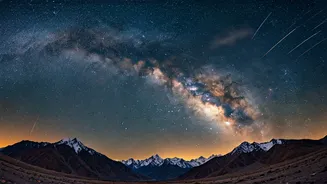
You don't need to be a professional astronomer to enjoy meteor tracking. The best tool is simply your eyes. Find a comfortable spot away from any residual light, perhaps on a reclining chair or a mat. Allow your eyes at least 20-30 minutes to fully adapt to the darkness; this will dramatically increase the number of meteors you can see. The best viewing time is generally after midnight until the early hours before dawn. Although meteors appear to radiate from a specific point, it's best to gaze at a wide patch of sky to catch the longest and most impressive streaks. Most importantly, be patient. Meteor watching is a game of waiting, but the reward of seeing a fireball blaze across the Milky Way is well worth it.
Essential Tips for Ladakh Stargazing
A trip to Ladakh for stargazing requires some preparation. Nights in the high desert are cold, even in summer, so dressing in warm layers is crucial. To preserve your night vision (and that of others), use a red-light torch instead of a bright white one. Stargazing apps on your smartphone, like SkyView or Stellarium, can be invaluable for identifying constellations and the radiant points of meteor showers. When planning, try to schedule your trip around a new moon for the darkest possible skies. Finally, remember to acclimatize properly to the high altitude for a few days in Leh before heading to even higher locations like Hanle or Pangong Tso to ensure a safe and comfortable experience.