
A New Vista for Southern Railway
Southern Railway has officially introduced its first Vistadome coach service on the Madurai-Guruvayur Express, starting from October 22, 2026. This move is set to transform the travel experience between Tamil Nadu and Kerala, offering passengers unparalleled
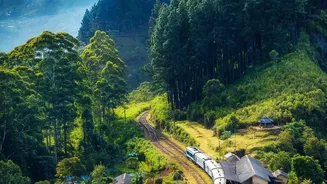
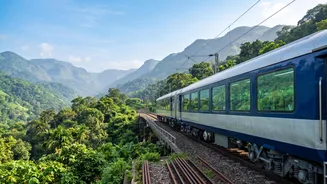
views of the lush, green landscapes of the Western Ghats. The coach has been added to the existing train on a temporary basis, scheduled to run until mid-January 2027. This initiative allows the railways to gauge passenger interest and operational feasibility before making a more permanent decision. The route is particularly special as it passes through the scenic Sengottai-Punalur ghat section and the Aryankavu pass, areas renowned for their natural beauty. The introduction of this service aims to boost regional tourism by turning a simple train journey into a memorable sightseeing experience.
What Exactly is a Vistadome Coach?
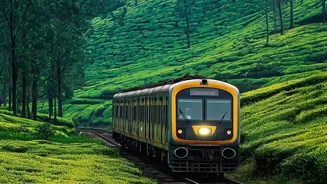
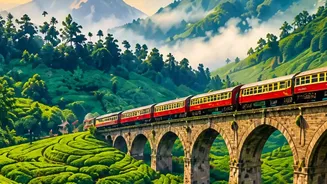
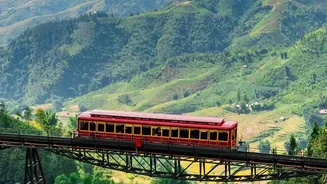
A Vistadome coach is not your average train car; it is designed specifically for sightseeing. The key features are its large, panoramic glass windows that extend up to the roof, providing an almost 360-degree view of the surroundings. Passengers are not confined to looking out of a standard side window but can also gaze upwards at the sky and hillsides. The seats inside these air-conditioned coaches are often plush and can rotate, allowing travellers to face the direction of the best scenery regardless of the train's movement. Some also feature an observation lounge at one end, offering a unique vantage point. This design makes the journey itself the main attraction, rather than just a means of getting from one point to another. The goal is to create an immersive experience that puts passengers right in the middle of the landscape.
Understanding the Trial: The Add-On Coach
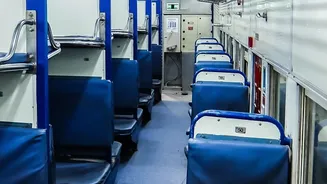
The current service on the Madurai-Guruvayur Express is what is known as an 'add-on coach' model. In this setup, a single Executive AC Vistadome coach is attached to the existing train rake. This is a common and practical first step for Indian Railways to introduce a new type of service. The primary advantage is that it is relatively quick and cost-effective to implement. There's no need to create a new train schedule or allocate a full new set of locomotives and staff. The Vistadome coach simply becomes part of the regular express service, operating on specific days of the week. However, the downside is that capacity is limited to the 40-odd seats in that single coach. Furthermore, the experience is mixed; while Vistadome passengers enjoy a premium view, the rest of the train remains a standard express service, with its own schedule and stops that may not be perfectly timed for sightseeing.
The Alternative: A Dedicated Tourist Train
The second possibility, and the one many tourists hope for, is the introduction of a dedicated panoramic train. This would be an entirely new train service where most or all of the coaches are Vistadome cars. This approach offers a far more curated and premium experience. The entire train would be designed for tourism, from the onboard service to the schedule itself. A dedicated service could have its timings optimized to pass through the most scenic sections, like the Sengottai gap, during peak daylight hours. It could also potentially have fewer stops, focusing only on key tourist locations. This creates a cohesive, high-quality journey from start to finish. The trade-off, however, is significant. Launching a new train requires much more investment, dedicated infrastructure, and new staff, which would inevitably lead to higher ticket prices and a much longer timeline for implementation.
The Key Difference: Experience vs. Implementation
The fundamental difference between the current trial and a new train boils down to a choice between integration and specialisation. Attaching a single Vistadome coach is an integrated approach—it enhances an existing service with minimal disruption and cost. It's a quick way to offer a new experience to a limited number of people. A new, dedicated Vistadome train is a specialised approach. It prioritises the quality of the tourist experience above all else, creating a unique product for a specific market. While the views from the window might be the same, a dedicated train offers a complete package: a purpose-built schedule, consistent service quality across all coaches, and an identity as a premier tourist attraction. The current trial is a test to see if the demand and operational logistics justify the leap from the integrated model to the more ambitious specialised one.