



The Science of the Sizzle
Every cooking fat has a smoke point, the temperature at which it stops shimmering and starts smoking, breaking down into compounds that can give food a bitter taste and release harmful free radicals. This is where ghee truly shines. With a smoke point of
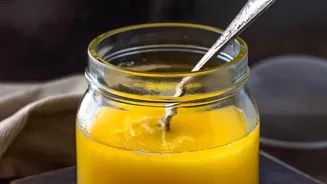
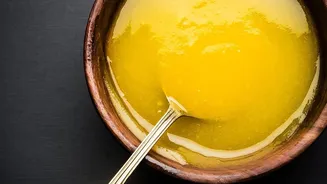
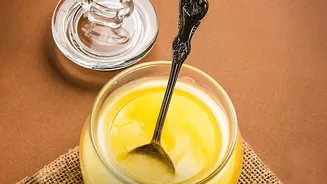
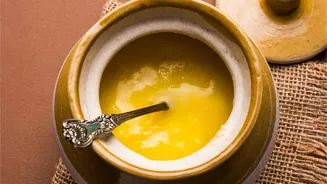
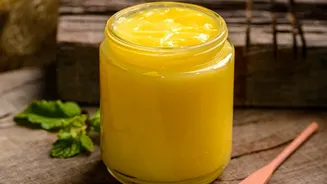
around 250°C (482°F), it stands tall among cooking fats. Regular butter, for comparison, starts to smoke and burn at a much lower 175°C (350°F) because of its milk solids. Even extra virgin olive oil's smoke point is typically lower, around 190°C. The process of clarifying butter to make ghee removes these milk solids and most of the water, resulting in a pure, stable fat that can handle the high heat of searing, stir-frying, and roasting without degrading. This stability makes it a reliable and safer choice for a wide range of high-temperature cooking methods.
An Ancient Staple Gets a Modern Twist
While ghee has been a cornerstone of Indian cuisine and Ayurvedic medicine for millennia, today's innovation lies in infusion. Home chefs are moving beyond using ghee just for traditional tadkas and sweets. They are now creating 'compound ghees' by steeping them with herbs, spices, and aromatics. This isn't just about adding flavour; it's about creating a multi-purpose culinary shortcut. An infused ghee is a flavour base and cooking medium all in one. A spoonful of garlic-infused ghee can start a pasta sauce, while a rosemary-infused one can be the perfect start for roasted vegetables, simplifying the cooking process while elevating the final dish. This trend combines the desire for healthy, home-cooked meals with the need for convenience and a touch of gourmet flair.
Your Guide to Infusing Ghee
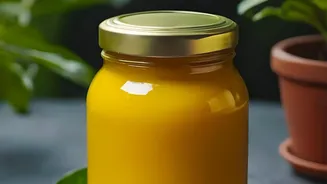
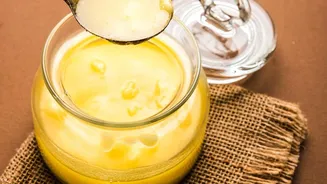
Making your own infused ghee is surprisingly simple. You can start with store-bought ghee or make your own by gently simmering butter until the milk solids separate and brown, then straining the liquid fat. To infuse, gently heat the ghee in a saucepan over low heat. For robust ingredients like smashed garlic cloves, whole spices (cinnamon, cardamom), or hardy herbs (rosemary, thyme), add them to the warm ghee and let them sizzle gently for a few minutes until fragrant. Be careful not to burn the aromatics. Take the pan off the heat and let the flavours steep as it cools. For more delicate dried herbs or powders, you can stir them into the ghee after it has been heated and slightly cooled to avoid scorching them. Once cooled but still liquid, strain the ghee through a fine-mesh sieve or cheesecloth into a clean, airtight jar.
A Palette of Flavours
The possibilities for infusion are nearly endless, allowing you to tailor your cooking fat to any cuisine or dish. For savoury dishes, try infusing with garlic, chilli flakes, and black peppercorns for a spicy kick. A combination of rosemary, sage, and thyme creates an earthy blend perfect for roasts. For a classic Indian touch, a mix of cumin seeds, ginger, and turmeric powder works wonders. On the sweeter side, consider vanilla beans and cinnamon sticks, creating a ghee that is perfect for drizzling on pancakes, stirring into oatmeal, or using in baked goods. You can even create finishing ghees, like a bright lemon-zest and chive infusion, to drizzle over fish or vegetables just before serving.
More Than Just Flavour
The benefits of using infused ghee go beyond taste and convenience. In Ayurveda, ghee is considered a 'yogavahi,' a substance that helps carry the properties of herbs and spices deeper into the body. By using a high-smoke-point fat like ghee, you are also ensuring that the fat itself remains stable during cooking, avoiding the creation of undesirable compounds. Ghee is also a source of fat-soluble vitamins like A, E, and K, and because the milk solids are removed, it is free of lactose and casein, making it suitable for many people with dairy sensitivities. While it remains a fat and should be consumed in moderation, its stability and nutrient-carrying properties make it a valuable addition to a health-conscious kitchen.