


More Than Just Pretty Pictures
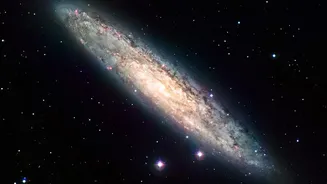
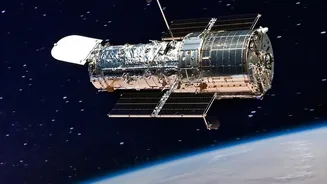
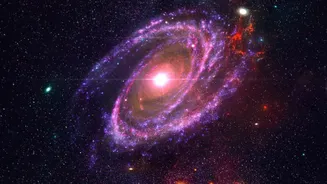
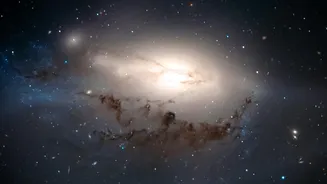
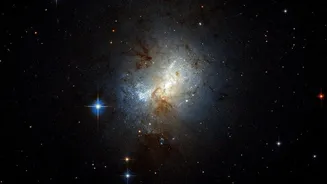
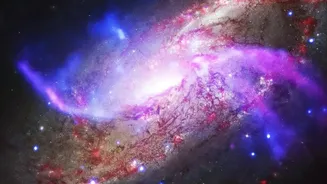
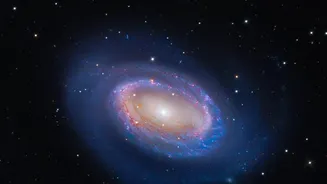
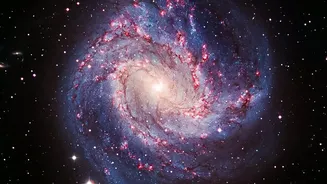
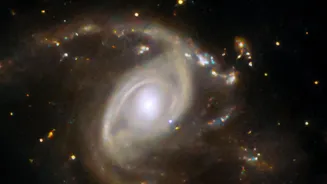
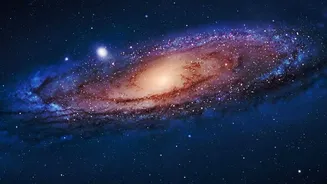
At first glance, the images are a swirl of cosmic light, distant galaxies shining like jewels on black velvet. But these are no ordinary space photos. Captured by the powerful optics of the James Webb Space Telescope (JWST), these views are scientific
revelations disguised as art. For years, our understanding of the early universe suggested that the first galaxies would be small, chaotic, and somewhat primitive. Astronomers expected to see messy toddlers still figuring out how to grow. Instead, what Webb is beaming back to Earth looks more like a collection of surprisingly sophisticated teenagers who grew up far too quickly. These images are beautiful, but more importantly, they are baffling, packed with details that challenge long-held theories about how the universe came to be the way it is today.
A Glimpse Back in Time
To understand the significance of these findings, it helps to remember a fundamental principle of astronomy: looking far away is the same as looking back in time. Light, fast as it is, takes time to travel the vast distances of space. When we look at a galaxy that is 13 billion light-years away, we are seeing it as it was 13 billion years ago, when the universe itself was just a fraction of its current age. Webb was designed specifically for this kind of cosmic time travel. Its infrared eyes can pierce through dust and see the faint light from the universe's first billion years, a period known as the 'Cosmic Dawn.' This is the era when the very first stars and galaxies were lighting up the cosmos, ending the so-called cosmic dark ages. Seeing these first galaxies clearly is like finding a photograph from the universe’s infancy.
Galaxies in a Surprising Hurry
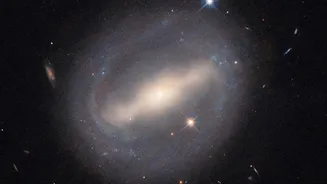
The main surprise is the sheer complexity and maturity of these ancient galaxies. Recent discoveries have highlighted several 'impossible' objects. Astronomers found a galaxy more than nine billion light-years away that already possessed a 'stellar bar'—a conveyor belt of stars feeding a dense, star-forming disc at its centre. Until now, such organised structures were thought to be features of modern, fully-formed galaxies like our own Milky Way, not systems from the early cosmos. Even more puzzling are galaxies like JADES-GS-z14-0, spotted when the universe was less than 300 million years old. Not only are they incredibly bright, but they also contain heavier elements like carbon and oxygen. According to standard models, there simply shouldn't have been enough time for multiple generations of stars to live, die, and seed the universe with these materials so quickly. This has led astronomers to what they call the 'impossibly early galaxy problem'—the consistent discovery of galaxies that are too big, too bright, and too chemically advanced for their age.
Rewriting the First Cosmic Chapters
So, does this mean the Big Bang is wrong? Not at all. What it does mean is that our understanding of what happened after the Big Bang needs a major update. The universe is not broken, but it was clearly more efficient and capable of building complex structures much faster than our models predicted. Scientists are now scrambling to adjust their theories on galaxy formation. Perhaps the first stars formed differently, or maybe the role of dark matter in gathering gas was more effective than we thought. These new views from Webb are not providing easy answers. Instead, they are asking better, more profound questions. They are pushing the boundaries of our knowledge and forcing scientists to be more creative in explaining how the universe managed to get so organised, so beautiful, and so complex in such a short amount of time.